Nvidia and Apple Pledge Millions for Trump’s White House Ballroom Project
Nvidia, Apple, and other major corporations have pledged millions to fund a controversial new White House ballroom for President Donald Trump, sparking legal and ethical scrutiny.
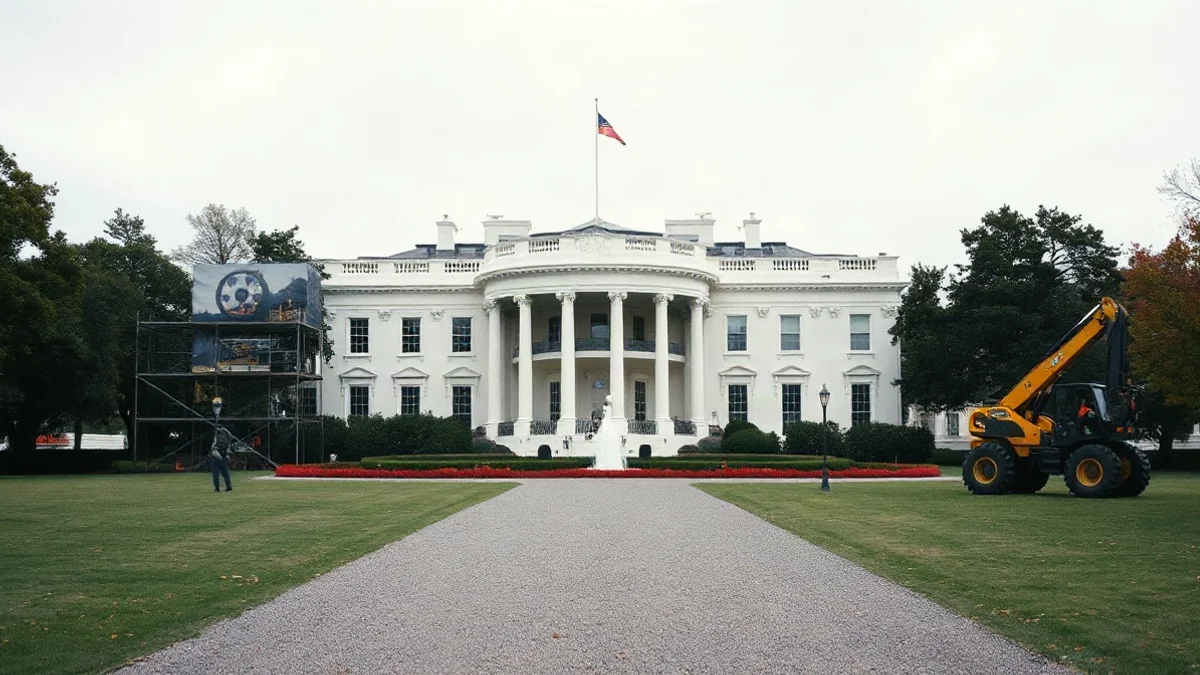
Nvidia and Apple have pledged an unprecedented $25 million donation each toward the construction of a planned ballroom at the White House by US President Donald Trump, according to a report by The Washington Post, which revealed that the megalomaniacal project has already raised about $333 million in private donations.
The list of prominent donors also includes the Adelson family, a major financial supporter of Trump and the Republican Party, who pledged $25 million, alongside an identical sum promised by billionaire Charles Ergen, co-founder and chairman of Dish Network. The president himself, according to the report, does not appear on the donor list.
The White House stated in response that no further details would be published regarding the identity of the donors, who, according to spokesperson David Ingle, "represent a wide range of great American companies." Ingle attacked public criticism, saying that those critics now claiming a hypothetical conflict of interest would have complained just as much if American taxpayers had been forced to finance these much-needed renovations, which have faced prolonged delays.
Nvidia was quick to clarify the motives behind the unusual step, stating that the company is proud to donate to a non-partisan fund aimed at serving the American public. A spokesperson for the chip giant emphasized that as an American company, support for the United States is of paramount importance and is not dependent on any business interests. In contrast, Apple chose not to respond to the report.
The financial scale of the project and the secretive manner in which the administration is handling fundraising have sparked widespread legal and ethical controversy. Watchdog organizations and legal experts argue that this conduct raises difficult questions about transparency, the influence of wealthy donors, and compliance with ethical norms and established oversight mechanisms.
The roster of corporations that have funneled money into the project does not stop with tech giants. According to The Washington Post, major federal contractors—including Lockheed Martin, Microsoft, and Palantir Technologies—have transferred $10 million each.
Trump initially stated that he and wealthy donors would personally finance the project, estimated to cost $400 million, but later attempted to secure $1 billion from Congress for an underground bunker and security measures to fortify the facility—an effort that failed.
The central findings of the investigation show that the vast majority of the funds raised came from wealthy companies and individuals with direct interests before the federal administration. Furthermore, half of the total amount came from companies or executives at companies that held active contracts with the federal administration during Trump's second term in the White House. The banquet hall is just part of a series of projects Trump is promoting as part of his efforts to reshape Washington through sweeping and unilateral changes, which have drawn sharp criticism from opponents who have challenged them in court.
The legal battle over the construction reached the highest courts. In an August ruling by a 5-4 vote, the US Supreme Court allowed Trump to proceed with construction work while his lawsuits are ongoing, overturning a previous judicial injunction. In a dissenting opinion, Chief Justice John Roberts stated that the project in question is "likely illegal."
Public Outcry and National Security Arguments
The planned facility, which according to Trump's statements is expected to accommodate about 1,000 guests, sparked widespread public outrage even before it was built. Preservationists and opponents of the administration argue that Trump completely exceeded his authority when he ordered the demolition of the historic East Wing of the White House—which housed the offices of the First Lady and the historic movie theater—to make room for the new structure.
The planned hall, spanning approximately 8,360 square meters, will include, according to Trump, bomb shelters, advanced medical facilities, drone and missile defense systems, and additional security measures. In light of the rising wave of public and legal criticism, the administration now argues that the facility is critically necessary for national security—an argument the president previously used to promote another controversial proposal to build a "triumphal arch."