Netanyahu denies in ABC interview: I did not try to convince Trump to renew strikes in Iran
The PM said he presented the US President with three options regarding the regime in Tehran during their meeting in Washington: 'It is his decision.'
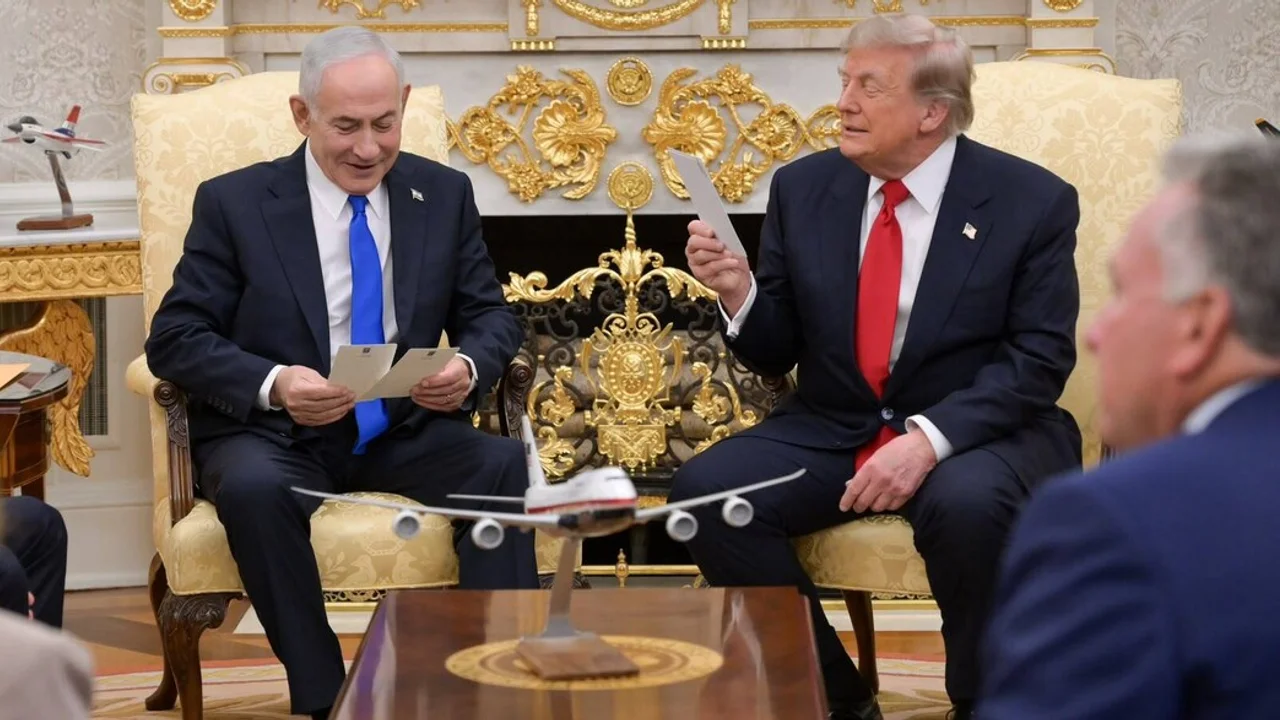
News in brief: Benjamin Netanyahu passes the ball to Donald Trump, calling him the senior partner. He emphasized his skepticism regarding the regime's negotiation tactics: 'They always lie and cheat.' Against the backdrop of the escalation in the last day, the Prime Minister sent a threatening message to Iran should it attack Israel.
Prime Minister Benjamin Netanyahu was interviewed last night (between Wednesday and Thursday) by ABC and denied that he tried to convince US President Donald Trump to renew strikes on Iran during their meeting. 'We are allies - he is the senior partner. This is the United States of America, let's not forget. I am a junior partner, but the Prime Minister of Israel. When I need to stand up for the interests of my country and the security of my country, I do it.' This comes against the backdrop of Trump's jab at Netanyahu hours before their meeting.
In the interview, he addressed the claim that he misled Trump before the war by suggesting that the regime in Iran could be easily toppled through military action: 'I did not mislead. No one tells the President what to do.' In the program 'Uvda' in March, the assessment presented by former Mossad chief Dadi Barnea regarding the toppling of the regime in Iran was revealed, according to which the process of regime change could take long months.
The options placed on the table at the meeting
According to Netanyahu, during their meeting in Washington, they discussed three options regarding Iran: negotiations for a broader agreement with Iranian elements, continuing the siege on the Strait of Hormuz, or taking further military action. 'In fact, we analyzed the three options. We did it openly between friends and allies. It is his decision.'
However, Netanyahu emphasized in the interview that he is skeptical about Iran's method of operation: 'They always lie and cheat. Always playing to gain time. Can this change with sufficient pressure - diplomatic or economic? Try it.'
Netanyahu was also asked about the possibility of regime change in Iran: 'I think it is weaker than ever, and Israel is stronger than ever - but I cannot tell you that the regime has already collapsed. My goal is to ensure that Iran, with this regime, will not have nuclear weapons. This is something that the President and I agree on.' He also sent a threatening message to Tehran, if they think to attack Israel: 'It will be a dangerous mistake - and we will respond with force.'
The battle for the Strait of Hormuz
In the interview, Netanyahu also addressed the issue of the Strait of Hormuz, and said that it would not be possible to predict if Iran could turn the flow of trade through the strait into a weapon: 'I thought they could do it, but I also thought they would have to consider what the consequences would be if they did it. No one could have predicted it exactly.'
'I don't think the strait will be such a strong lever. People will move energy pipelines to the Red Sea, and from there to Israel in the Mediterranean. We can open this blockade, and we will do it,' he added.
Moments before their meeting: Trump's statement against Netanyahu
Two hours before his meeting with the Prime Minister, the US President said that he does not need Netanyahu to know about what is happening at 'Mount Mahosh' - Iran's secret nuclear site. 'I don't need Bibi to tell me that (what is happening there). We are equipped with the best cameras in the world that are focused there and we know exactly what is happening,' he said in an interview with Fox.
'I said, "Bibi, maybe you'll just tell me why you need to notify the world?", I know exactly what is happening there.' According to him, it is not a big problem. 'We took down their nuclear facilities and we will take down Mount Mahosh easily if we don't make a deal,' added Trump.
Mossad's assessment before the war
Refuting Netanyahu's claim that he misled Trump in the interview comes after it was revealed in March in 'Uvda' that former Mossad chief Dadi Barnea presented him with an assessment that toppling the regime in Iran is possible. The ability to achieve this goal was at the center of discussions in Israel and the US before the start of the attack in February. Barnea estimated in the cabinet that the toppling of the Iranian regime, if it happens, is expected only at a late stage. The process of toppling the regime could take long months, he estimated before the war.
According to that same assessment, only after significant damage to the regime's power centers - including the mechanisms of oppression and military capabilities - could the conditions for the return of protests ripen. Even in the United States, they doubted from the beginning the possibility of a quick uprising, and US President Trump even called on the Iranian public to stay at home - which illustrates that even in Washington they did not expect immediate change. Furthermore, during the war, it was reported in the New York Times that Netanyahu adopted the plan, and Trump also appeared to be someone who believes in the optimistic scenario that the elimination of Iran's leadership alongside intelligence operations would lead to a popular uprising that would quickly end the war.
It was also reported in the American newspaper that ahead of the war, Netanyahu used the optimistic assessments of the Mossad to convince Trump that the collapse of the Iranian regime is a realistic goal. However, senior officials in the United States and the Israeli security establishment doubted this from the beginning.