"We heard a boom - and then we saw the platoon commander covered in blood": 20 years since the Kfar Giladi disaster
12 reservists lost their lives in a Katyusha rocket strike in the assembly area near the "Roaring Lion" monument in Tel Hai. On the 20th anniversary of the disaster, soldiers and commanders of the 9255th Battalion gathered for a memorial ceremony for their comrades, including Doron Alon, then a young reservist and today a company sergeant major in the battalion, who returned to the site for the first time: "I feel that I can close this chapter."
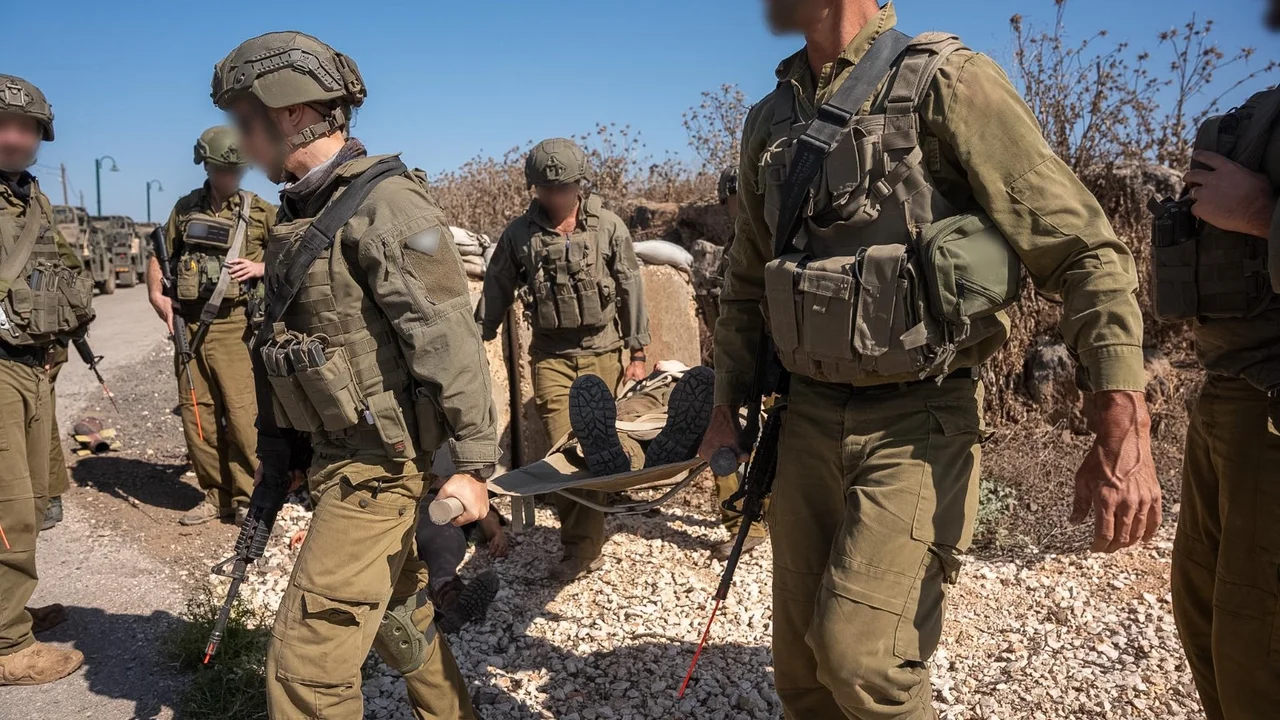
In the midst of the Second Lebanon War, at 12:00 noon on August 7, 2006, a Katyusha rocket launched by Hezbollah struck directly at the entrance plaza of Kibbutz Kfar Giladi, where reservists from the 226th Brigade were staying in an assembly area. 12 soldiers were killed in the disaster. Last Friday, 20 years later, soldiers and commanders of the 226th Brigade and the 9255th Battalion held a ceremony in memory of their brothers-in-arms who fell in the incident, near the "Roaring Lion" monument of Tel Hai.
Among those present at the ceremony was Doron Alon (44), currently a company sergeant major in the battalion and a resident of Haifa. Alon was drafted in November 2000 into the 202nd Paratrooper Battalion. When the Second Lebanon War began, he was in the USA and waiting for mobilization. He bought a plane ticket and landed in Israel within 24 hours. On August 6, he joined his friends who had entered Lebanon the night before, but he missed them. Until he could join his brothers-in-arms in combat, he waited for them on the lawn in the center of the kibbutz. He did not know that another force of soldiers from the battalion headquarters had remained outside the kibbutz and were hiding from the scorching sun under the trees at the entrance to the kibbutz, near the cemetery.
"Around 9 in the morning, my father dropped me off in Kiryat Shmona and I was taken to Kibbutz Kfar Giladi. There were four of us, and we sat on the grass," Alon recalled that day. "There were very few adults left in the kibbutz, so much so that when the siren went off, the public shelter was closed. When the Katyusha passed us, we heard the boom and thought it was behind us, and we were lucky to have gone out."
"When we left the shelter, three minutes later, I saw the platoon commander from the regular service running towards us with his uniform covered in blood, and he asked me to go down to the entrance of the kibbutz. When I got there, five minutes after the impact, I saw the dimensions of the terrible disaster that still haunts me. It was my first day in the reserves after three years of regular service."
The memory of the incident has accompanied Alon and his friends over the years: "The truth is, I try to suppress this event. There are almost no soldiers left who fought in 2006 and are still with us." He admitted that in the first years, they believed the kibbutz did not let the guys in, causing great anger. "But today, my friends and I understand that there was no bad person in the kibbutz who intentionally kept them out, and no one intended for this to happen."
For Alon, the memorial ceremony on the 20th anniversary was the first opportunity to close a circle, as he entered Kibbutz Kfar Giladi for the first time since the disaster. "The fact that the kibbutz members have been our partners for the last 20 years in organizing the ceremony and the logistics is not taken for granted, and we appreciate it very much. We stayed overnight in the kibbutz, and I feel that something opened up for me, and I was able to close this chapter."
Even now, two decades later, the operational reality has again called the soldiers for prolonged service in the north. The "Iron Swords" war brought the battalion's soldiers, young alongside veterans aged 50, 60, and 70, back to the Lebanon border. The battalion carried out missions in four rounds, including a maneuver in the village of Ayta ash-Sha'b, through the "abduction curve" where Eldad Regev and Ehud Goldwasser were kidnapped in 2006.
"I am proud, like my father and brothers, to continue to serve in the reserves," Alon concluded. "I didn't imagine that I would return to Lebanon after 20 years when I am already a father. We understand that our children will also have to serve in the army and protect the country. I have done close to 700 days of reserve duty in the last three years, and I understand that this is our mission. We will return and answer the call when they need us. There is no one else who will do it."