New Zealand Grants Mount Taranaki Legal Personality and Indigenous Board
New Zealand granted Mount Taranaki an independent legal personality, empowering an eight-member board to represent the volcano after 150 years of colonial land disputes.
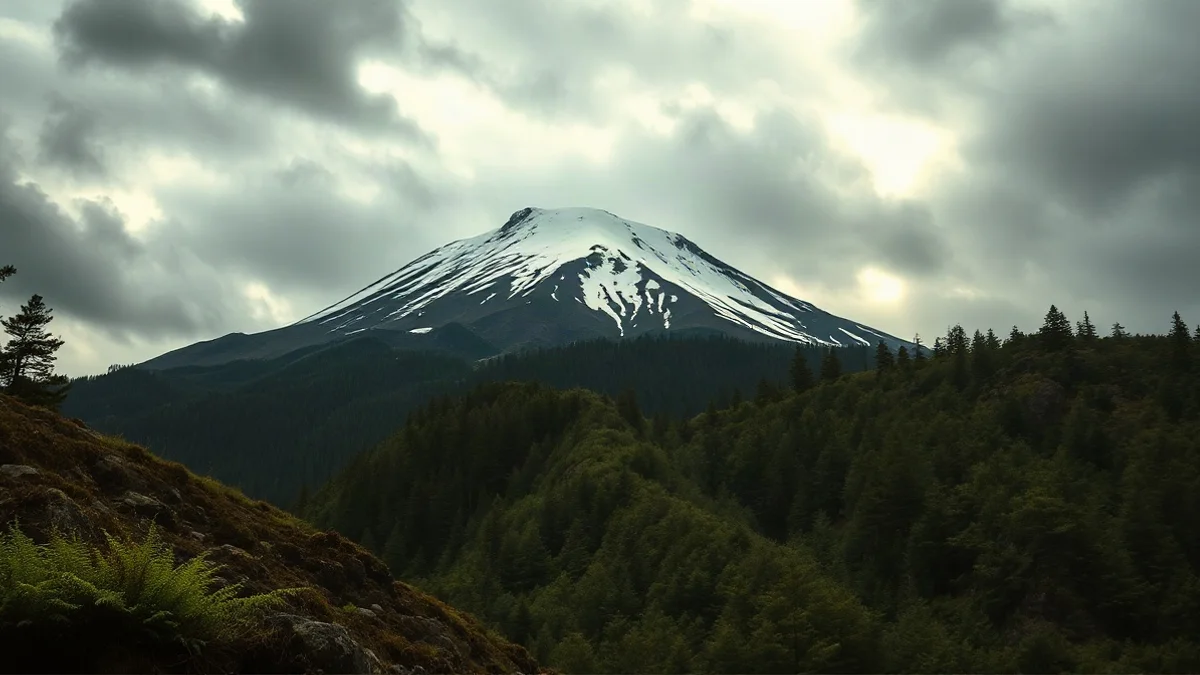
New Zealand has granted Mount Taranaki an independent legal personality, empowering an eight-member board to act as its legal voice. Under legislation approved in January 2025 and enacted that April, Taranaki Maunga and its surrounding ancient landscape were recognized as a legal entity possessing distinct rights, duties, and responsibilities.
Following the conclusion of a public consultation period in October 2026, authorities and Maori tribal representatives are developing a management framework to safeguard the mountain's rights in practice. This milestone follows over 150 years of struggle stemming from colonial land confiscations by the British Crown.
Historical Context and Restitution
Rising above the western coast of New Zealand's North Island, Taranaki Maunga is revered by the eight local Maori tribes as an ancestral figure deeply intertwined with their history, identity, and spiritual traditions. In 1865, the British colonial government confiscated approximately 1.2 million acres of land in Taranaki, including the volcano, following land disputes and conflicts.
According to the government's historical settlement record, the Crown subsequently marginalized Maori communities from decisions regarding their ancestral mountain, even as recreational users gained a prominent voice in park administration. Although brief legislation in 1978 transferred the mountain to the Taranaki Maori Trust Board, it mandated an immediate return to the Crown as a national park gift—an arrangement officially dismantled by the 2025 statute.
National park lands formerly owned by the Crown are now vested in Te Kahui Tupua, ensuring that the collective identity of the mountain holds the title rather than an individual, tribe, or government agency. While the legal personality encompasses the broader ancient landscape, the legislation does not automatically alter private property rights outside the park boundaries. Visitors retain access for hiking and tourism, and the Department of Conservation maintains operational responsibility for daily park management.
Governance and Statutory Board
Management of the entity is overseen by a statutory body known as Te Tupuni Kokorangi, representing Te Kahui Tupua. The council comprises four members appointed by Te Tupuni Ngahauru—the collective governance entity representing the eight tribes—and four members appointed by the New Zealand Minister of Conservation.
Chaired by Liana Poutu, the council is tasked with protecting the health and wellbeing of the mountain, building relationships with government agencies, and assisting in the development of the national park management framework. Its members fulfill rigorous statutory responsibilities rather than serving in a purely ceremonial capacity.
Department of Conservation application guidelines require that proposals for activities within the park explain how they align with the mountain's legal status and the cultural values known as Nga Pou o Whakatupua. Applicants must document consultations with relevant tribes and family groups, and applications lacking this information will not be processed. These values emphasize the mountain as an ancestor, human connections to the land, and intergenerational responsibility.
Public Consultation and Future Outlook
Throughout 2026, the council gathered public feedback for the management plan named He Kawa Ora, which will guide the protection, restoration, access, and use of the Te Papa-kura-o-Taranaki National Park, formerly known as the Egmont National Park. Planners Laura Batimana and Shaun Ziltener held 55 meetings with iwi, climbing clubs, schools, conservation groups, and other stakeholders.
While some recreational users expressed concern that the legal personality could restrict public access, planners reported that consultations helped address these apprehensions. Practical provisions of the plan remain under development, with the Department of Conservation expecting a draft to be publicly notified by mid-2027. Final approval requires mutual agreement between the Minister of Conservation and Te Tupuni Ngahauru.
This framework follows existing New Zealand precedents, such as the Te Urewera Act of 2014, which established legal identity for a former national park, and 2017 legislation recognizing the Whanganui River as a legal entity. The 2025 legislation also restored formal indigenous place names, renaming Mount Egmont and Mount Taranaki to Taranaki Maunga, designating the national park as Te Papa-kura-o-Taranaki, and officially recognizing four ancient mountain names alongside several surrounding geographical features.