Rare 2,000-Year-Old Celtic Silver Coin Hoard Uncovered in Hungary
Archaeologists in Hungary discovered a hoard of over 200 ancient Celtic silver coins buried in a small jar 2,000 years ago, marking a rare historical find.
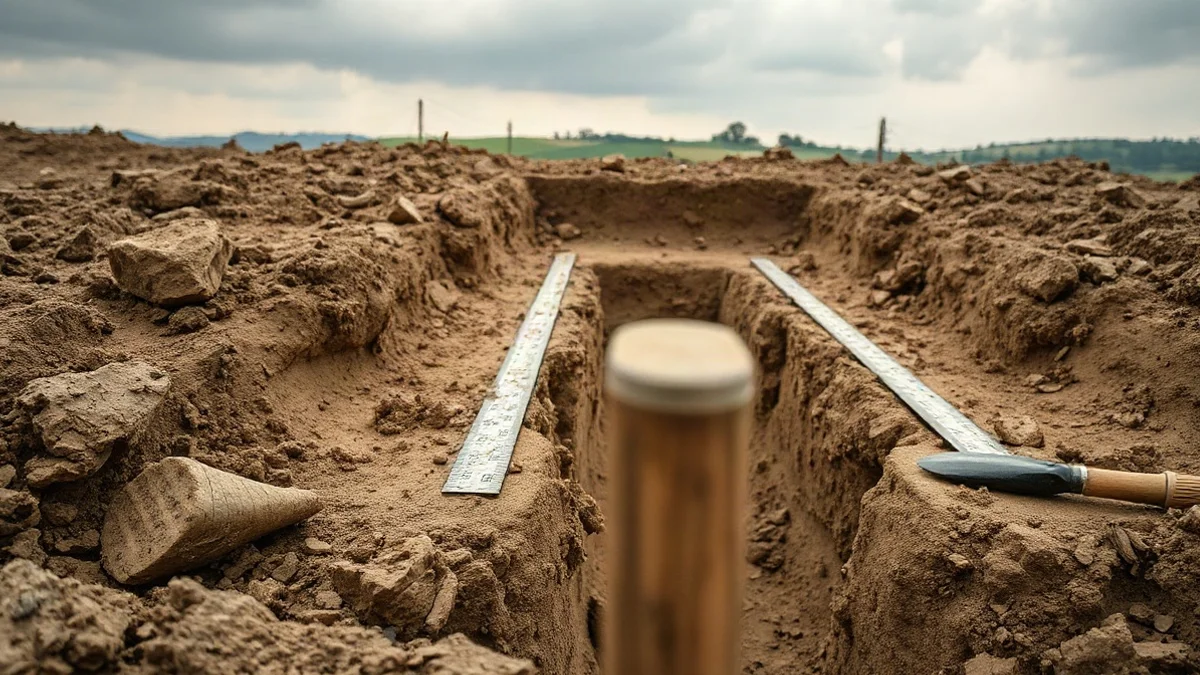
Archaeologists in Hungary have unearthed a hoard of more than 200 ancient Celtic silver coins dating back over 2,000 years, marking one of the largest such discoveries in the country in recent decades. The excavation project, conducted between 2023 and 2025 ahead of the construction of an electrical substation in western Hungary, revealed the cache buried approximately 40 centimeters underground inside a small ceramic vessel.
Discovery and Archaeological Significance
The coin collection weighs about two kilograms and holds a raw silver market value exceeding 2,000 US dollars, though researchers emphasize that its historical rarity makes it effectively priceless. The site was previously part of an agricultural farm where plowing had occasionally exposed isolated coins over the years. During the recent pre-construction surveys, archaeologists first identified scattered coins before conducting metal-detector sweeps that pinpointed the main treasure vessel.
Eszter Kreiter, an archaeologist at the Hungarian National Museum, noted during a press conference that such a find is exceptionally rare in Europe, with the last comparable discovery in Hungary dating back to the late 1960s. The silver pieces are modeled after Greek tetradrachms, an early large silver currency introduced in the late sixth century BCE. These Celtic imitations belong to the Velm type, named after a fortified Celtic hillfort, or oppidum, located roughly 15 kilometers to the west.
Iconography and Surrounding Settlement History
Each coin features a stylized head on one side, likely depicting the Greek god Apollo, while the reverse side displays a helmeted horseman and a horse. Excavations near Szombathely in western Hungary have uncovered evidence of thousands of years of human settlement at the location. Among the associated artifacts are a nearly millennia-old polished stone chisel used for woodworking and a peacock-eye-patterned glass bead that appears to have belonged to a necklace from the sixth or seventh century BCE.
Kreiter explained that in subsequent centuries, a Roman villa was constructed over the site without disturbing the buried silver hoard. Although the villa was demolished long ago, the archaeological team successfully reconstructed its floor plan, including the hypocaust subfloor heating system, and recovered a Roman brick bearing the footprint of a dog. All retrieved artifacts are slated for museum exhibition.
Historical Context of Celtic Coinage
According to the National Museum of Wales, the Celts were Iron Age tribes sharing loosely related Proto-Indo-European languages who inhabited much of central and western Europe from approximately the 10th to the first century BCE. Celtic Gauls were ultimately defeated by Roman forces led by Julius Caesar at Alesia in eastern France in 52 BCE, while ancient Britons were also of Celtic origin.
Numerous modern ethnic groups, including indigenous the Irish and the Bretons along the coasts of France, trace their ancestry to the Celts, a region often referred to as the Celtic fringe of western Europe. British numismatist Christopher Howgego, an emeritus professor of Greek and Roman numismatics at the University of Oxford, has noted that Celtic tribes in the Carpathian Basin—encompassing modern-day Hungary and Romania—began minting their own silver currency after mercenary soldiers encountered coins while serving in Hellenistic armies in Greece and Macedonia.
Howgego observed that these Greek-inspired Celtic coins blended classical portraits with distinctive indigenous designs. Because these tetradrachm imitations held high intrinsic value, they were rarely used for everyday purchases and were instead accumulated as wealth or deposited as ritual offerings.
Parallel Events in Ancient Judea
At the very time these silver coins were being concealed in a small jar in central Europe, pivotal developments were unfolding in Judea that shaped Jewish history. This era corresponded to the Hasmonean dynasty, which emerged following the Maccabean Revolt against the Seleucid Empire and the religious decrees of Antiochus IV Epiphanes.
In 164 BCE, Jewish insurgents purified the Second Temple in Jerusalem and restored its ritual services, an event commemorated during the festival of Hanukkah. The independent Hasmonean kingdom subsequently expanded and consolidated its power under leaders such as John Hyrcanus and Alexander Jannaeus. Consequently, while an unknown individual was hiding a fortune in silver coins in central Europe, a sovereign Jewish dynasty was already ruling in the Land of Israel, centuries before the destruction of the Second Temple by Roman forces in 70 CE.