Mossad Faces Internal Turmoil and Mass Departures Under Roman Gofman
Mossad faces unprecedented internal turmoil and mass departures of senior officials under Director Roman Gofman, who has brought in external advisors and revived controversial Gaza resettlement plans.
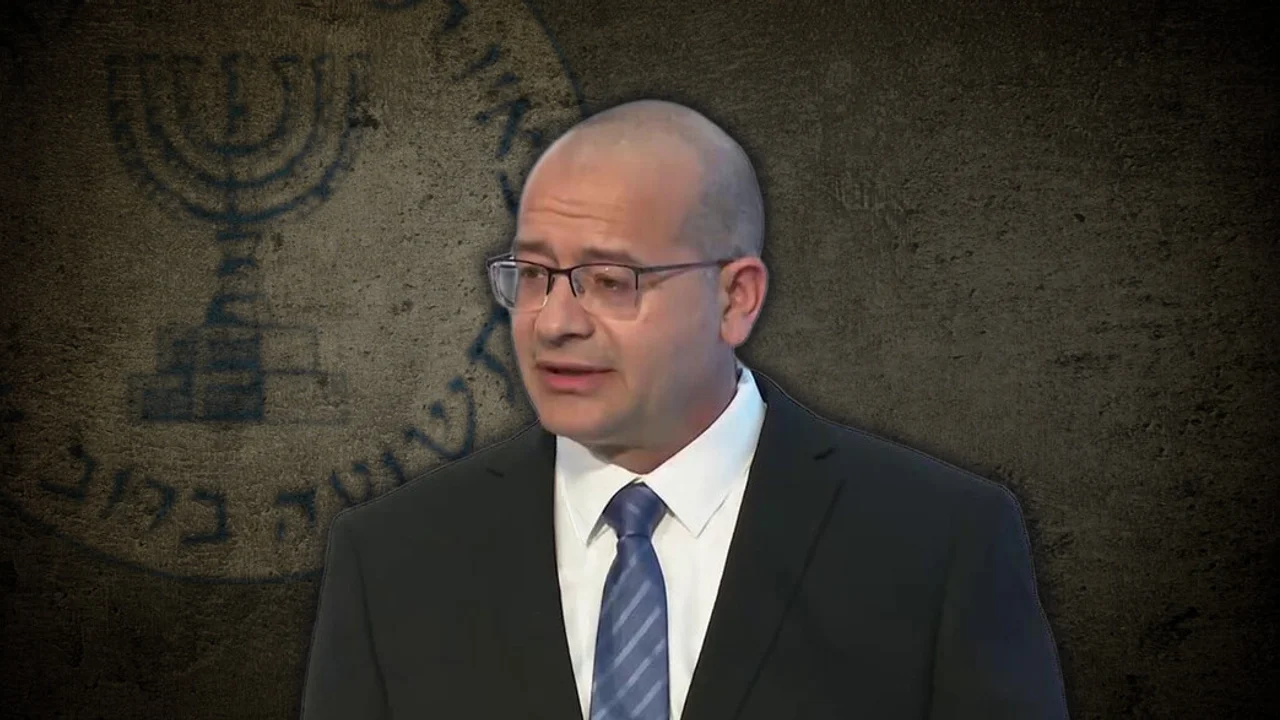
A major leadership shake-up at the Mossad under the command of Director Roman Gofman has triggered internal turmoil, mass departures of senior intelligence officials, and sharp criticism from former agency chiefs. Nearly six months after taking the helm, Gofman has replaced key department heads with external figures, including businessmen, academics, and advisors with close ties to Prime Minister Benjamin Netanyahu.
Unprecedented Departures at the Top
The wave of changes has led to the ousting or resignation of several elite intelligence figures. Among those who left are the deputy director of the Mossad, the head of the Intelligence Directorate, the head of the Iran Division, and the head of the Operations Directorate. Two additional department heads are reportedly on their way out, including the internal agency comptroller.
Critics from within the intelligence community argue that bringing in outsiders without prior intelligence backgrounds damages the agency's operational core. Former officials noted that while the Mossad was functioning at peak efficiency—highlighted by operations such as the pager blasts—the current administration is dismantling institutional knowledge and replacing career professionals with loyalists.
The Controversial Gaza Resettlement Project
One of the most contentious initiatives spearheaded by Gofman involves exploring voluntary migration options for the population of Gaza. Recalling a former official who was previously sidelined, Gofman tasked him with coordinating efforts to identify countries willing to absorb displaced Gazans. This project has sparked fierce debate among top department heads, with some labeling the initiative a dangerous political crossing of lines.
Critics warn that dragging the intelligence agency into highly polarizing political matters compromises its operational mandate. Past attempts to introduce such plans under previous leadership were unanimously rejected by senior officials who viewed them as unviable and detrimental to Israel's regional standing.
External Advisors and Strategic Shifts
The inclusion of external business figures and political advisors in classified Mossad forums has also caused deep unease. For the first time in the agency's history, private citizens linked to political circles are participating in top-tier security discussions. While supporters argue that fresh perspectives and economic advisors are vital to preventing strategic blind spots, veterans condemn the move as an unprecedented breach of security protocols.
At the same time, Gofman's aggressive push regarding Iranian regime change—including reported diplomatic outreach in the USA coordinated with Prime Minister Netanyahu—has faced skepticism. Many intelligence insiders view these ambitious geopolitical maneuvers as unrealistic, contrasting sharply with the agency's traditional reliance on calculated, precise tactical operations.