Retiring Rafael CFO Moshe Lipel on Defense Budgets and US Aid Realities
Retiring Rafael CFO Moshe Lipel reflects on 41 years in Israel's defense establishment, discussing state debts, foreign subsidiaries, and the need for an IPO.
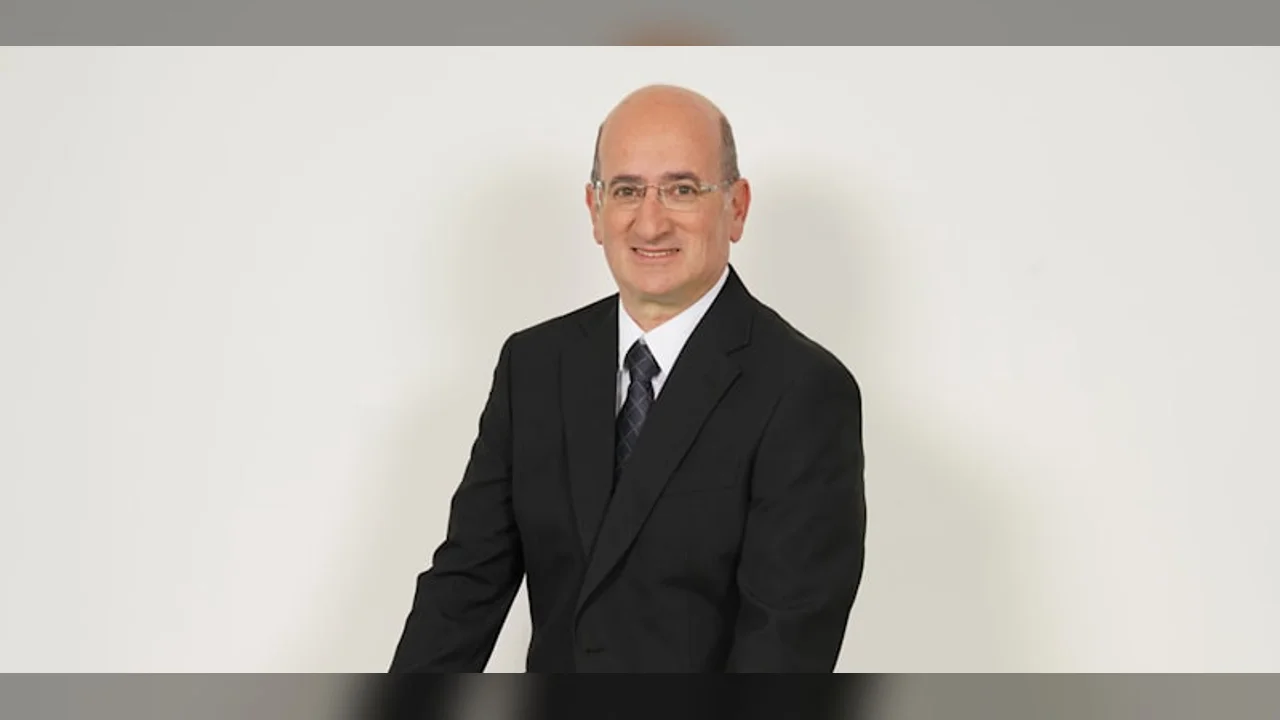
Moshe Lipel has concluded a remarkable 41-year career in Israel's defense establishment, stepping down from his role as Chief Financial Officer of Rafael Advanced Defense Systems. Reflecting on decades at the heart of state budgetary decisions, Lipel offered an exclusive interview discussing relations with the Ministry of Finance, the shifting dynamics of US military aid, and the strategic imperative for state-owned defense firms to go public.
Navigating Ministry of Tensions and State Debts
Starting as a young captain in the corps of the Financial Advisor to the IDF Chief of Staff, Lipel eventually rose to the rank of Brigadier General and served as the financial advisor himself from 2004 to 2007. Over the years, he witnessed massive budgetary expansions, including the 10 billion shekel injection following the Second Lebanon War. Addressing current state debts to major defense suppliers, which hover around 20 billion shekels, Lipel pointed out that the government relies on cheap credit rather than prompt payments.
"The State of Israel has found a solution where it does not pay, which means cheap credit. For Rafael, this translates into significant interest costs, or foregone interest I could have earned on my own money. The ministry understands this and there is a willingness to compensate the company, much like Elbit Systems was compensated."
Despite these financial friction points, Rafael experienced exponential growth under his watch. Net profit surged from 429 million shekels in 2021 to 1.35 billion shekels last year, while the order backlog leaped from 1.36 billion shekels five years ago to approximately 5.39 billion shekels in 2025. Lipel praised the banking system's strong support for the defense sector, noting that robust financial stability helped navigate turbulent macroeconomic conditions.
Expanding Global Footprint Through Subsidiaries
A pivotal element of Lipel's tenure was restructuring Rafael's extensive network of subsidiaries. Upon taking office, he consolidated dozens of subsidiary accounts into the primary financial statements, transforming potential administrative burdens into lucrative assets. Today, roughly one-third of Rafael's profits stem from these overseas entities.
Subsidiaries allow the defense contractor to bypass political hurdles and register transactions as local in strategic markets across Europe and the United States. Key international holdings include Rafael USA, DND in Germany, and joint ventures such as EuroSpike alongside Rheinmetall and Diehl, as well as EuroTrophy in partnership with KNDS and GDELS. This strategic architecture shields the company from currency fluctuations and secures stable revenue streams in a challenging geopolitical climate.
The Urgency of Going Public
As a fully state-owned enterprise, Rafael faces regulatory caps that limit subsidiary ownership to 50% and require government approval for mergers and acquisitions. Lipel stressed that an initial public offering is no longer optional for a company aspiring to scale further, especially when competing for talent against tech giants like Nvidia.
"We need an offering as a company that wants to develop and grow. There are quite a few difficulties and roadblocks in a fully state-owned, unlisted enterprise, including the ability to recruit employees. While we offer attractive salaries within the government ecosystem, we cannot compete with signing bonuses and salaries offered by Nvidia."
Advocating for a phased approach, Lipel supports an initial listing targeting institutional investors. This incremental step would unlock crucial tax incentives for research and development, streamline procurement regulations, and provide much-needed human resources flexibility.
Re-evaluating US Military Aid and Defense Independence
Addressing the broader macroeconomic landscape, Lipel weighed in on discussions surrounding the potential conclusion of US military assistance under current bilateral agreements. Having grown significantly over the past two decades, the Israeli economy is well-equipped to absorb structural shifts in foreign aid.
"The state will manage without US aid, and perhaps it will even benefit the domestic defense industries," Lipel remarked. While Israel cannot achieve absolute self-sufficiency in complex hardware like fighter jets, reducing reliance on foreign supply chains could foster greater local manufacturing independence and ease the burden on state resources as the defense budget exceeds 140 billion shekels.
Looking ahead, Lipel plans to leverage his decades of financial and operational expertise by serving as a consultant and corporate director, focusing particularly on supply chain management in the security sector.