Study Reveals How Human Demographics Shape Ibex Reporting in Mitzpe Ramon
A new study reveals that ibex hotline reports in Mitzpe Ramon are heavily influenced by resident demographics and hotel guest habits rather than animal presence alone.
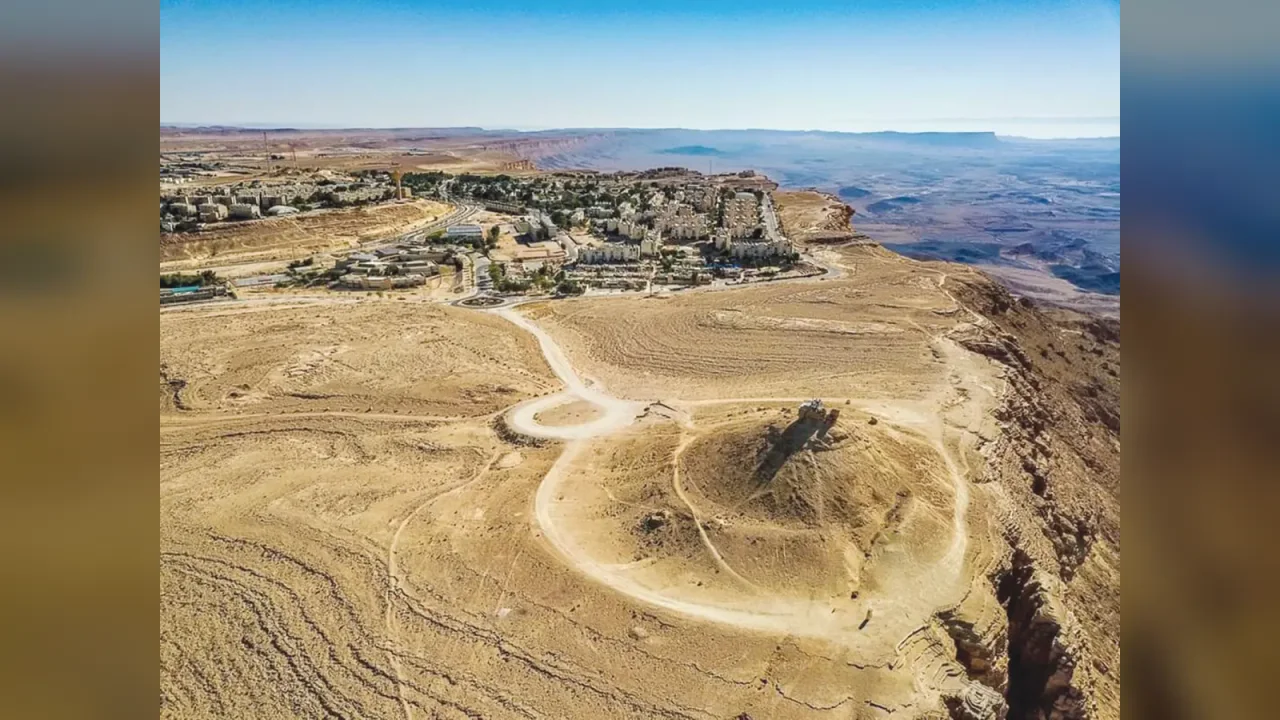
Nubian ibex roaming through Mitzpe Ramon have become an iconic local symbol and tourist attraction, but sharing urban spaces with wildlife creates complex challenges. When ibex become entangled in fences, feed on hazardous waste, or wander onto roads, environmental organizations and local authorities rely heavily on hotline reports from residents and visitors to manage situations on the ground. Until now, conservation research focused almost exclusively on wildlife movement and ecological attractants, but a new study published in the journal Ecology and Environment examines the human side of the equation: the people who place the calls.
Researchers from Tel Aviv University, the Technion, and the Steinhardt Museum of Nature History analyzed 228 wildlife incident reports involving ibex in Mitzpe Ramon, collected by the Israel Nature and Parks Authority between 2015 and 2021. Using a computer-based spatial prediction model, the research team generated two separate maps. The first was an ecological distribution map predicting where ibex are likely to be found based on vegetation, building density, and proximity to the Ramon Crater cliff. The second was a socio-ecological distribution map predicting human-wildlife interactions based on socioeconomic ratings and neighborhood population density.
Discrepancies Between Neighborhoods
Comparing the two maps revealed surprising gaps in reporting patterns across different urban areas. In older, less affluent residential neighborhoods bordering the crater, researchers documented a high presence of ibex but very few hotline reports, a phenomenon classified as underreporting. Conversely, northern and more affluent neighborhoods recorded a high probability of reports relative to actual ibex presence, representing overreporting.
Erans Schwarzfuchs, a researcher from the School of Zoology and the Department of Sociology and Anthropology at Tel Aviv University who led the study alongside Prof. Daniel Orenstein, Dr. Dror Ben-Ami, and Prof. Tamar Dayan, emphasized that municipal authorities often treat resident complaints as precise ecological indicators. Hotline reports reflect not only animal behavior but also the socioeconomic characteristics and reporting habits of the human population in each neighborhood.
The Beresheet Hotel Phenomenon
Reporting discrepancies reach their peak and highest complexity around the Beresheet Hotel complex. The study reveals that the hotel functions as an isolated island in two distinct ways. For the ibex, it acts as an ecological island providing essential resources scarce in the arid desert environment, including open swimming pools, lush green landscaping, and waste food sources. For humans, it functions as a social island where hotel guests and management operate differently from local town residents.
"Our hypothesis is that the reporting gap in the hotel area stems primarily from the stark difference between local residents and guests," explains Schwarzfuchs. "Guests have different expectations and varying tolerance thresholds, and their enthusiasm, expressed for example through feeding ibex, can lead to negative impacts on animal welfare."
Managing Human-Wildlife Coexistence
Study findings offer practical directions for managing human-ibex interactions in Mitzpe Ramon and other desert settlements. At the hotel level, researchers recommend targeted measures such as restricting ibex access to swimming pools through fencing or covers, adopting desert landscaping that discourages foraging, and enhancing guest education on wildlife coexistence. At the municipal level, authorities should reinforce Mitzpe Ramon's unique identity as a community living in harmony with ibex through environmental education programs.
This research aligns with a parallel study conducted by the same team on wild boars in Haifa. Both urban studies demonstrate that wildlife management in populated areas cannot separate ecological factors from social dynamics, requiring a symmetrical understanding of both animals and human residents.