Government Companies Authority Warns Water Tariff Capping Threatens Mekorot
The Government Companies Authority warns that capping water tariff hikes threatens Mekorot's financial stability, forcing heavy debt reliance. The Water Authority rejects the claims, citing strong market access and long-term regulatory mechanisms.
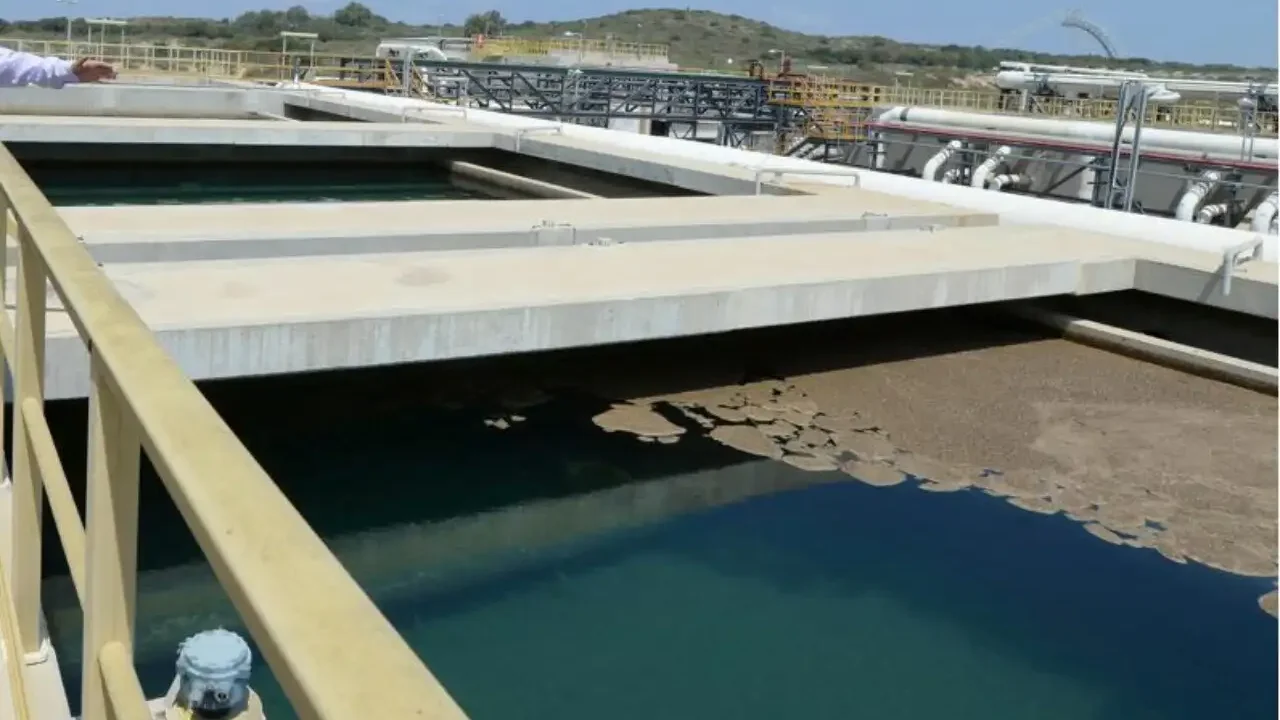
The Government Companies Authority has issued a stern warning to the Water Authority, stating that restraining water tariff increases poses a "real risk" to the financial stability of the national water company, Mekorot. Water tariffs are projected to rise by only 2.3% in January, but the Companies Authority argues that Mekorot is shouldering the cost of this containment policy through mounting debts and financial strain.
Financial Pressures and Capital Market Debt
In a sharp letter addressed to Water Authority Director Hezi Lipschitz, Senior Deputy Directors Yaniv Edri and Elinor Damari cautioned that current tariff mechanisms force Mekorot to accumulate debt. The company is required to raise approximately 2 billion shekels in bonds during 2027 to finance development plans and refinance existing debt, while equivalent funds owed by the Water Authority are repaid gradually over decades. Because the water sector operates as a closed economy, tariffs are designed to cover all operational, developmental, and administrative expenses. When tariffs prove insufficient, the resulting deficit is recorded as a "regulatory asset" in financial statements, which takes up to twenty years to recover.
This structural gap forces Mekorot to continually borrow from the capital market. The situation has intensified following a sharp write-down of Mekorot's asset values—including infrastructure and pipelines—due to revised regulatory rules set by the Water Authority. Following recommendations from a committee led by Prof. Eugene Kandel and a subsequent public hearing, the Water Authority altered its methodology for calculating returns on Mekorot's projects and revenues. This dispute prompted Mekorot to take the unprecedented step of filing a petition with the High Court of Justice against its own regulator.
Asset Write-Downs and Executive Compensation
The resulting regulatory changes triggered substantial financial losses, with Mekorot writing down 1.4 billion shekels of its asset value last year and an additional 83 million shekels in the first half of 2026. Consequently, the company's leverage ratio climbed to 71.5%, exceeding the 70% threshold established by a financial robustness team comprising representatives from the Treasury and other regulatory bodies. The Companies Authority warns that this elevated leverage increases financing costs, threatens future development plans, and even precluded senior executives from receiving performance bonuses because the company ended 2025 in a net loss.
"This situation is unacceptable, damages the company's financial stability, and transfers an external financing burden onto its shoulders," Edri and Damari wrote, emphasizing that Mekorot cannot be expected to expand operations independently while carrying such liabilities.
The Water Authority Response
Rejecting the criticism, the Water Authority maintained that the accumulated amounts do not constitute unpaid debt but rather a long-standing structural regulatory mechanism. Officials noted that Mekorot successfully raised over 1.7 billion shekels in June 2026—double its target amid nearly 3 billion shekels in market demand—while retaining its elite ilAAA credit rating from S&P Maalot. Furthermore, the Water Authority explained that spreading repayments over decades prevents current consumers from shouldering the entire cost of infrastructure projects meant to serve future generations.