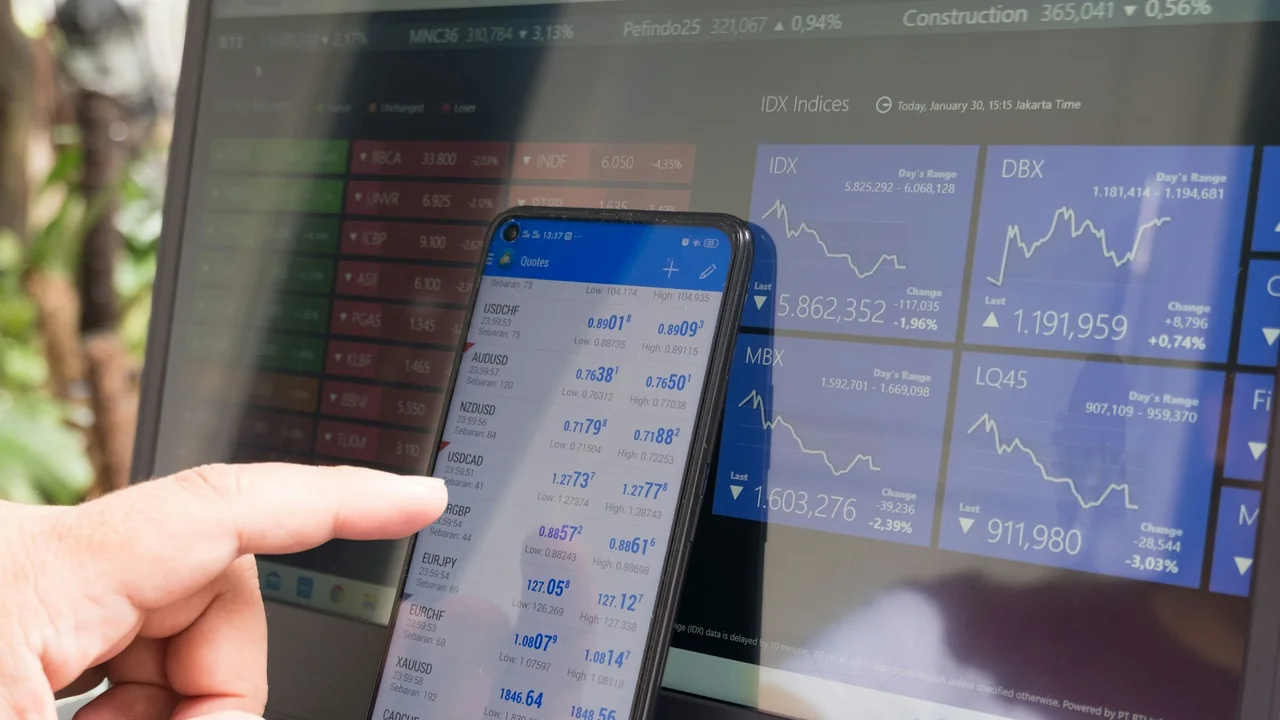
Wall Street and Tel Aviv Bounce Back on Friday Amid Market Volatility
US and Tel Aviv markets closed a volatile week with a sharp Friday recovery driven by chip stocks and strong US employment data. The US added 165,000 jobs in October as the shekel weakened against major currencies amid ongoing political uncertainty.
US markets experienced a volatile week marked by political shifts and technology sector turbulence, though Friday's recovery provided investors with some breathing room. On Friday, the Nasdaq rose 1.1%, the S&P 500 gained 0.3%, while the Dow Jones slipped 0.5%. Over the entire week, however, the Nasdaq dropped 3.4% for its fourth consecutive weekly decline. The S&P 500 fell 2.7% and the Dow Jones shed 0.9%.
Chip Stocks and Midterm Elections
Wall Street's turbulence peaked on Thursday when the Nasdaq plummeted 5.52% and the Philadelphia Semiconductor Index lost over 12%. The sell-off was triggered by US midterm election results in which Democrats secured control of both chambers of Congress. Investors grew concerned that the new legislative majority would advance strict regulations on data center construction and the artificial intelligence industry.
Friday brought a rebound, with the semiconductor index surging 4.2%. Advanced Micro Devices (AMD), Intel, and Micron posted sharp gains, while Nvidia rose approximately 3%. Despite the recovery, market analysts remain divided on whether this represents a temporary technical correction or a durable stabilization.
Tel Aviv Exchange and Foreign Exchange
Trading on the Tel Aviv Stock Exchange was similarly volatile amid domestic political uncertainty and global market headwinds. The TA-35 index plunged 3.69% on Thursday following a 1.96% drop on Wednesday. However, sentiment reversed sharply on Friday as the TA-35 surged 3.09% to close at 3,941.14 points, underscoring intense investor nervousness.
In the foreign exchange market, the shekel weakened against major currencies on Friday. The representative rate for the US dollar rose 0.85% to 3.194 shekels, while the euro strengthened 0.53% to 3.5724 shekels. These currency fluctuations reflect both domestic political uncertainty and international market dynamics, with the dollar receiving additional support from robust US employment data.
US Labor Market Resilience
According to the October employment report released on Friday, the US economy added 165,000 jobs, significantly surpassing forecasts of 60,000 to 65,000. The unemployment rate ticked down from 4.2% to 4.1%. While these figures highlight labor market resilience, they also heighten concerns that the Federal Reserve will face obstacles in lowering interest rates.
Meanwhile, the University of Michigan's consumer sentiment index rose to 51 points in November from 48 in October. Inflation expectations for the coming year eased from 4.7% to 4.3%, offering a measure of reassurance to policymakers.