Mallorca Workers Uncover Prehistoric Cave with Extinct Mammal Remains
Construction workers in Mallorca discovered a sealed 124-meter cave system containing the remains of an extinct Myotragus balearicus mammal, human bones, and ancient artifacts dating back to the Bronze Age.
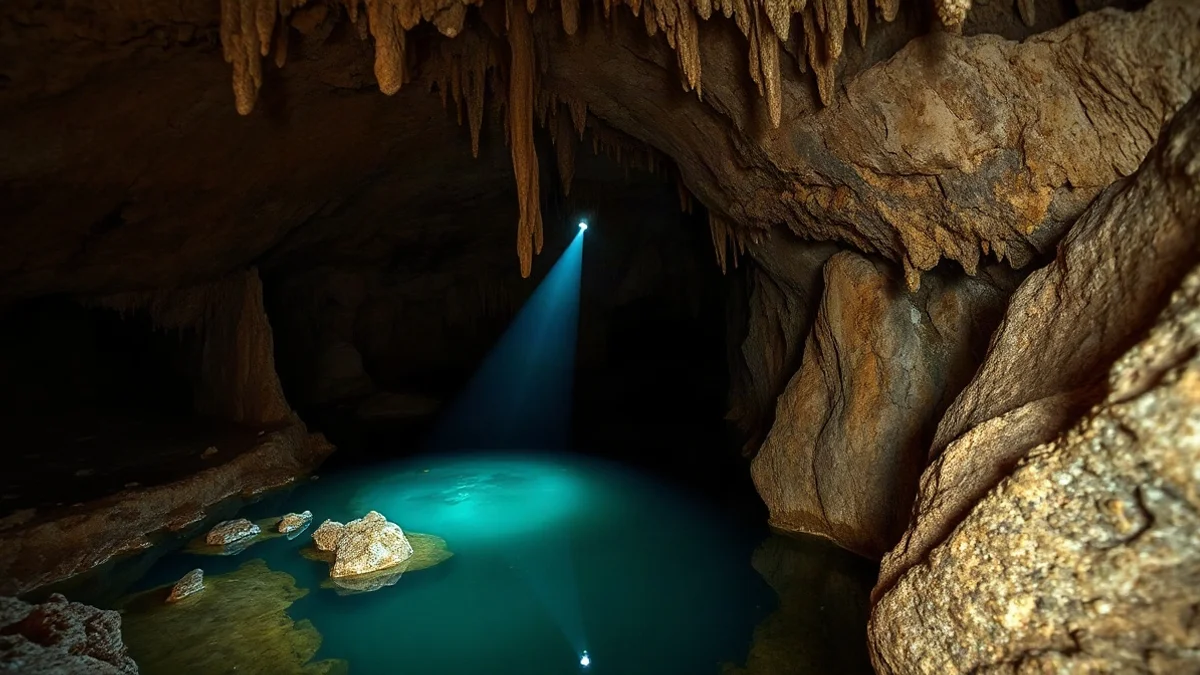
Construction workers expanding the Son Noguera industrial zone near the town of Llucmajor on the Spanish island of Mallorca have uncovered a vast subterranean cave system containing the remains of an extinct prehistoric mammal. During excavation work, workers exposed an entrance leading to a 124-meter network of passages featuring nine chambers and a small underground lake, which researchers estimate had remained entirely inaccessible since the 13th century.
The most significant discovery within the cavern is the skull of a Myotragus balearicus, an ancient mammalian species related to modern sheep and goats that evolved in isolation on the Balearic Islands. This unique creature featured short legs, forward-facing eyes, and continuously growing rodent-like incisors.
Unique Evolution and Extinction
Research published in 2009 revealed that the animal exhibited an unusually slow developmental rate compared to other mammals, reaching physical maturity at around 12 years of age while displaying bone growth patterns similar to those of reptiles. Scientists believe these specialized biological traits helped the species survive in a restricted island habitat with severely limited food resources.
Scientific models indicate that the mammal vanished approximately 4,300 to 4,500 years ago. While human colonization of the islands is widely considered a primary factor in its ultimate extinction, the exact environmental and anthropogenic causes of its disappearance remain under active scientific investigation.
Human History Inside the Cavern
Alongside the ancient mammal remains, researchers unearthed human bones belonging to an adult and a child, alongside various ceramic vessels. These artifacts suggest that the cave functioned as a burial site as early as the Bronze Age around 1500 BCE, before later generations utilized the underground reservoir as a freshwater source.
Additional relics from both the Roman period and the era of Islamic rule in Mallorca were recovered from the subterranean site. Historians and archaeologists estimate that the cave's natural entrance was finally sealed and blocked off around the 13th century following centuries of intermittent human activity.
Following the discovery, local authorities in Mallorca announced plans to grant the cave the highest level of legal protection under heritage conservation laws. The recovered artifacts are scheduled for transfer to the Museum of Mallorca once laboratory analyses are complete, while researchers prepare for upcoming excavations to uncover further archaeological secrets hidden beneath the surface.