Despite Solberg's opposition: The Supreme Court freezes the MAHASH law
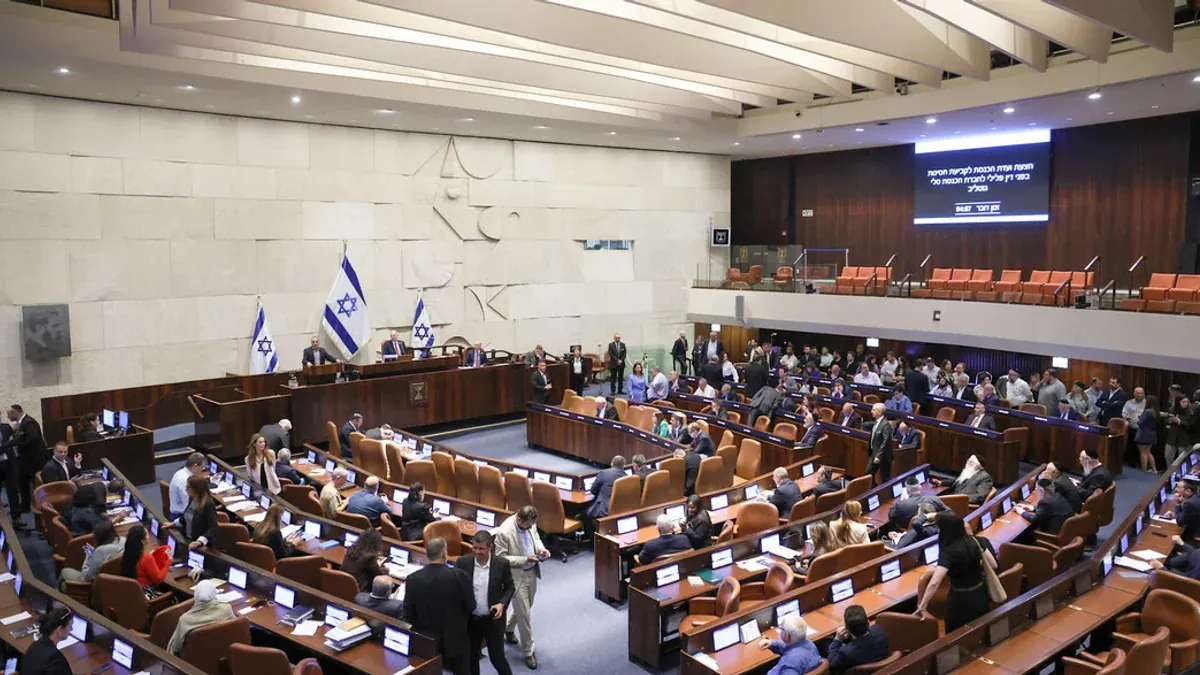
Supreme Court President Isaac Amit and Justice Dafna Barak-Erez decided to issue an interim injunction delaying the implementation of parts of the law considered one of the judicial reform laws. The Deputy President was in the minority. Minister Levin: "The decision is proof of the judges' frustration."
The Supreme Court freezes the MAHASH law: Supreme Court President Isaac Amit and Justice Dafna Barak-Erez decided to issue an interim injunction delaying the implementation of parts of the law. The Deputy President of the Supreme Court, Noam Solberg, was in the minority. Minister of Justice Yariv Levin harshly criticized the Supreme Court's decision.
In the majority opinion, the judges wrote:
"After we considered both the position of the petitioners and the Attorney General, who support granting an interim injunction due to the immediate consequences for the activity of the Department for the Investigation of Police Officers (MAHASH) and due to the election period, and the position of the Knesset and the Minister of Justice, who oppose this while emphasizing the status of Knesset legislation — an interim injunction is hereby issued, delaying at this stage the implementation of the sections."
The sections of the law that were frozen are those that can be implemented immediately, with the judges' practical decision being a complete halt to the law's implementation. This is a law that was approved in the Knesset about two and a half months ago and is considered one of the judicial reform laws — and it was passed in complete opposition to the position of the Attorney General.
In the legal system, the law is perceived as one that will accelerate the politicization of the police and turn police officers from employees working for the citizen into employees working for the government in power at that time. Furthermore, there is a fear that there will be no more corruption investigations, as police officers will fear for their promotion the higher the rank of the person being investigated.
The law determines, among other things, that the Minister of Justice will re-establish the Department for the Investigation of Police Officers in his ministry separately from the State Attorney's Office. MAHASH will be administratively and budgetarily subordinate to the minister. In addition, all employees of the department will be civilians who will receive access to all of the police's intelligence and case management systems, according to rules that will be set by the Police Commissioner in agreement with the Director of MAHASH. According to the law, as part of separating MAHASH from the State Attorney's Office and the Attorney General, all powers of a criminal nature, including the powers to delay proceedings against police officers that are currently held by the Attorney General or the State Attorney, will pass to the Director of MAHASH. However, MAHASH will continue to be subject to the general guidelines of the Attorney General and the State Attorney. It was also determined in the passed law that investigations against Shin Bet personnel will be transferred to MAHASH based on the approval of the Attorney General and the head of MAHASH.
Minister of Justice Yariv Levin harshly criticized the decision and stated:
"The Supreme Court's decision is proof of the frustration felt by a handful of Supreme Court judges, who are trying to cling to the horns of the altar. After losing their control over the Judicial Selection Committee and over the Commissioner for Complaints against Judges, the judges of the political minority in the Supreme Court are trying to protect the failing institution of MAHASH, using the method of 'a friend protects a friend'."