Inside the Multi-Million Dollar Industry of Luxury Subterranean Shelters
Elite billionaires and tech moguls are investing millions in luxury subterranean bunkers and fortified remote retreats to safeguard against global disasters, economic collapse, and societal unrest.
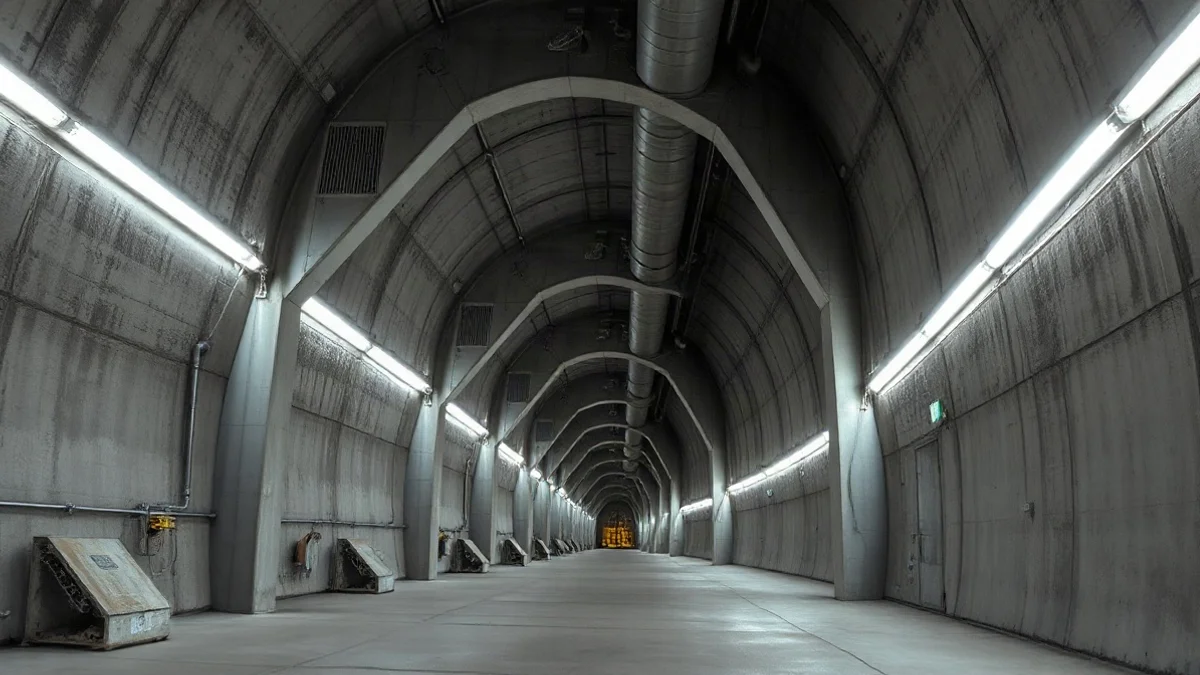
Inside the Billion-Dollar Industry of Luxury Apocalyptic Bunkers
What began decades ago as Cold War-era nuclear silos is transforming into a booming global market for luxury survival shelters. Entrepreneurs and elite developers are converting subterranean concrete monoliths into high-end residential complexes complete with swimming pools, cinemas, hydroponic farms, and medical facilities. For ultra-wealthy clients willing to spend millions of dollars, these fortified retreats offer a technological promise of security against global pandemics, systemic economic collapse, and geopolitical catastrophe.
From Missile Silos to Luxury Subterranean Living
American developer Larry Hall pioneered the luxury shelter concept when he acquired a decommissioned nuclear missile silo in Kansas for approximately $300,000 in 2008, investing nearly $20 million to transform it into Survival Condo. Spanning 15 subterranean floors with reinforced concrete walls several feet thick, the complex is designed to house up to 75 individuals for five years. Half-floor apartments start at $1.5 million, whole floors cost $3 million, and multi-level penthouses reach $4.5 million. The facility incorporates alternative power grids, advanced air filtration systems, medical bays, and independent fish and vegetable farming units, allowing residents to live off the grid indefinitely.
Tech Titans and Remote Island Escapes
High-profile technology leaders have also been linked to major disaster-readiness investments. In December 2023, media investigations detailed a massive estate being constructed by Meta CEO Mark Zuckerberg and Priscilla Chan on the Hawaiian island of Kauai. Spanning approximately 5.7 square kilometers with an estimated cost exceeding $270 million, the property features agricultural lands, water reservoirs, and a 465-square-meter subterranean structure equipped with blast-resistant doors and an emergency escape ladder. When questioned about the bunker, Zuckerberg clarified that the space was a smaller storm shelter rather than an apocalyptic doomsday facility.
Similarly, OpenAI CEO Sam Altman revealed in a 2016 interview that he maintains emergency supplies, including gold, firearms, antibiotics, water, and IDF-issued gas masks, alongside a remote property in Big Sur and contingency plans to fly to New Zealand. Silicon Valley venture capitalist Peter Thiel attempted to build a luxury lodge near Lake Wanaka on New Zealand's South Island, though local environmental authorities ultimately rejected the planning proposal in May 2024. LinkedIn co-founder Reid Hoffman estimated that over 50 percent of his fellow tech billionaires have acquired some form of disaster insurance, driven by concerns ranging from nuclear warfare and natural disasters to societal unrest sparked by artificial intelligence and economic inequality.
Commercializing Safety for Families and Communities
Beyond elite billionaires, specialized companies are mass-producing modular security solutions for affluent families worldwide. Ron Hubbard, founder of Texas-based Atlas Survival Shelters, reported a surge in inquiries following international military escalations involving Russia, Ukraine, and Iran. Among the high-profile figures exploring these systems is reality television star Kim Kardashian, who toured an Atlas subterranean cylinder during a 2021 episode of her family's program. Atlas offers modular steel and concrete shelters starting at around $60,000 for basic units, scaling up to elaborate subterranean compounds costing hundreds of thousands or millions of dollars, with operations expanding into the Persian Gulf region.
Other enterprises favor communal survival models over individual bunkers. The Vivos xPoint project in South Dakota repurposes 575 former military ammunition bunkers into a community-based survival enclave where long-term leases start at $55,000. Meanwhile, Utah entrepreneur Jason Orvis spent over a decade developing a 1,200-dunam collective homestead equipped with greenhouses, solar power systems, and 50 tons of stored grain. Orvis emphasizes practical self-reliance and community cooperation over high-tech luxury, viewing the investment primarily as a means to foster life skills and interpersonal bonds.
Engineering Complex Realities and Safety Limits
Designing subterranean luxury compounds presents formidable engineering challenges. Specialist builders note that incorporating amenities like swimming pools and indoor firing ranges requires complex mechanical ventilation, humidity control, and massive energy loads. Furthermore, experts caution that long-term subterranean habitation is not universally practical for every type of disaster. Brian Camden, a specialist in fortified construction, notes that public health authorities often recommend sheltering in place for short periods following radioactive fallout, while advising clients against planning for indefinite underground isolation without proper security protocols and multiple emergency exits to prevent structural entrapment.