Liquid Ice: The $750 Million Hydrogen-Powered Megayacht Concept Unveiled
The futuristic Liquid Ice megayacht concept features liquid hydrogen propulsion, a 7,000-nautical-mile range, and research facilities, with an estimated cost of up to $750 million.
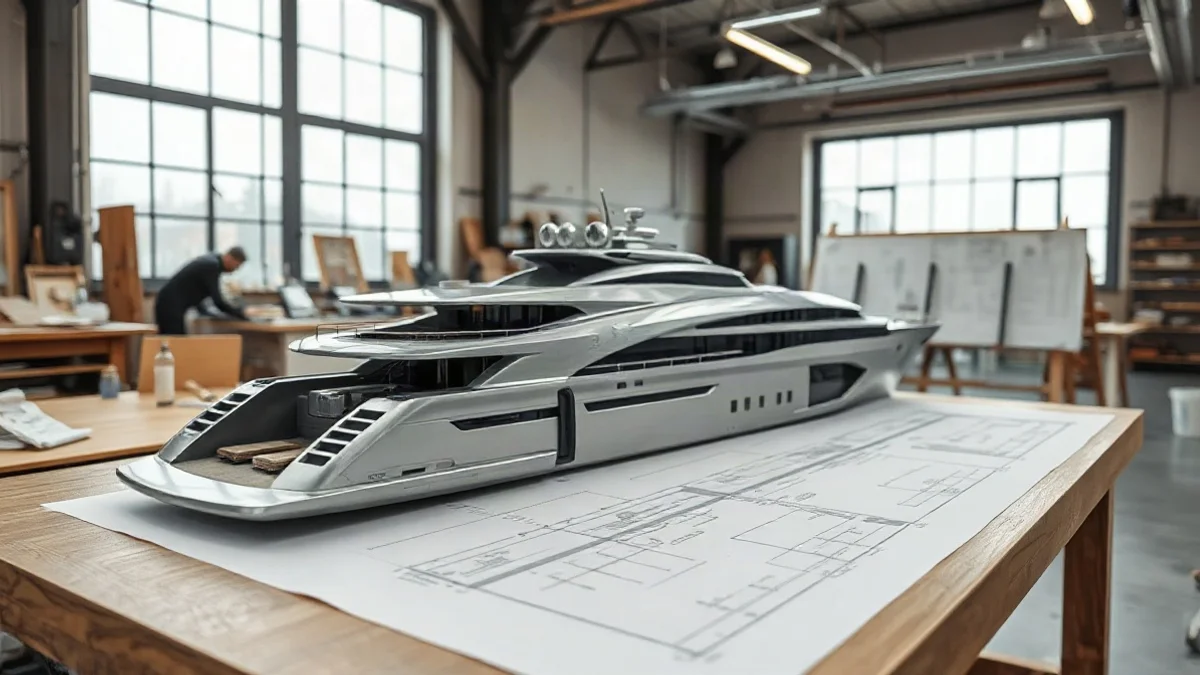
A newly unveiled futuristic megayacht concept named Liquid Ice aims to redefine luxury maritime engineering by combining an opulent floating palace with a scientific research vessel. Designed jointly by Polish studio Aria Yacht Design and German marine engineering firm Janthina Naval Architects, the 148.5-meter ice-class vessel carries an estimated price tag of between $500 million and $750 million. The ambitious project relies on an innovative propulsion system powered by liquid hydrogen and high-capacity electrical batteries, allowing it to navigate remote polar regions without depending on conventional diesel engines.
Advanced Hydrogen Propulsion System
The yacht is engineered to travel a range of approximately 7,000 nautical miles, equivalent to about 12,964 kilometers, on its alternative energy architecture. According to the technical specifications, Liquid Ice will feature two storage tanks holding a combined total of 150 usable tons of liquid hydrogen, paired with an immense 13 megawatt-hour battery system. The hydrogen will feed fuel cells to generate electricity for propulsion and onboard operations, while the batteries balance energy consumption and secure a continuous power supply.
For comparison, the renowned yacht Breakthrough, built by Dutch shipbuilder Feadship and originally ordered for Microsoft founder Bill Gates, stores approximately four usable tons of hydrogen. This means the planned system on Liquid Ice will carry nearly 38 times more hydrogen despite the new vessel being only about a quarter longer. While Breakthrough utilizes hydrogen primarily for auxiliary onboard electricity and limited operations, the new megayacht is designed to rely on it for extended, long-range voyages.
Research Facilities and Luxury Amenities
Beyond its green propulsion, the vessel is structured to function as an advanced marine research base equipped with scientific laboratories, a mission control room, and accommodations for up to 12 researchers alongside guests and crew. It will carry two deep-sea submersibles, two helicopters, three guest tender boats, and six jet skis. This deployment capability allows passengers to conduct exploratory missions and transition smoothly between sea and air without relying heavily on coastal infrastructure.
Luxury accommodations match the vessel's scientific capabilities, featuring a double-height grand saloon, a 270-degree forward panoramic observation lounge, a swimming pool, a spa complex, a gym, and a beach club. The aft section is designed as a multi-purpose deck that can transform into a tennis court or an open-air cinema, with the helicopter stored in an under-deck hangar. An enclosed glass winter garden also allows guests to enjoy panoramic vistas during extreme weather conditions.
Projected Performance and Construction Status
Published metrics indicate that Liquid Ice is planned to reach a maximum speed of 21 knots, roughly 39 kilometers per hour, with a cruising speed of 12 knots, about 22 kilometers per hour. The gross tonnage of the vessel is estimated at 13,500 tons, reflecting its massive scale and the expansive volume dedicated to propulsion systems, research facilities, and hospitality areas.
Despite the detailed specifications, industry reports confirm that a buyer, a building shipyard, approved funding, and a delivery date have not yet been announced. Consequently, the projected cruising ranges and operational performances remain theoretical design targets rather than verified sea-trial data. If realized, Liquid Ice could set a new benchmark for combining energy independence and scientific capability in the luxury yacht sector.