Researchers Send Message Through Walls Using Gravity Instead of Wi-Fi
Australian researchers have successfully transmitted and decoded the word Gravity through a brick wall using tiny variations in a gravitational field generated by a 1.8-ton elevator counterweight.
Researchers at the University of Queensland in Australia have demonstrated an unconventional communication method by transmitting and decoding a message using tiny variations in the gravitational field, bypassing traditional Wi-Fi, Bluetooth, and cables.
Experimental Setup and Methodology
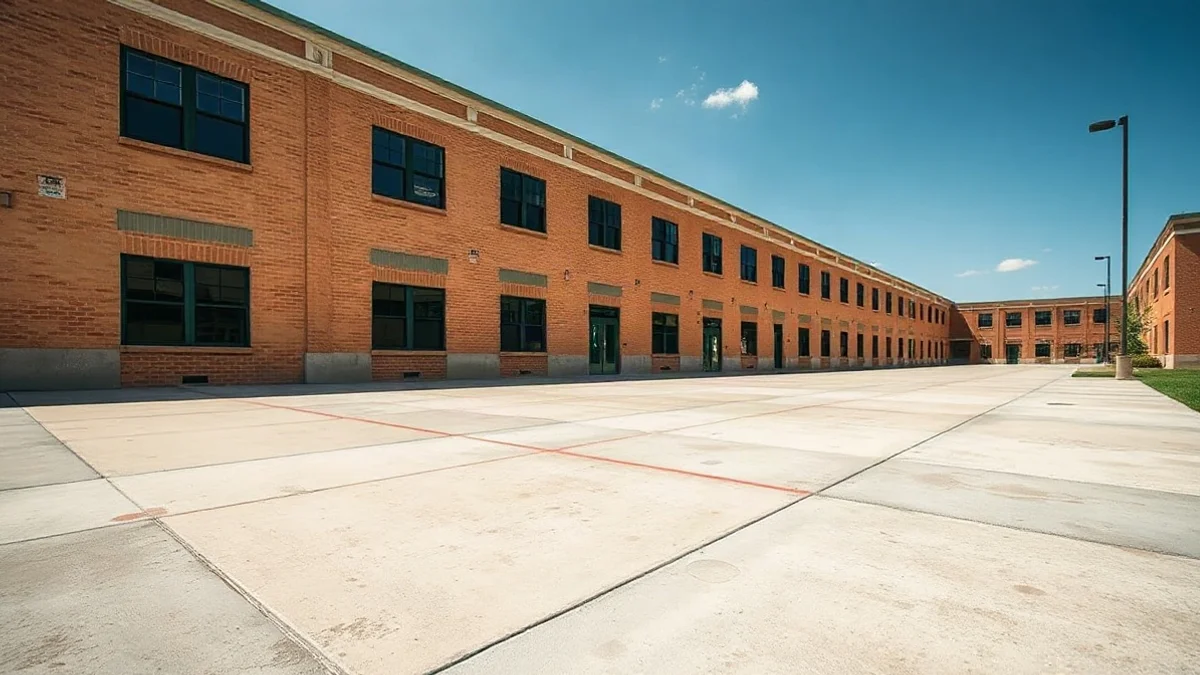
Published in the journal Science Advances, the study provides a proof-of-concept for a communication channel that normal matter cannot block in the same way it obstructs electromagnetic signals. For the experiment, the team utilized a vintage 1950s elevator inside the Parnell Building at the university, shifting its 1.8-metric-ton counterweight between two floors. Each of the two weight positions represented a different binary digit, either 0 or 1.
The movement of the heavy mass altered the surrounding gravitational field. Positioned in an adjacent restroom across a brick wall was a gravimeter, a sensitive device used to measure changes in gravitational acceleration. The instrument detected the micro-fluctuations caused by the shifting weight, enabling the researchers to reconstruct the transmitted sequence of bits.
Transmission Rate and Future Projections
The message traveled across a distance of approximately 70 centimeters. Each relocation of the weight produced a change of about 50 nanometers per second squared in the measured gravitational acceleration, a minute shift successfully captured by the sensor. The word "Gravity" was encoded into 49 bits using seven-bit ASCII characters alongside control sequences, and the captured bitstream matched the transmission exactly.
This scientific milestone came with a significant limitation, as the transmission rate stood at a sluggish one bit per minute, requiring nearly an hour to convey the message.
Prof. Andrew White noted the operational constraints of the setup:
"Our elevator was excruciatingly slow — it dates back to the 1950s — and therefore the experiment only transferred one bit per minute."
According to estimates presented in the study, employing a modern elevator and a more advanced gravimeter could increase the speed to roughly 15 bits per minute. Combining multiple improvements under ideal conditions, including a 75-metric-ton mass and superconducting sensors, could theoretically extend the operational range to about 500 meters, though these figures represent future projections rather than demonstrated performance.
Advantages and Vulnerabilities
The primary theoretical advantage of gravity-based communication is that gravitational signals cannot be easily blocked by placing ordinary matter in their path. The researchers highlight potential applications for transmitting short messages in environments where radio communication is restricted, such as heavily shielded facilities or sealed bunkers.
However, the ability to penetrate walls does not render the transmission immune to interference. The study notes that the movement of other masses near the receiver can disrupt measurements, and could potentially be exploited to jam or spoof the signal. At this stage, the significance of the experiment lies in the foundational demonstration that information can be encoded into gravitational field fluctuations and extracted on the opposite side of a barrier, though overcoming severe speed, range, and equipment constraints remains necessary for practical applications.