The shooting at aid and medical workers - and the death of Hind Rajab: IDF investigations - and the decisions
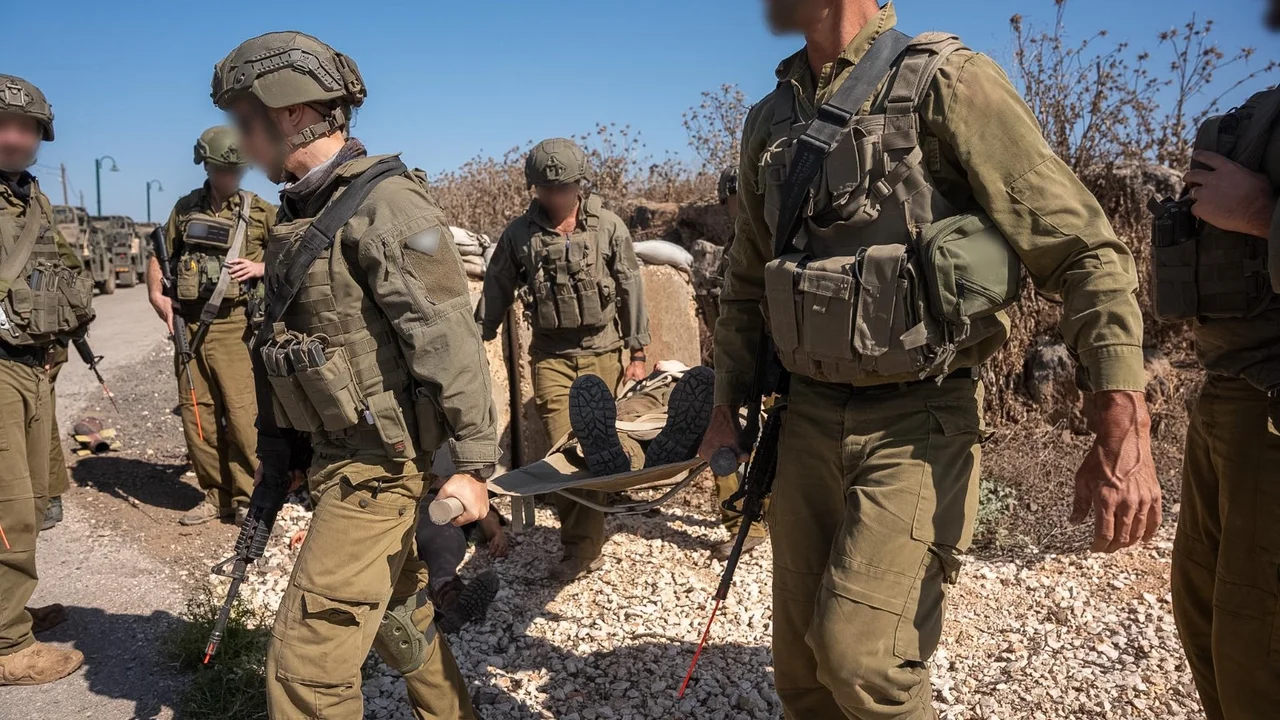
After causing an international outcry, the IDF General Staff's fact-finding mechanism has completed its review of five significant incidents that occurred during the fighting in Gaza - and has made legal decisions. Regarding the deaths of "World Central Kitchen" workers and the shooting at "Doctors Without Borders" personnel, it was determined that there is no suspicion of a crime. The death of Hind Rajab and her family, as well as the "killing of the paramedics" - will be transferred to the Military Police Criminal Investigation Division (MPCID). Also: the incident in which the need for disciplinary measures will be examined.
The General Staff's fact-finding mechanism, which examines exceptional operational incidents, published its conclusions today (Wednesday) regarding five significant events that occurred during the "Iron Swords" war, including the deaths of "World Central Kitchen" and "Doctors Without Borders" workers, the incident defined as the "killing of the paramedics" in Rafah, and the death of Hind Rajab. "As part of the IDF's obligations in accordance with international and Israeli law, the IDF investigates exceptional incidents that occurred during the fighting," clarified the IDF Spokesperson, who published the decisions made by the Military Advocate General.
The General Staff mechanism was established several years ago in accordance with a government decision and operates according to the Chief of Staff's directive. Its role is to conduct factual assessments of exceptional operational incidents using a variety of tools and methods. The IDF Spokesperson stated that its investigations serve as an aid to IDF commanders for the purpose of making command decisions, and also form the basis for decisions by the Military Advocate General regarding the question of opening a criminal investigation. Since the outbreak of the war in the October 7 massacre, the mechanism has finished investigating about 150 incidents and transferred them for the Military Advocate General's review. In dozens of incidents, the Military Advocate General decided to close the files, and the perception was that an action taken in good faith in the middle of a battlefield should not be examined through criminal lenses.
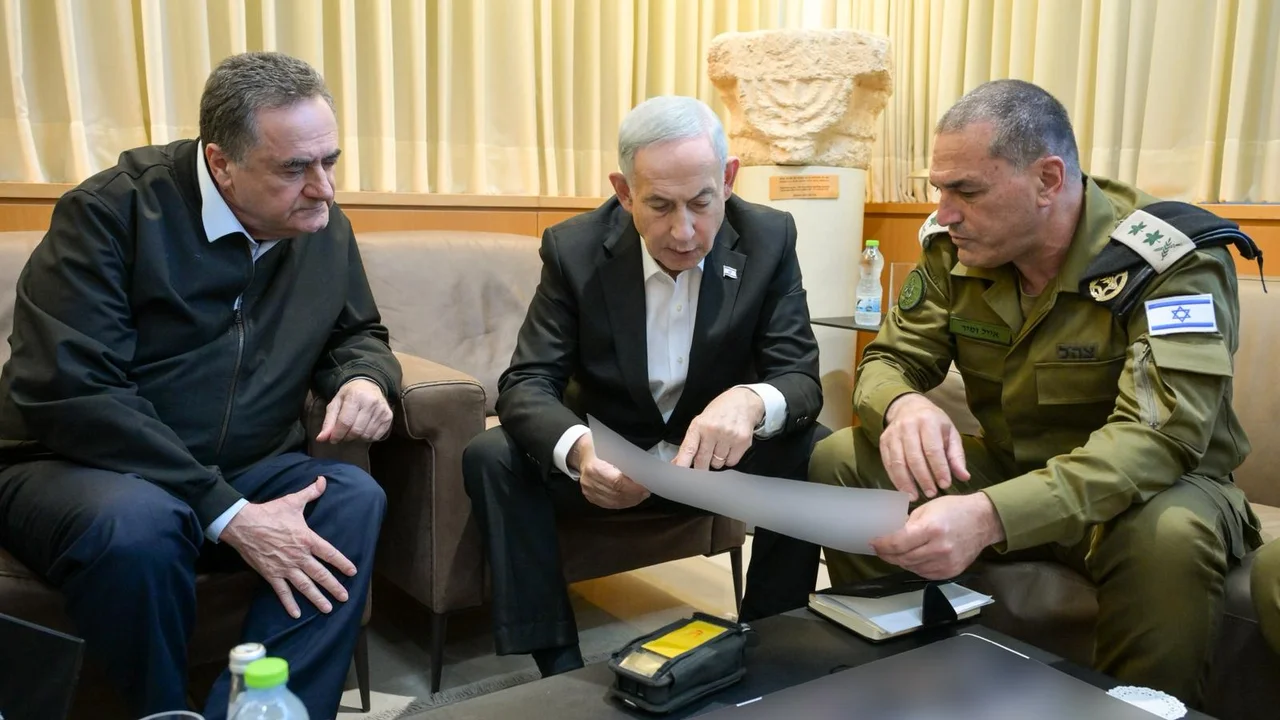
The Military Advocate General, Major General Itai Ophir, who took office less than a year ago, was required to deal with the issues. Security sources explained that "the Military Advocate General believes in the principle of complementarity, which says that if a specific case is investigated in an independent investigation by a sovereign state, then international courts cannot intervene." Sources in the Military Advocate General's office clarified that this is not why investigations are opened - "but the investigation itself also provides protection to the soldiers." Recently, legal decisions were made regarding five incidents that received public resonance.
The deaths of WCK organization workers
On April 1, 2024, during the activity of the international aid organization WCK ("World Central Kitchen") to transfer humanitarian aid in the Gaza Strip, fire was carried out towards the organization's vehicles, which led to the deaths of seven of its workers. The findings of the investigation conducted in the IDF revealed that on that day, the forces identified an armed man on a truck of the humanitarian aid convoy, on its way to a warehouse for the purpose of unloading the aid, and also identified vehicles surrounding the trucks in a way that matched - according to their assessment and based on the accumulated operational experience of the operational elements involved - a scenario of the Hamas terrorist organization taking over the convoy.
It also emerged that WCK organization workers hired an armed security force to accompany the convoy until the end of the operation and protect it from being taken over by armed elements in Gaza, and this due to the delay until the night hours of the convoy's departure from the pier where the aid was collected, towards the warehouse where it was supposed to be unloaded. The investigation noted that the presence of this armed security force on the organization's vehicles was not coordinated with IDF elements. In the IDF, they explained that after the convoy arrived at the designated warehouse, several people were identified - incorrectly as it turned out in retrospect - as armed, and they entered vehicles that began to travel south from the warehouse, while deviating from the route that the organization had coordinated in advance with the IDF. Accordingly, and in the shadow of the force's assessment on the ground that the convoy had been taken over by elements of the Hamas terrorist organization even before it arrived at the warehouse, the operational elements mistakenly believed that military operatives of Hamas were in the vehicles - and therefore attacked the vehicles.
Also, the investigation revealed that during the course of events, IDF elements tried to contact representatives of the WCK organization to verify their assessment that these were indeed not the organization's people in the vehicles. "These attempts, during the half hour in which the tracking of the convoy vehicles that were held as those containing Hamas operatives as mentioned - did not succeed," the IDF reported.
Following the difficult results of the incident, and after the findings of the initial investigation were presented to him shortly after the incident, the then-Chief of Staff Herzi Halevi decided to dismiss a brigade fire officer in the rank of Major, alongside another officer in the rank of Colonel in the reserves - the Chief of Staff of the Nahal Brigade, Nochi Mendel. In addition, disciplinary reprimands were given to the Southern Command Commander Yaron Finkelman, the Nahal Brigade Commander Colonel Yair Zuckerman, and the 162nd Division Commander Brigadier General Itzik Cohen, as all three were responsible for supervising the implementation of orders. In light of previous professional acquaintance with one of those involved in the incident, the Military Advocate General refrained from personally making a decision in this case, and it was made by the Chief Military Prosecutor. The IDF stated that after examining all the findings of the factual assessment, it was decided that despite failures in the process of forming the assessment that Hamas operatives were traveling in the vehicles - the commanders' decisions did not cross the criminal threshold, and this in view of the sequence of suspicious signs and the totality of the operational circumstances. Therefore, it was decided that there is no reasonable suspicion of committing a criminal offense that justifies opening an investigation or taking additional steps against any of those involved in the incident beyond those taken as mentioned above.
The shooting at the ambulance - and the death of Hind Rajab
The second investigation for which decisions were presented was the shooting at the Hamada family's vehicle and at an ambulance - and the deaths of nine people, including the girl Hind Rajab, in Gaza City in January 2024. The findings of the investigation regarding the shooting at the Hamada family's vehicle revealed that IDF forces carried out fire towards the vehicle, which was approaching them while traveling against the direction of evacuation published in a prior announcement by the IDF Spokesperson to the residents of the area. According to reports published then, it was the vehicle of the Hamada family, and as a result of the shooting, five of the vehicle's passengers were killed, and two remained alive - Hind Rajab and her cousin Layan.
After carrying out the shooting, following a phone call to rescue elements, in which the two girls participated at first, and later Hind alone, the travel of a Red Crescent ambulance was coordinated for the purpose of evacuating the casualties. However, according to the claim, upon the arrival of the ambulance at the scene of the incident, a shell was fired at it, and the two paramedics who were traveling in it were killed. After a few days, the bodies of the seven members of the Hamada family were extracted from the vehicle, including the bodies of Hind and Layan. Also, the bodies of the two paramedics were extracted from the ambulances. The IDF stated that after examining the findings and in view of alleged failures regarding the issue of coordinating the movement of the Red Crescent ambulance, it was decided to order the continuation of the examination of the incident by way of an MPCID investigation. In view of the decision, it is not possible to expand beyond what is stated above regarding the aspects arising from the mechanism's investigation.
It should be noted that Hind Rajab called the Red Crescent, and her calls for help were recorded. The conversations were published around the world after she was not located and it was unclear whether she was shot by the IDF or not. For 12 days it was unknown what happened to her fate, and her name and face were published in the world. In February, they found her dead with her family in the car, together with the two paramedics who were sent by the Red Crescent to rescue her. Later, a fund was established in her name - the "Hind Rajab" legal fund - which files lawsuits against IDF soldiers for suspicions of war crimes in Gaza.
"Killing of the paramedics" - will be transferred to MPCID
The third investigation published concerned the deaths of 15 Palestinians, including medical personnel and a UN worker in Tel al-Sultan last March. As part of an ambush carried out by IDF forces on Hamas operatives, three shooting incidents occurred towards various rescue vehicles: a fire truck, ambulances, and a UN vehicle. The findings of the investigation revealed that an IDF force was preparing to carry out a raid on the Tel al-Sultan area in the early morning hours, and in this framework, the ambush force was positioned on a central access route, as a supporting effort towards the raid. The force on the ground that was positioned in the ambush fired towards a vehicle that was identified by it as a Hamas vehicle.
About an hour later, it was written in the investigation, the force was reported about five vehicles moving towards it at high speed. Later, the vehicles stopped very close to the force, and its passengers disembarked from the vehicles quickly - and it was decided to open fire towards them. About a quarter of an hour later, the force fired towards another vehicle that arrived at the scene. In retrospect, it turned out that the vehicles that were hit in the first and second shooting incidents were a fire truck and ambulances, and the vehicle that was hit in the third shooting incident was a Palestinian UN vehicle. In the three shooting incidents, 15 Palestinians were killed as mentioned, some of them medical personnel and paramedics. The IDF clarified that the investigation revealed that among the dead, six were identified as affiliated with Hamas. After the incident, it was noted, the force decided to crush the vehicles and cover the bodies with an iron net. In light of the findings of the investigation, as they were presented to the Chief of Staff shortly after the incidents, the Chief of Staff instructed that a disciplinary note be recorded for the commander of the 14th Brigade, and that the deputy commander of the Golani reconnaissance unit finish his role. After examining the findings of the investigation, and since it was found that carrying out the shooting during the incident raises a reasonable suspicion of committing an offense, it was decided to continue the examination by way of an MPCID investigation.
The structure that was attacked - belongs to "Doctors Without Borders"
The fourth investigation concerned an IDF attack aimed at a structure in Khan Yunis, in which two women were killed and seven other people were wounded. In the attack, which was carried out in February 2024, a single shell was fired towards the structure - which turned out in retrospect to belong to the "Doctors Without Borders" organization. The mechanism's investigation revealed that in the evening hours of that day, as part of the movement of operational elements on an axis located near Hamas combat complexes - over which operational control had not yet been achieved and it was estimated that enemy forces were expected to be present in it and its surroundings - the force noticed a structure located at a topographical point dominating the axis on which they were moving. In view of the operational elements' assessment that the structure was in a location that posed a threat to them, a single shell was fired towards one of its windows, from which the force estimated it would be possible to observe their movement on the axis and harm the force.
The findings of the investigation indicated that unlike other structures in the vicinity, the lights in the structure were off and no movement was observed in it or its surroundings before the shooting was carried out. The IDF emphasized that at the time of the decision to carry out the shooting, the operational elements did not have up-to-date information about the structure being affiliated with the "Doctors Without Borders" organization. Also, the IDF noted that it was not possible for the force to identify the signage on which the organization's name and symbol appeared, which was on the front of the structure, as the force was moving on an axis located behind the structure. It was also reported that after examining the findings of the mechanism's investigation, it was found that the forces carried out fire for a military purpose, towards a target they estimated that due to its location, in the described circumstances, constitutes a military target. Also, despite the gap that arose from the fact that the forces did not have the up-to-date information that the structure was a known site of the "Doctors Without Borders" organization, it was found that in the described operational circumstances - there is no place for further examination by way of an MPCID investigation. Alongside this, in view of certain failures discovered in the attack process, the Military Advocate General ordered an examination of the need to take disciplinary measures against any of those involved.
Warning fire towards the "Doctors Without Borders" convoy
The fifth investigation for which decisions were published dealt with fire carried out in November 2023 towards vehicles of a "Doctors Without Borders" organization convoy, which led - according to the claim - to the killing of two of the convoy's passengers. The mechanism's investigation revealed that the day before the incident, coordination was carried out with IDF elements for the movement of the organization's personnel convoy from Gaza City to the organization's clinic in Khan Yunis. The convoy, which included five vehicles, moved on a one-way evacuation axis that was coordinated in advance as mentioned, and arrived at noon that day at an IDF checkpoint.
The coordination for the convoy's movement was finally approved shortly before the convoy set out on its way, before it was known to the force at the checkpoint. The investigation noted that the convoy vehicles were asked to wait until the matter was clarified, and therefore they waited near the checkpoint. After some time, since they feared they would not manage to reach their destination before dark, they decided - on their own initiative and without proper coordination - to turn back and return to the organization's facilities in Gaza City. This, it was noted, even though IDF elements clarified to the convoy members that the checkpoint's operating hours had been extended, and that it was not possible to coordinate the convoy's return to Gaza City at that time. They also clarified to them that the convoy's return to Gaza City at that time could not be carried out within the framework of approved coordination - and that such movement could endanger them. The investigation wrote that with the convoy's movement back to Gaza City, IDF forces that were positioned on the movement axis identified the convoy of vehicles that was approaching them while driving - against the direction of the area's evacuation movement as approved. Following the identification of the movement that was not coordinated - and which aroused suspicion of a threat to the force - the soldiers carried out warning fire several times. In the IDF, they emphasized that no fire was carried out towards the vehicles themselves but for warning only - in order to prevent the vehicles from approaching them. Despite this, the vehicles continued their journey and arrived at a distance of a few hundred meters from IDF forces, in a way that was perceived by the force as a real threat, among other things, against the background of the terrorist organizations' activity patterns in the area. Accordingly, the force members fired additional warning fire, towards the road, in accordance with the orders, at a distance of about one hundred meters from the location of the vehicles, which at that time were at the head of the convoy. According to the investigation's findings, it was found that there is a possibility that the deaths of the two convoy passengers were caused as a result of being hit by shrapnel from the warning fire. Alongside this, the IDF emphasized that it was not found that direct fire was carried out towards the convoy at any stage. In these circumstances, it was found that the incident does not raise a reasonable suspicion of committing a criminal offense.