IDF documentation soldiers - and operations in dangerous zones: "To be at the forefront and capture the story"
IDF documentation soldiers took part in two aid missions - to Colombia and Venezuela, following powerful earthquakes. Sergeant H., who documented the rescue operations: "The goal was to document the forces, but what caught me was the residents."

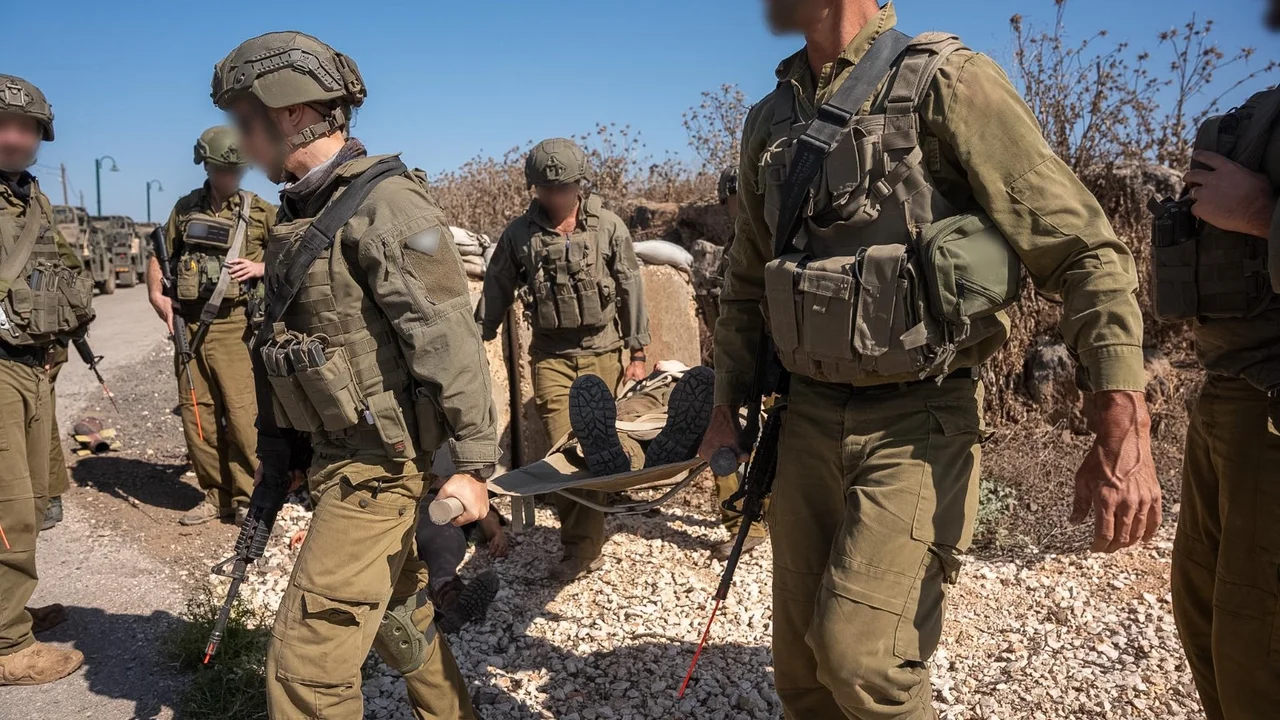
A still camera, a video lens, and an assault rifle. This is the main equipment with which IDF documentarians set out to the most complex scenes: from combat centers in the Gaza Strip, Lebanon, and Syria, to disaster-stricken areas on the other side of the world.
Recently, IDF documentation soldiers completed participation in two international aid missions: the "Brit Re'im" (Alliance of Friends) mission to Colombia following a severe earthquake, and a rescue mission for earthquake victims in Venezuela. Through the lens, they captured not only rescue and engineering operations but also human drama, quiet diplomacy, and the encounter between green uniforms and local citizens.
In Colombia, Sergeant H. and Sergeant Y. found themselves at the heart of search and rescue efforts in the city of Cali. The mission, numbering about 80 rescue, engineering, and technology experts from the Home Front Command in cooperation with the Ministries of Defense and Foreign Affairs, worked shoulder to shoulder with local forces.
"Getting off the plane as a regular soldier alongside reservists and senior officers for such a mission is a historic event," recalls Sergeant Y. "I was attached to the commander of the National Search and Rescue Unit. In one scene, where a building collapsed near a hospital, I filmed the overall situation over the commander's shoulder. You could see the destruction, but also the dozens of local citizens who mobilized to help with the clearing."
For Sergeant H., who was at the central scene at a high-rise residential building, the human angle was the main thing. "Our goal is to document the forces, but what caught me was the mobilization of the residents," she says. "The rescue teams and population officers met the families, knew them by their names, and every time a missing person was found, we knew exactly who we were rescuing. These are moving moments that are etched in the pictures."
Alongside direct assistance in locating 29 missing persons and scanning over 100 buildings, the visual documentation captured the breaking down of barriers. "At one scene, a local family came up to us, smiled, and gave us 'high-fives'," says Sergeant Y. "This stood out especially against the backdrop of pro-Palestinian demonstrations that had been in the area earlier. The connection created in the field was purely a human hand reaching out, and it was expressed in the most authentic hugs possible."
During 12 days in Colombia, the team produced over 1,000 photos and video clips, including vertical shooting adapted for digital platforms. "Beyond the operational importance, our photos are also intended for the families back home," concludes H. "The soldiers left home in the middle of August to save lives on the other side of the world. The photos show their loved ones the magnitude of the significance."
For Staff Sergeant Sh. (22), who just finished his military service, the mission to Venezuela was part of a chain of operational events since November 2023. The mission went out as an examining and consulting body after two earthquakes to formulate an engineering plan for building rehabilitation.
"We arrived in a country without official diplomatic relations with Israel, but in the field, we met huge sympathy," says Sh., who was attached to the mission commander. "The role of a documentarian is to be at the forefront and extract the story. I documented high-level meetings with the local government and the engineering work of sorting buildings."
One of Sh.'s significant documentations captured the moment when the local Minister of Infrastructure informed a family that their home was not fit for living and must be demolished. "You see all the emotion and human turmoil of a family losing a home, and on the other side, IDF soldiers who come and hug them. It is the most human encounter that can be."
Sh. represents a new generation of operational documentarians who operate deep in enemy territory. During his service, he documented operational activities in Gaza, Syria, and Lebanon, up to the peak moment when he documented the return of live hostages.
"Moving from the Strip and Syria to a civilian aid mission is a conceptual change," concludes Sh. "In combat, the soldiers are happy to see the camera; it boosts morale. When I saw my pictures integrated into newspaper covers or documented the hostages returning home, I understood that this is history in real-time. The camera is not just a reporting tool, it is the definitive testimony to the IDF's work."