Reservists' wives after the recording that stirred the web: "Support for exemption is a knife in the back"
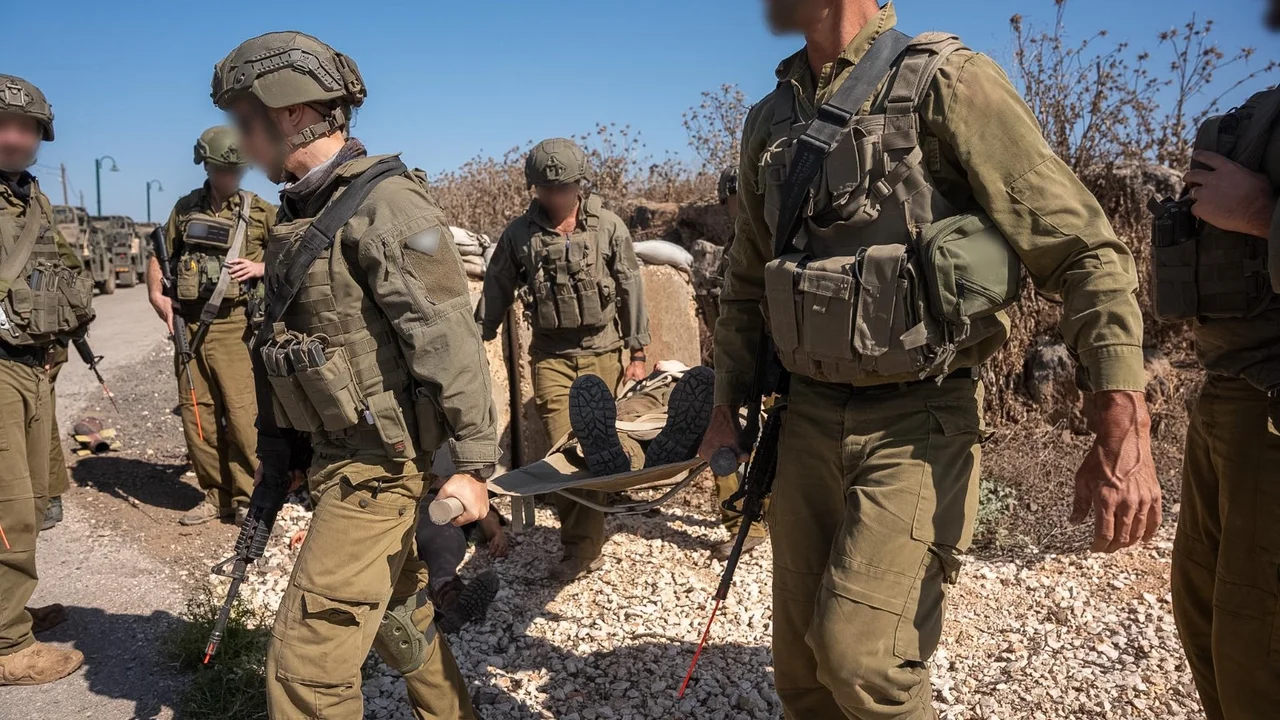
Their spouses are on their sixth round of reserve duty since October 7, and they are living in a state of daily breakdown. Emuna Klein Bar-Noy and Maayan Shitrit told Ynet about raising children without their husbands ("every round is a practice for life without a father") and criticized MKs who support exemption from recruitment for the ultra-Orthodox: "How can they call themselves Zionists?"
The recording published this week by Bat-El Sananes, in which she was heard crying after her husband received another call-up order for reserve duty, surfaced the feelings of thousands of reservists' wives and received a wave of solidarity responses. In an interview with the Ynet studio, Emuna Klein Bar-Noy and Maayan Shitrit, whose spouses are on their sixth round of reserve duty, spoke about the burnout, the sense of burden, and the anger toward the government regarding the recruitment issue.
"I honestly debated whether to agree to be interviewed," admitted Klein Bar-Noy. "These feelings of breakdown are very hard to stay in, because a moment later I have to continue taking care of the children. My husband has been inside for a month and a half, he has more than 50 days left, we are not even halfway through. We are already so deep in the breakdown that it is impossible to explain it."
Shitrit said that Sananes' feelings are well known: "This is a feeling that all reservists' wives know. Of course, there are days like this. In the last two rounds, they also extended our order, because there is no one to carry the burden. It has already become a routine - there is no one to replace, so they just extend, and everything is on our backs, on our couple and family time." Both said that they are nearing the end of the sixth round of reserve duty. When asked how many reserve days her husband had accumulated, Shitrit replied: "I stopped counting. Each round is between 100 and 120 days."
"Stabbing us in the back"
Klein Bar-Noy described the gaps in daily life compared to other families: "We are already in our third consecutive year without family time. Even on holidays, my husband will not be home. Seeing families spending time while we are again choosing the people of Israel - and at the same time, people are simply stabbing us in the back." She directed most of the criticism toward the Knesset members who support the exemption from recruitment: "I have nothing left to say to the ultra-Orthodox Knesset members. I want to speak to the Knesset members who claim they are Zionists. How can you call yourself a Zionist and at the same time cooperate with people who do not care about the future of the State of Israel?". According to her, the sense of inequality is what deepens the burnout: "We give with love to the State of Israel what is needed, but taking so much from us and at the same time not obligating others to give - this is what makes all the difficulty unbearable."
"The children are practicing for life without a father"
Klein Bar-Noy also told about her children's coping with the father's prolonged absence: "Every morning and every night the children ask if Dad will be here. I think that both I and the children feel that from round to round we are simply practicing for life without a father. This is not the home we imagined, but in the meantime, we are carrying the burden and other people are simply turning their backs on us."
Shitrit identified with the words and described the difficulty at home: "My daughter also constantly asks 'Where is Dad?'. She says sadly 'Dad is in the army'. He cannot always even answer a phone call, if he is in an operation or on a mission. It is very difficult." She also criticized the issue of exemption from recruitment: "I see this as a real desecration of God's name. My husband knew how to set time for Torah both in Gaza and in Lebanon. It does not contradict military service. We are one people, and everyone must carry the burden."
At the end of the interview, the two called not to leave the reserve families alone. Emuna turned to the reserve families: "Share with friends and family what you are going through. If a government does not arise that will take real steps to ease the burden, the next decade of our children will also look like this." Maayan turned to the general public: "Open your eyes and see the wives of career soldiers and reservists. We are no longer asking for help, because we feel uncomfortable. But a hot meal, folding laundry, or any small help - these are the things that make all the difference."