The Horn brothers are back together in the stands: 'When I returned to Toto-Turner, I had no voice. My body didn't function'
In the tunnels of Gaza, Yair Horn would mentally construct lineups and quietly hum Hapoel Be'er Sheva songs to keep his sanity. Then came the release, the helicopter over the stadium, and the return to the stands that didn't feel complete while his brother Eitan remained behind. Only now, for the first time since October 7, the family is starting the season at full strength: 'Of course, we must not forget the fallen soldiers, my friends from the kibbutz and from captivity who were murdered. Among them were football fans who will never be able to come to the stadiums again.'
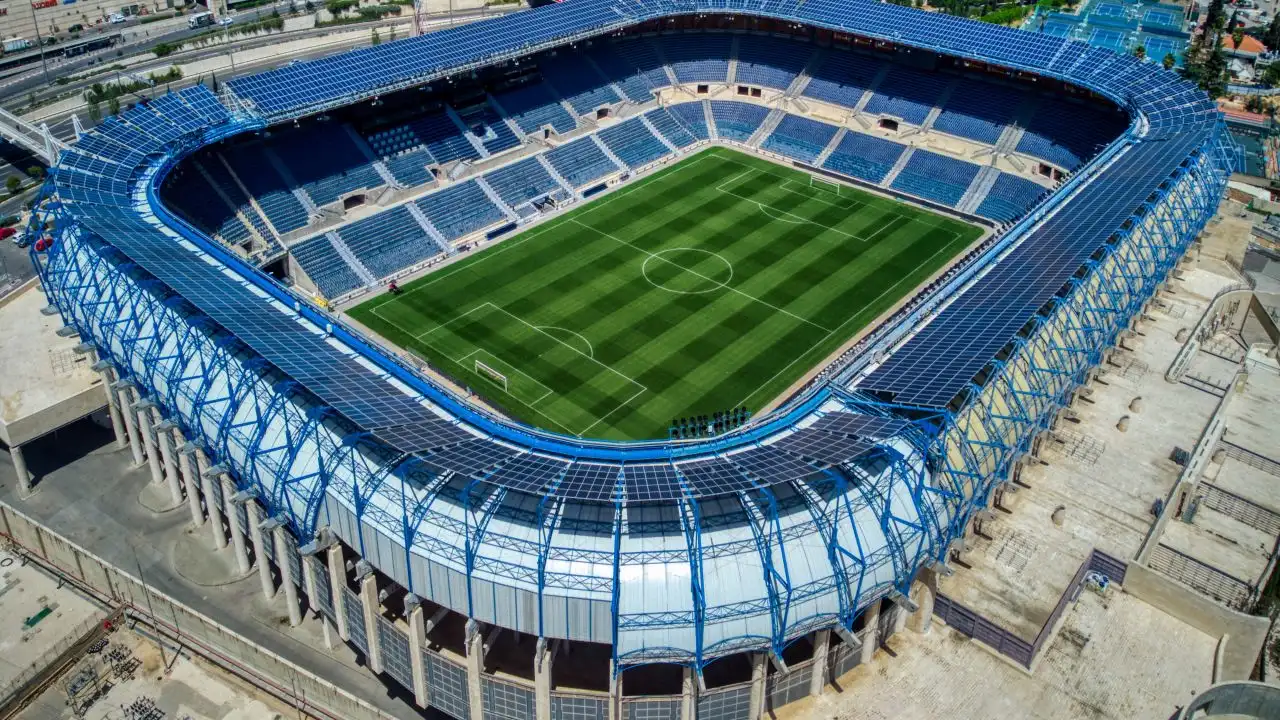
On Saturday morning, February 15, 2025, Yair Horn from Kibbutz Nir Oz was released from Hamas captivity along with two other hostages, after 498 days. A few hours later, when the helicopter flying him from the Gaza border to the hospital in the center of the country was already in the air, Horn asked the pilots to change the route slightly and fly over the Toto-Turner Stadium. Dressed in a red game shirt, he looked with excitement from above at one of the places that symbolized home for him more than anything else – the home of his beloved team, Hapoel Be'er Sheva. It was one of those rare moments of light in the sequence of turbulent days that Israel has experienced since October 7, and also a moment that illustrated how football is an inseparable part of life.
But the joy was still not complete. Horn was free, but his heart remained in Gaza: his brother Eitan was left behind. Only in October 2025 were the last living hostages released, including Eitan. Not only was the Horn family finally whole, but the southern stand also got the brothers back at full strength, including Amos, who throughout that period came to games in red shirts with pictures of his brothers. Like any fan, 48-year-old Horn is excited about the start of the league. Last year he was already a free man, but the fact that hostages were still being held in Gaza, including his brother, prevented him from fully dedicating himself to football. This time the season starts for him in a much more normal reality.
'A year ago there were still hostages, including Eitan. Since then everyone has returned. It's joyful. My whole family is together, and we are all whole and healthy,' he says in a special interview for the season opening supplement of Yedioth Ahronoth. 'But I am of course also sad about all the people we lost in the war – the fallen soldiers, my friends from the kibbutz and from captivity who were murdered. Among them were football fans who will never be able to come to the stadiums again. It meets me every time from a different direction.'
'Football organizes my schedule'
Even before the start of the league, Be'er Sheva has already managed to play quite a bit, mainly in the Champions League qualifiers. This week Horn accompanied it to Bucharest for the first playoff match against Azerbaijan's Sabah, and it is likely that he will also be with it in the return leg in Baku, hoping to see it qualify for the Champions League for the first time in its history. But with all due respect to the European cream, Horn is already waiting for the bread and butter.
'A new season is always exciting. There are new expectations. I'm already starting to get a little nervous, because I'm just waiting for the league to start,' he admits. 'I'm not a guy for the off-season. I don't find myself in it, I don't know what to do and I feel lost. Football really organizes my schedule, and I'm just waiting to get to Turner and meet the friends. This time I'm opening the season as a national champion. There's nothing to do, it's clear that it causes a different feeling. We're not starting from zero. We have a title, and we need to do our best to keep it.'
How did such a significant connection between you and your brothers to Hapoel Be'er Sheva come about?
'I'm a football fan from birth – of the Argentina national team, of Argentina's Atlanta and of Be'er Sheva. Although I never lived there, for me I am a Be'er Sheva native. In our family there is a rule: you support the team that represents the place where you were born. That's how I was raised. My parents lived then in Kibbutz Mishmar HaNegev, and I was born in Soroka. From eight months old until 20 I was in Argentina, but the support for Be'er Sheva was always there.'
Did the support for football help you in any way in captivity?
'Yes. Football helped me pass the time and think about something else. I would run lineups in my head and try to remember what number each player wore. Of course, it was forbidden to sing out loud, but in my head I would hum the songs of Hapoel Be'er Sheva. It was real guided imagery. I imagined myself in the stands, cheering. Even if only for a few seconds, these thoughts helped me feel that I was in another, better place. The thought that I am in the stands and cheering for someone else made me feel that, in fact, they are cheering for me too.'
Did you know in captivity what was happening in the football world?
'We were cut off from football. The first time we heard something was when one of the terrorists said that Kylian Mbappé had moved to Real Madrid. It really surprised us. Later we heard on the radio that the Toto Cup games had started. It was strange. I didn't understand how people were playing football during a war, when we were down in the tunnels. On the other hand, I also understand that people needed it.'
'I was bummed that Barda is no longer coaching us'
So when you were released you didn't know anything about what happened to Hapoel Be'er Sheva?
'Of course I didn't know anything. We thought all the time about what was happening with the team, but we had no idea. Before I was released, the family was told not to tell me all the news immediately and not to surprise me, because they didn't know how I would react. But half an hour after we met, one of my nephews told me that Elyaniv Barda was no longer coaching Be'er Sheva. I was bummed at that moment. 'Elia' is a great guy.'
Describe the first time you returned to watch a game from the stands and sing with the fans.
'The return to Turner was very emotional, but far from perfect, because not all the hostages were home. Going up the stairs to the stands always gives me 'goosebumps'. If there is such a concept – excellent, and if not, then I invented it. The first few times I returned to the stadiums I also had to fly to the USA to act for the release of the hostages. It was hard for me to sing. I had no strength and I had no voice. My body didn't function.'
You became one of the most famous fans in the country.
'Of course. Before October 7, only those who sat near us at Turner knew us. They knew that we always sat together in the same place since the stadium opened, with the three nephews. They called us 'the Argentine brothers'. These places were saved for me and Eitan while we were in captivity. Since I returned I only receive love.'
Tell us about the connection with the club's people.
'The club was always there. When we were in captivity, it supported the family. The players went out to the grass in shirts with our pictures, and so did the fans. The fan organization mobilized, and in general all the fans – including the veteran and well-known fan Eliyahu Bergman. Everyone helped us all the time – the professional staff and the management staff. And of course, everything starts with Alona Barkat. This explains why I feel that Be'er Sheva is one big family. After the release, my first appearance on television was with Ran Kozuch. It shows the connection.'
Did captivity cause you to get perspective as a football fan?
'I have perspective, but not because of the captivity but because of my experiences as a fan. I remember, without disparaging God forbid, games in the second league against Kafr Qasim or Kiryat Gat. We didn't even have a fan shop. Look at us today: already more than a decade at the top, with championships, cups and Europe. But above all there is a feeling of family.'
'This is my invention, all the rest are copycats'
What shall we wish you for the coming season?
'Success to Hapoel Be'er Sheva. I hope for victories, thrills and journeys. This is football, family and life.'
In conclusion, Horn asks to set one thing straight, and along the way sends a sporty and humorous jab to his friends, the survivors of captivity: 'I want to remind you that I was the first to ask to fly over the stadium in a helicopter. I invented it. All the rest are copycats. Yalla Be'er Sheva!'