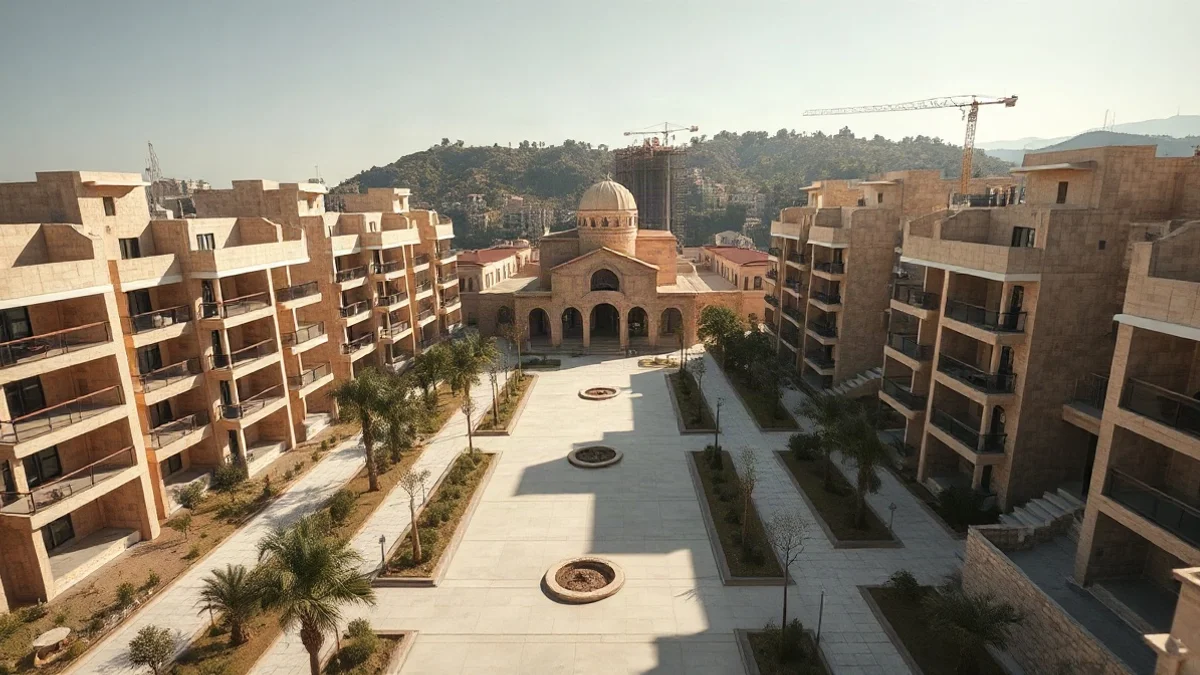
Court rejects petition: Green light for 750 apartments on the site of the Dan bus depot in northern Tel Aviv
The Tel Aviv Administrative Court rejected a petition filed by 48 residents against the project at the intersection of Raoul Wallenberg and Pinchas Rosen streets. The court upheld the use of easements to provide public access to open spaces, ruling it a proper balance between public needs and property rights.
The Administrative Court in Tel Aviv-Yafo has rejected a petition filed by 48 residents against an urban renewal plan for the construction of approximately 750 housing units at the site of the Dan bus depot in northeastern Tel Aviv, near the intersection of Raoul Wallenberg and Pinchas Rosen streets.
Judge Gilad Hess upheld the plan, which covers an area of about 38 dunams. The project involves the evacuation of the existing bus depot and the construction of a mixed-use complex featuring 15-19 story towers, commercial areas, and approximately 10.4 dunams dedicated to public buildings and open spaces.
The Legal Dispute
The core of the petition challenged the planning authorities' decision to designate about 7.5 additional dunams as open public spaces through easements rather than separate plots. Petitioners argued that this mechanism violated the TA-5000 city master plan, led to unreasonable density, and created regulatory ambiguity.
The court rejected these arguments, siding with the planning institutions and the developers, Amad Real Estate Development and Investments and the Nahor company, represented by attorneys Anat Biran, Efrat Lerner, and Mor Agiv Kashri. The ruling affirmed that the local planning committee is authorized to establish easements and that such measures are consistent with the city's master plan.
Balancing Public and Private Interests
Judge Hess emphasized that the plan allocates 18.6 dunams—roughly 49% of the total area—for public needs. The easement mechanism ensures public access while allowing the land area to be factored into building rights calculations. The judge determined that this solution "creates a correct balance between the public interest, the need for open spaces, and the property rights of the landowners."
The court also dismissed claims regarding unreasonable density, noting that 39 housing units per net dunam is acceptable for an urban complex situated near major transportation axes, the Ramat HaHayal business district, and Yarkon Park. Additionally, the court found that the petitioners suffered no actual harm from a minor flaw in the publication of traffic assessment documents.
The petition was rejected in its entirety, with the petitioners ordered to pay 18,000 shekels in legal costs. Attorney Anat Biran stated: "The ruling provides significant reinforcement to the importance of balanced and feasible planning, recognizing that broad public benefit can be achieved without disproportionately infringing on property rights."