The photographer arrived at the most talked-about family in America — and what he saw haunts him to this day
Photographer Mark Laita has been documenting the Whitaker family from West Virginia for over 20 years. Now he returns to the first meeting, the unusual behavior that left him in shock, and the dilemma that has accompanied him ever since: important documentation or exploitation?
The Whitaker family from West Virginia has become an internet phenomenon in recent years, after videos documenting their lives garnered millions of views and earned them the unflattering nickname "the family with the most extreme inbreeding in America." However, the photographer who brought their story to the general public admits that even after years of documentation, there is one encounter he simply cannot forget.
Mark Laita, a photographer and the man behind the YouTube channel Soft White Underbelly, has documented the Whitaker family for over two decades. According to family members, the history of inbreeding in the lineage began about a hundred years ago, when the descendants of identical twins Henry and John Whitaker married each other. Laita's videos, and especially a documentary he released in 2020, made the family known around the world.
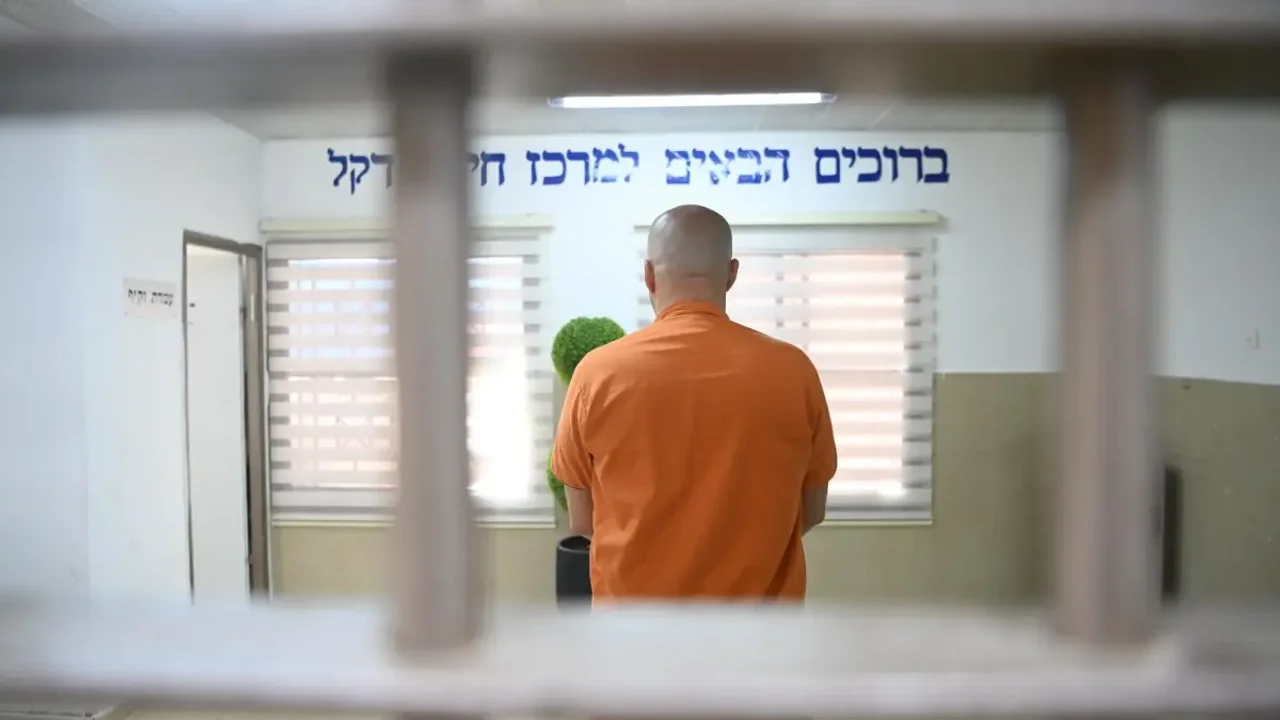
In an interview for a podcast, Laita returned to the time he first arrived at their place of residence. According to him, the road itself already felt like entering another world: the road turned into a country path, then into a dirt road, until the crew reached a trailer and a small structure in the isolated area. And then came the moment that was etched in his memory.
Laita said that some of the family members reacted to his presence in a very unusual way. According to him, some made sounds that sounded like barking at him, and another person would react every time they spoke to him by screaming, running away from the place, and kicking a trash can. He described the encounter as one of the most jarring things he had seen during his work.
The photographer admitted that already in the first film he found it difficult to communicate with some of the family members, but the connection between them continued. Over the years, he published additional videos that documented much more everyday moments: preparations for Christmas, a visit to the local fair, and even a visit to the family cemetery.
It was precisely the great success of the videos that caused him quite a bit of discomfort. Laita admitted that the documentation can feel exploitative, but argued that there is value in exposing a reality that most people do not even know exists. From his perspective, photography and documentation almost always carry within them a complex relationship between the one who photographs and the one who is photographed.
Relations between the parties also experienced crises. In 2024, Laita donated about 1,000 pounds for what he was told was the funeral of Larry Whitaker — and later it turned out, according to him, that Larry was actually alive. At a later stage, it was reported that the authorities removed three of the family members from their home in the town of Odd, with their relatives claiming they did not receive a clear explanation for the move.
The story of the Whitaker family continues to evoke a mixture of curiosity, discomfort, and criticism regarding the boundary between human documentation and voyeurism. But for Laita, at least, it seems that the impression from the first meeting has not disappeared even after decades in front of the camera.