CEO is certain: "The next crisis in the real estate market will be much more significant than the current one"
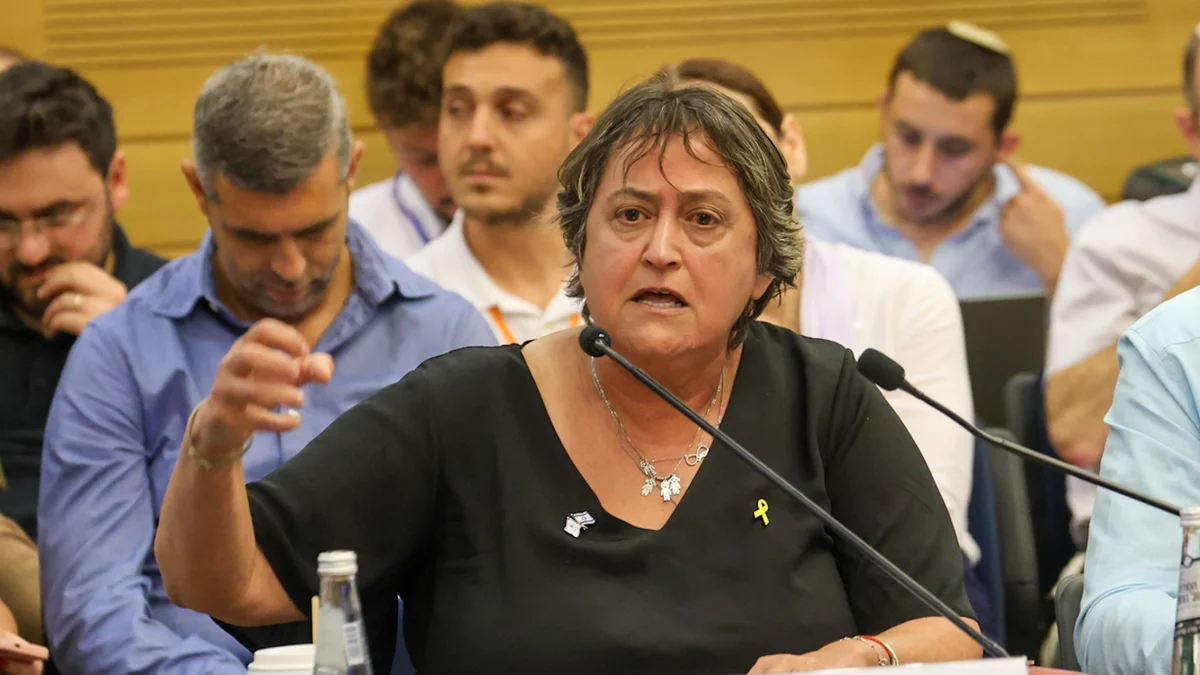
Kardan Real Estate CEO Amos Dabush believes that rising construction costs, the drying up of the land market, and a lack of government management could damage the real estate sector for years. According to him, many companies will be forced to join partners to survive.
Kardan Real Estate CEO Amos Dabush is in no hurry to call what is happening today in the apartment market a "crisis," "slowdown," or "stagnation."
"I am not in a hurry to use such bombastic words, but I can say that this is a very challenging situation, the likes of which we have not experienced in the construction and real estate industry for many years," he says in an interview with Globes.
Dabush does not fully accept the argument that the interest rate hike and the war brought about this situation. "I think the source is deeper," he says, detailing: "There is a significant decrease in the volume of apartment sales, a very significant increase in construction costs, and regulation is burdening the industry more and more. These are three components that cause our industry to be in a situation it has not been in for a very long time."
Kardan Real Estate
Market cap: 812 million shekels.
Activity: The company is promoting projects for about 27,000 housing units at various stages of planning and execution, of which over 19,000 housing units are in urban renewal.
What is the government's part in this?
"The industry has been managed for many, many years supposedly according to free market principles, and it was convenient for everyone. The Treasury became addicted to tax revenues, the authorities became addicted to betterment levies, and developers also got used to high prices, and therefore were always willing to put up higher amounts in tenders. A vicious cycle was created that is very difficult to get out of in the current situation.
Add to this the fact that since the beginning of the year, the Israel Land Authority (ILA) has marketed almost no land - in my eyes, this is one of the most important points to understand what is going to happen in the coming years.
Add to that the increase in execution costs that led to many urban renewal projects currently being re-examined.
And finally, add to that the fact that due to population growth, very many heads of authorities are challenging us both regarding public buildings, regarding betterment levies, and regarding the volume of the project. From this, you will understand that the next crisis is going to be much more significant than the current crisis."
We are still in the midst of this crisis and you are already looking at the next crisis?
"Yes. You see that the State of Israel is not managing the business. Everyone is for themselves. And if no one manages the whole issue of construction costs and the whole issue of foreign worker costs, then construction costs do not stop rising.
On the other hand, the State of Israel is not enthusiastic about lowering land prices. Now they have stopped the tenders, and I don't know for what reason. If they really have nothing to market, it is much worse. There is no CEO there. I have been in the industry for almost 30 years, so I already see it coming and I am shouting and there is no one to listen."
Amos Dabush
Personal: 50 years old, married + 4, lives in Modiin.
Professional: CEO of Kardan, holds a master's degree in real estate and a bachelor's degree in business administration. Graduate of the Technion's real estate appraisal track. Formerly VP of Marketing and Business Development at Y.H. Dimri.
Hobbies: Pilates on machines and surfing.
"After the elections, there will be more economic certainty"
Kardan Real Estate, owned by the Kardan Israel group, is a public company traded on the Tel Aviv Stock Exchange with a value of about 833 million shekels, after falling by about 25% since the beginning of the year. It engages in the initiation and development of residential projects and income-producing properties, and also executes projects through the Al-Har Engineering and Construction company.
Among its large projects currently under execution: the Island project in Bat Yam, which includes two 20-story buildings and 160 apartments; the U Towers project on Metzada Street in Bat Yam, which includes two 31-story towers and a total of 300 apartments; and the Alive project in the Park HaYam neighborhood in Netanya, which includes a 32-story tower.
In the planning and execution stages is a Pinui-Binui (evacuation and construction) project in the Mohaliver complex in Yehud, which includes 491 apartments, the Pardes Snir complex in Tel Aviv (jointly with the Reality fund), land in Hadera, and a project in the Eilat quarter in Holon.
There is something optimistic in what you are saying, because if you are talking about the next crisis, it means that between the current crisis and the next crisis there will be some period of prosperity.
"Let's wait and see what happens with the security situation, and when, God willing, the war ends, the elections end, there will be much more economic certainty here. Also, people's desire to invest will be much greater. Take Kiryat Ata or Migdal HaEmek. An Nvidia campus will be built - do you understand what that does to such an area within a radius of 30-40 kilometers from it? It sends the whole area flying upwards.
What are international companies looking for? Quiet. Once there is quiet, a lot of money flows into the country, the economy looks better, and our industry also looks much better.
But you have to manage the event. Right now they are ignoring what is happening in the industry."
Explain, in what way are they ignoring it?
"Releasing housing units to the market? It needs to be managed. Releasing foreign workers to the market? It needs to be managed. Regulation needs to be managed. It cannot be that every municipality decides for itself what it does. It doesn't make sense. Is the Ministry of Interior responsible for local government? Let there be uniform rules for everyone.
It cannot be that in one authority it is like this and in another authority it is different. There need to be uniform rules. And it cannot be that the state disclaims everything.
For example, local authorities are not willing to pay a salary to plan examiners, so what do they do? Control institutes. Who does it fall on? On the developer, who has to pay thousands of shekels per apartment to have it checked. Why? Because there is no manpower to check in the municipality. It is an unmanaged business, and in the end, it rolls over to the price of the apartment."
In the government, they thought that privatizing the plan check would shorten the permit times.
"Well, did the time for a permit shorten? No. But the story is not the control institutes. This is one problem out of a thousand problems that exist in regulation. Everything is cumbersome. When you have a toothache, you need a root canal, you don't need to put a filling on top. But with us, every time they put a different filling, and it's a pity."
We see apartment prices dropping a little, but not more than that for now. Why?
"Because not all companies are desperate. It depends on the stage the project is in. Because if today you are building a project and you have another four-five years until occupancy, you are not in a hurry to lower the price. Many things can change during this time. Today, because most construction is high-rise, construction takes much more time than in the past, and therefore you have more air as a developer. You don't have to hurry.
Also, not everyone wants to recognize a loss. That's why you don't see the drops. You do see creativity in payment terms and various promotions."
In the 70s, 80s, and 2000s, prices dropped by tens of percent. Can that return?
"Definitely not. Also because the rate of natural growth here is not similar to the 70s and 80s, and not to the 2000s. If you look at the total apartment price, the developer's profit is the smallest part. Taxation is very significant, construction costs are very significant, and also land costs, whose owner in most cases is the State of Israel. Therefore, I do not believe that such a thing can happen."
You have talked so far about economic factors and companies. What about the buyers? The demand?
"We see the demand in the sales offices. They come in, they go out, they check, but in the end, buying an apartment is an emotional thing. It is one of the biggest purchases they make in their lives and it is very much related to the mood in the State of Israel. Many are sitting on the fence to see what will happen.
It is also true that in some places prices have reached a state where people are avoiding or alternatively looking for other places to move to because they cannot afford it. And that is also fine, not everyone lives in Manhattan."
Beyond the emotional aspect, many people say they cannot afford apartment prices.
"So they buy somewhere else. I'm not saying it's simple. I really want my children to live near me, but I live in Modiin, and a four-room apartment there costs 3-4 million shekels. I'm not sure I can buy every child an apartment to live near me. So sometimes you compromise out of lack of choice."
"We managed conservatively and I don't regret it"
The supply of apartments is at an all-time high.
"It is true that the supply of apartments is at an all-time high, but no one is also looking at the demand, and it exists. It hasn't disappeared. Right now people are not buying apartments for a million and one reasons. The demand needs to meet the supply, and if it doesn't meet it in Tel Aviv, it will meet it in Bat Yam or Rehovot. People will settle within these circles and it will work out even if it takes some time."
Regarding the supply, the Planning Administration is sure that if they approve many housing units, they will solve the crisis.
"That is also what they told me at the Housing Headquarters ten years ago under the late Avigdor Yitzhaki. And that is also what they told me at the Treasury three years ago and four years ago and five years ago."
So maybe the problems started 10 years ago?
"In 2015, the seeds of disaster for today's crisis were sown. Why? Because what did the State of Israel do in those days? It took all the stock of the best lands it had, without exception, and directed it to one segment of the economy.
They gave people who had money in their pockets to earn a million shekels in lotteries in Glil Yam, Rishon LeZion, Modiin, Tel Aviv, Bat Yam, in the 'Price for the Occupant' (Mehir LeMishtaken) program. 100-200 thousand people won the lottery and earned. Today it is already much more than a million shekels.
With this, the state lost all its most expensive assets, the value of the best real estate it had. What was it left with? Look at the tenders from the beginning of the year: jokes. A camp in Ramat Gan, Sderot, Netivot, Ofakim. I am not disparaging this. But the state made the market very one-dimensional.
Once you talk to one segment of the population on one hand and on the other hand you waste all your land magazine - look where we have reached. 'Price for the Occupant' is a good thing, and it is very important to help young couples, but once you allocate 100% of your land to the goal - you cause a problem."
But for years they have also been allocating apartments for the free market.
"The real estate industry is an aircraft carrier. When you sail on a small yacht, and turn the steering wheel, the yacht moves to the right. For an aircraft carrier, it takes a few good hours.
If I buy land today and receive the land from the ILA only in three years, how can I guess what the prices will be in three years? I can't, but that is what is happening. So what do they want from us? The state builds the mess by the fact that I win a tender but it gives me the land in two and a half to three years."
What is happening in your company in light of the current situation?
"Thank God we have managed conservatively until today and I don't regret it. We haven't run in recent years to tenders to pay hundreds of millions. We did more combination deals and urban renewal, so we are exposed much less than other companies. Also, the stocks we opened today are in initial stages. Most of them, by the way, are in stages of underground foundation or diaphragm walls, so thank God everything is fine."
"We will see more partnership entry deals"
Not all developers have a breathing space of a few years to survive the hard years. They have execution and financing costs.
"There are those who have a backbone and broad shoulders to survive this properly, and there are those who will move to manage cash flows or will go off the field, many companies are turning today to non-bank financing and parting with a significant part of the future profit to survive.
You see many urban renewal and TAMA 38 projects being sold, because there it is about small developers who find it a bit harder to survive. They have to unite and make partnerships to survive this. By the way, that is perfectly fine.
We have seen in recent times many more inquiries from developer companies that want us to enter into a partnership with them, that we acquire projects from them or even that we examine the acquisition of the entire activity. This happens mainly in urban renewal, where very large clusters of projects have been built in recent years, but the market has changed.
Today it is much harder to finance, promote, and market projects of these volumes, and therefore companies understand that they need a strong body next to them with capital, financing ability, and execution ability. I am not talking about one company or another that got into trouble, but about a process that is happening in the entire industry. You see it also in deals that are being made now in the market, of entering into partnerships, acquiring holdings, and acquiring activity.
We are examining them, but we are not looking for small deals. If we enter, it is for a significant deal of hundreds of housing units and above, whether through a partnership in a project, acquiring projects, or acquiring a company with a significant backlog.
I think this process is only at its beginning. When a market is in a slowdown for a long time, a process of consolidation begins: whoever has projects but lacks execution ability looks for a partner, and whoever has capital and execution ability looks for these opportunities. Therefore, I estimate that we will see in the near future more deals of entering into partnerships, acquiring projects, and acquiring companies, especially in urban renewal, where the backlogs can be in volumes of hundreds and thousands of housing units."