"The Fear Agreement": Why the arms deal with Greece worries Erdogan so much
Israel and Greece have signed the largest defense export agreement in the history of relations between the countries, worth more than 10 billion shekels, for the establishment of a multi-layered air defense system. The Turkish media did not hide their anxiety: "The alliance of evil does not stop."
Sometimes the best way to understand the significance of a defense agreement is not to read the official statements of the parties that signed it, but to check who is worried about it. In the case of the giant deal signed on Monday between Israel and Greece, the answer is clear: Ankara did not really like what it saw.
Israel and Greece signed a defense agreement worth more than 10 billion shekels, under which Israel will establish a multi-layered air defense system in Greece, known as "Achilles' Shield," named after one of the heroes of Greek mythology. The system will include, among other things, David's Sling, Spyder, Barak, advanced MX radars, and a national command and control system. This is the largest defense export agreement in the history of relations between Israel and Greece, and one of the largest in Israel's history.
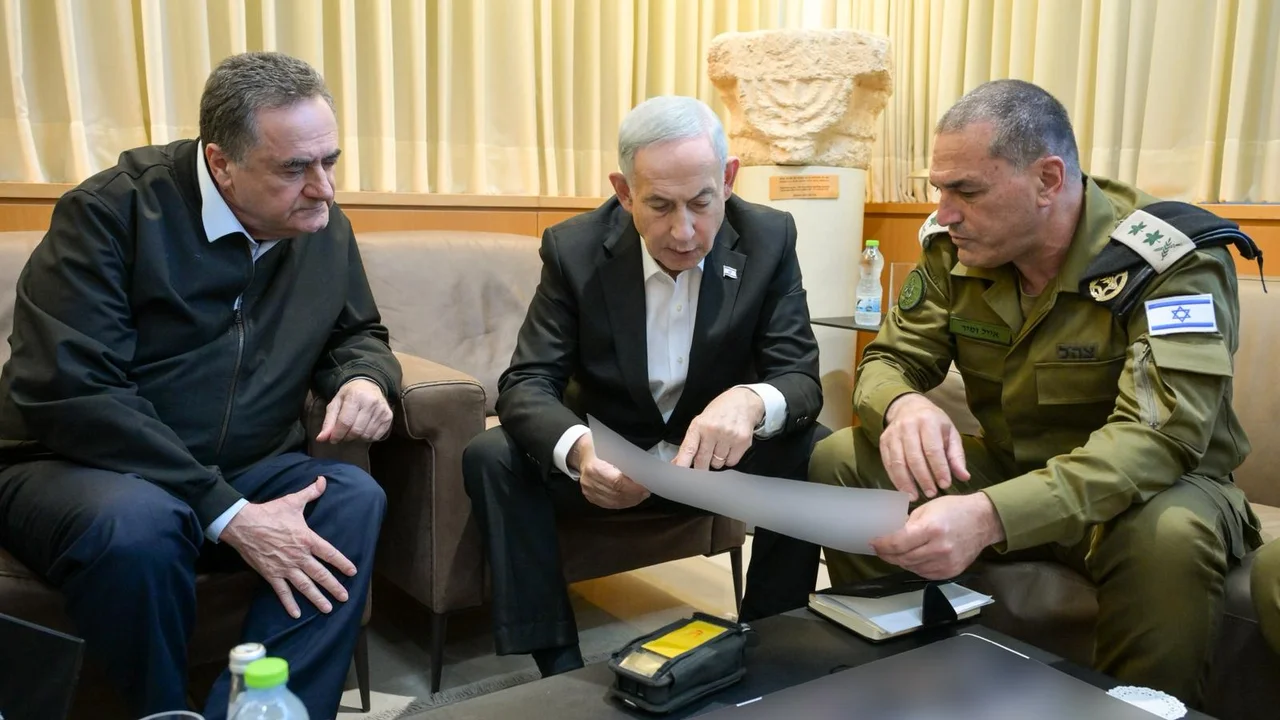
Prime Minister Benjamin Netanyahu defined the agreement as one of the largest in the country's history, and the Prime Minister's Office website noted that "the defense agreement signed today with Greece is a direct continuation of the Eastern Mediterranean alliance we made a decade ago with Greece and Cyprus."
However, in Turkey, they do not see only defense systems here. The Turkish media presents the agreement as a move directed against Ankara, and some commentators on television channels even give it an offensive character, even though these are defense systems designed to deal with missiles, aircraft, and drones.
The intensity of the Turkish anxiety could also be seen in the newspaper headlines on the morning after the agreement was signed. The newspaper "Turkgun" came out with a short and dramatic headline, "The Fear Agreement," and in the sub-headline emphasized that it is an agreement directed against Turkey. The newspaper "Turkiye," which is also identified with the government, went further and wrote in the headline, "The alliance of evil does not stop: A Zionist shield for the Greeks."
Why does this worry Ankara so much? Because the deal is a significant milestone in the strengthening of the alliance between Israel, Greece, and Cyprus — an alliance that has been forming for more than a decade and could limit Turkish freedom of action in the Eastern Mediterranean and the Aegean Sea. From Ankara's point of view, the problem is not just the weapon system itself, but the fact that Greece and Cyprus are not standing alone: behind them stands Israel, a technology and defense power, which thwarts and sabotages Turkish interests in the region and beyond.
And from the Greek point of view, advanced defense systems are not a luxury, but a real necessity. Turkey is currently a revisionist state, led by a regime that holds great ambitions. Just last Friday, two Greek F-16 jets were scrambled to intercept a Turkish drone that penetrated Greek airspace in the area between Samothrace and Lemnos. In recent years, such provocations by the Turks have become a routine matter in the Aegean and Mediterranean seas.
Erdogan is careful to remind that today's Turkey "is not the old Turkey." He is right. But Greece is also not the same Greece. Therefore, "Achilles' Shield" is much more than an arms deal. It is a declaration of the new balance of power in the Eastern Mediterranean. And if the Turks are so worried about it — we must have done something good.
The author is an expert on Turkey, Department of Political Science and Middle East Studies at Ariel University.