Logistics wins wars: technology alone is not enough
US President Donald Trump rebuked Secretary of Defense Pete Hegseth over a shortage of interceptors. This incident highlights the critical importance of logistics in maintaining operational readiness.
US President Donald Trump rebuked Pete Hegseth, the Secretary of Defense — or as he prefers to call himself, the Secretary of "War" — that the full picture regarding the inventory of interceptors was not presented to him, and that he believed the "problem had already been solved." According to reports from a source in Washington, the shortage of long-range missiles and interceptors was among the considerations that limited additional massive strikes against Iran.
And that is exactly the point: even for the strongest and most advanced army in the world, one bottleneck in the supply chain is enough to limit its operational capability. In the end, Mr. President, it is a matter of logistics. The logistical crisis that the US is experiencing in the production and supply of interceptors is also taking its toll on its allies. Ukraine recently admitted that due to the shortage and the need to strictly manage ammunition stocks, one interceptor was launched for every 27 missiles fired at it from Russia. Israel, which does not usually disclose its ammunition stocks, also reported to the US, according to foreign sources, that its interceptor stocks had reached record lows.
As we experience the results of the ongoing campaign with Iran, a simple truth is sharpened: in current wars, countries will not necessarily lose because they lack planes, tanks, or advanced technology. They may lose because the logistical chain behind them fails to continue functioning under fire. Many talk about the need for technological superiority, but the sentence is incomplete without two additional words: logistical superiority. It is enough for a control chip for a plane to be delayed in arrival, for a spare part for a tank to be missing, or for procurement not to identify the need in time, for a weapon system worth millions to be disabled. The weak link that changes the rules of the game is not always on the battlefield; sometimes it is in a warehouse, in a factory, or in a truck that did not arrive on time.
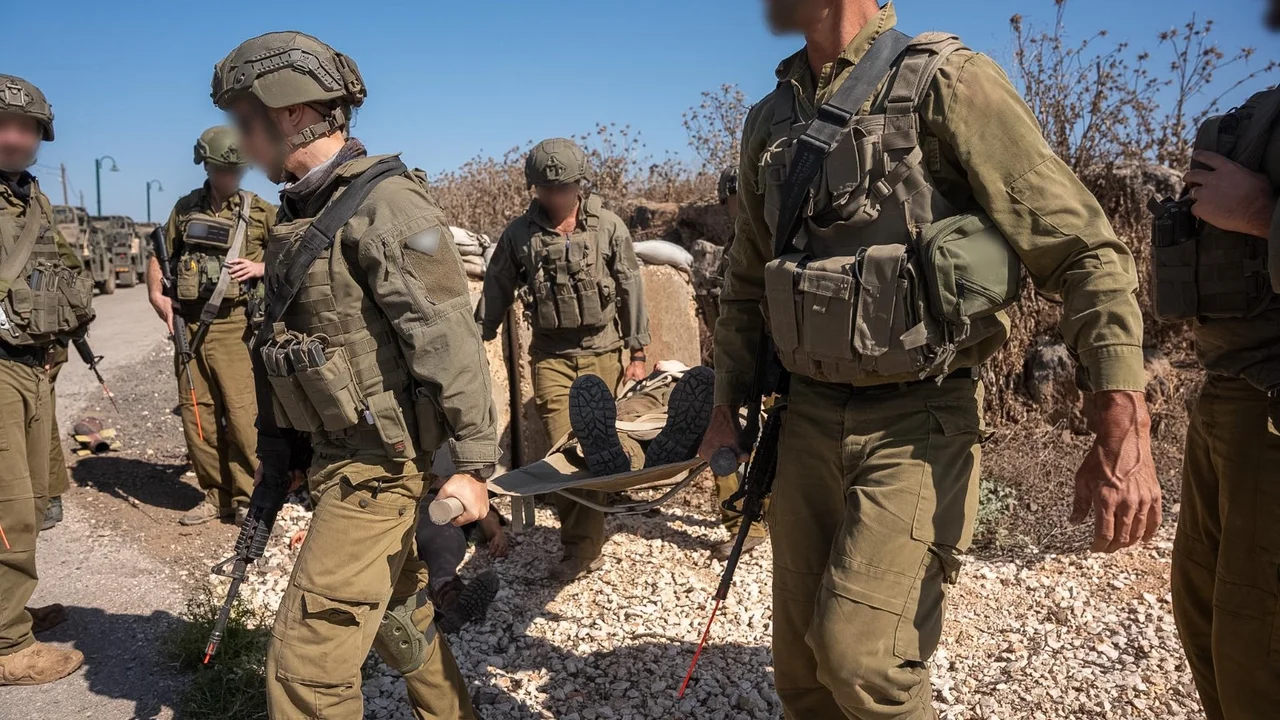
The October 7 massacre seared the souls of the bereaved families and the soul of an entire nation. That morning, severe failures in the functioning of systems were also discovered. There was no management in the country, and almost no government ministry was found to be functioning. Soldiers who fought with heroism found themselves unable to immediately receive equipment from emergency warehouses, and in many outrageous cases, waited hours until the key to those warehouses arrived. Thus, difficult hours passed from the moment the regulars and reservists were called up until they could be sent equipped to the Gaza envelope.
The importance of logistics can also be seen in the war in Ukraine. Ukraine has proven that it knows how to control a system for transporting ammunition from all over Europe, manage inventories, integrate civilian cyber companies, and be part of an international supply chain. All these allow it to stand stubbornly against Russia, and were it not for the shortage of American interceptors, the picture of the battles might have been different.
And back to the American logistical system: there is one more thing that the US needs to understand. When terrorist groups, Iran's proxies, decide that they are the new landlords of the shipping lanes in the Red Sea, not only does the price of oil at the gas station in Idaho rise, but the entire global logistics begins to malfunction — and so do the costs to the global economy. It is time to understand that in the current world of wars, there is no longer room for slogans of "quick and done." Armies alone cannot fight without a multi-disciplinary logistical system and the participation of a civilian system, which, in addition to its daily activity, will provide equipment, knowledge, and manpower that can be activated immediately. True, it costs money, and quite a bit. But in an emergency, one is always prepared to pay more. This is the essence of the matter: to overcome the adversary, military superiority will not be enough without logistical superiority.
Nehama Ronen is the Chairwoman of Maman.