Bardugo Group Advances Kfar Saba Student Housing Project Amid Regional Shortage
Geocartography studies reveal a severe shortage of small apartments and student housing in Kfar Saba despite a large regional student population. In response, the Bardugo Group is advancing the Joy Living project.
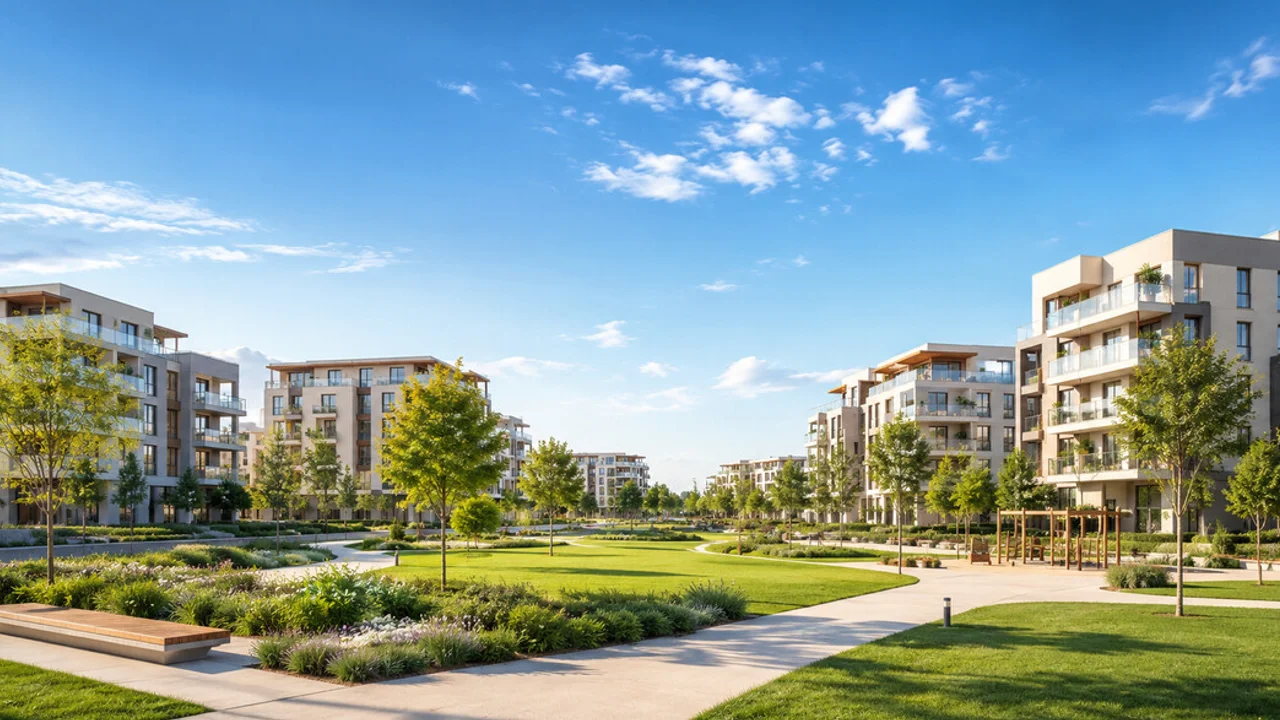
Kfar Saba is confronting a growing mismatch between its housing inventory and the needs of young adults, students, and young couples, according to two recent studies conducted by Geocartography for the Bardugo Group. While the city benefits from proximity to academic institutions, employment hubs, and major transit routes, the supply of small apartments and dedicated student housing remains severely limited. In response, the Bardugo Group is advancing the Joy Living project to bridge this housing gap in the Sharon region.
Surging Academic Population and Limited Bed Supply
Data compiled in the student housing study indicate that approximately 2,740 students reside in Kfar Saba, with roughly 8,000 living in the immediate surrounding area encompassing Ra'anana and Hod HaSharon. Across the broader Sharon sector, which includes Herzliya and Ramat HaSharon, the student population reaches approximately 15,000. Furthermore, regional academic institutions have seen substantial enrollment growth. Beit Berl College and the Academic Center for Law and Science accommodated roughly 7,400 undergraduate and graduate students, reflecting an increase of about 3,000 students over a decade. Additional nearby institutions, such as the Ruppin Academic Center, the Wingate Institute, and the Netanya Academic College, host approximately 10,000 students.
Despite this dense concentration of academic activity, student accommodation options remain scarce. Beit Berl College offers roughly 180 legacy dormitory spaces, while newer solutions have emerged near Reichman University and the Ruppin Academic Center. Geocartography estimates a demand potential of at least 800 student beds in the immediate Kfar Saba, Ra'anana, and Hod HaSharon corridor, highlighting robust feasibility for dedicated residential complexes.
Lior Bardugo, chairman and owner of the Bardugo Group, emphasized the necessity of tailoring residential development to diverse demographics:
"When we want to address housing needs in the city, it is not enough to ask how many apartments are being built, but rather who they suit. Students, singles, and young couples need a variety of options alongside large family apartments."
Construction Deficits and Demographic Shifts
Parallel research examining the Kfar Saba rental market highlights a stark imbalance in the city's construction mix. Out of approximately 10,000 housing starts initiated during the reviewed timeframe, only around 600 apartments featured three rooms or fewer, accounting for just 6% of total construction. One- and two-room apartments comprised a mere 3% of housing starts. Consequently, the proportion of young residents aged 20 to 29 in Kfar Saba declined from 12.6% to 9.9%, accompanied by an expansion of senior demographics.
The research also revealed evolving commuting and residential preferences. Roughly 40% of regional students attend traditional universities, a quarter study at the Open University, and about half of the area's students attend institutions within the Tel Aviv district. Proximity to railway stations and transportation arteries allows many students to base themselves in the Sharon region even when their campuses lie outside it, supporting the viability of off-campus student complexes featuring co-working spaces and shared amenities.
The Joy Living Project Specifications
Situated in the Bnei Akiva compound near Weizmann Street and Highway 531, the planned Joy Living development spans approximately 6.5 dunams. The project comprises five nine-story buildings housing approximately 370 residential units designed to accommodate about 700 students.
-
Unit Mix: Fully furnished studio, two-room, and three-room apartments equipped with air conditioning and balconies.
-
Shared Facilities: On-site fitness center, study and co-working lounges, music rooms, laundry facilities, and a community garden.
-
Commercial Ground Floor: Retail shops, cafes, restaurants, and neighborhood services catering to both students and local residents.
With rental certainty standing out as a primary decision factor—as 39% of target respondents favored long-term leases even with a 150-shekel monthly premium—the development aims to combine predictable lease terms with accessible pricing. Lior Bardugo concluded that providing stable, long-term rental options alongside dedicated student housing is vital for encouraging young households to anchor their futures in Kfar Saba.