Jerusalem Starts Major Accessibility Project on Old City's Christian Quarter Street
Jerusalem has launched a complex accessibility project on Christian Quarter Street in the Old City, carefully dismantling and documenting ancient Roman stones to accommodate wheelchairs.

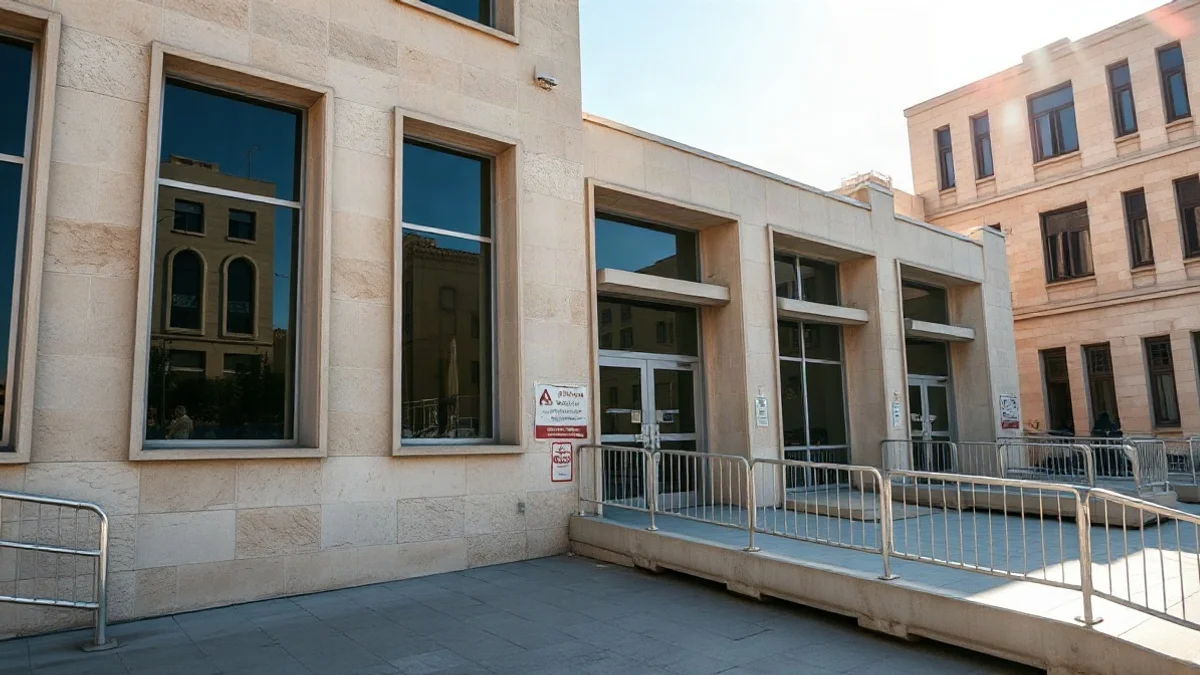
Jerusalem's Old City is undertaking a complex accessibility project on the Christian Quarter Street, where thousands of tourists, pilgrims, and residents walk daily over ancient Roman stones. The project involves dismantling, documenting, and relocating ancient paving stones to make the western side of the street accessible for wheelchairs and strollers, while modernizing underground water and electricity infrastructure.
This is not the first time these historical stones have been moved. In 1977, during market restorations in the Old City, archaeologists Shlomo Margalit, Doron Chen, and Giora Solar uncovered remnants of an ancient paved street about 60 centimeters underground, identified as part of the medieval Patriarch's Street. The stones were lifted to the modern street level at the time. Nearly five years after that restoration, the Israel Antiquities Authority has mapped about 50 Roman paving stones, roughly half of which are in complex condition.
According to the authority's guidelines, every single stone is being numbered, measured, and documented before removal to determine whether it will be returned to the street or preserved in a warehouse. The restored stones will be laid in a 1.5-meter strip along the eastern side of the street, while the western side will feature smooth paving suitable for wheelchairs. The works are being led by the Ministry of Jerusalem and Israel Tradition, the Jerusalem Municipality accessibility department, and the Israel Antiquities Authority, with execution by the East Jerusalem Development Company.
"This unique project, which combines modern accessibility with millennia-old paving, is part of our vision to make Jerusalem the most accessible city in the world," said Shemon Albom, Director General of the Ministry of Jerusalem and Israel Tradition. Jerusalem Mayor Moshe Lion emphasized the importance of balancing historical preservation with inclusivity, noting that the city's profound historical and religious depth must be open to everyone.
The Christian Quarter Street project represents the latest phase in an initiative spanning over 15 years. Since 2009, approximately 6 kilometers of alleys within the Old City walls have been made accessible, including the Via Dolorosa, Al-Wad Street, and David Street. Total investments in the overarching project have reached around 80 million shekels, excluding infrastructure updates carried out by utility companies.
Approximately 40,000 residents live in the Old City, an estimated 4,000 of whom have disabilities. The initiative also targets international tourism, catering to the global population of roughly one billion people with disabilities. In addition to physical adjustments, two free applications have been deployed: Accessible JLM, which provides accessible navigation in eight languages and has surpassed 140,000 downloads since 2009, and StepHear, which guides visually impaired visitors across 60 stations in 11 languages.