"I cannot leave here for Damascus. They know I speak Hebrew, they will slaughter me"
Where Iran tries to use collaborators, Israel has found partners — and just across the border, a surprising construction boom is taking place, stemming from the desire of tens of thousands of Druze to acquire a shelter for times of danger. "We want to understand what about you, are you here forever?", explains a Druze from southern Syria about what needs to happen for them to express unequivocal support for Israel. "Everyone here is dangerous to us, they see us as traitors." The IDF, in any case, is being cautious.
About four kilometers from the border fence, in the heart of the Syrian village of Hader, Dr. Daabus Najm takes a short break from a busy workday at the local clinic that the IDF helped establish. He treats about 19 patients a day here for free, for a monthly salary of only 100 dollars. Najm, a native of Ein Qiniya in the Golan Heights, crossed the border into Syria in 2004 for doctoral studies — got married and stayed to live there. "On the day the Assad regime fell in December 2024, when the Israeli army entered here, I arrived here from As-Suwayda and I have been here ever since," he tells us. "I had a house and a job there, but I miss home very much, Ein Qiniya, and I thought then that I would be able to come and visit home."
The clinic where Najm works is one of five that the IDF initiated and helped establish in the area: one in the Hader sector and four others in the Druze villages on the Hermon ridge. The IDF transferred advanced equipment, medicines, and even an ambulance to them. When he meets the Israeli soldiers who sometimes arrive at the clinic, Najm serves as an interpreter. He asks the military personnel to bring laboratory equipment for blood test analysis, explaining that sending the tests to Khan Arnabe involves traveling on complex and dangerous roads.
"Remembering the covenant"
Staying in Hader is, for Dr. Najm, a survival necessity, and returning to As-Suwayda does not guarantee him and his wife a safer future. "I cannot leave here for Damascus because they know there that I speak Hebrew, and they will slaughter me," he says. "It is safe for me here. Everyone in Syria is dangerous to the Druze, they see us as traitors." Since the fall of the Assad regime, the IDF has been strengthening its hold on strategic points in southern Syria — spaces that were conquered overnight in a military operation whose scope and power no one ever imagined.
Not far from here, on Mount Hermon, the army completed preparations for the coming winter. The Hermon and Hader area are of supreme strategic operational importance for protecting the security of the Golan residents in Israel, and the day is still far off when we will be able to leave the place and hand it over to another regime. Especially when it comes to the regime of Ahmad al-Shara, the Syrian prince who paved his way to power with much blood. Even after US President Donald Trump removed Syria from the list of countries supporting terrorism last week, in Israel they refuse to surrender to the man who grew up in the ranks of Al-Qaeda.
Land of chaos
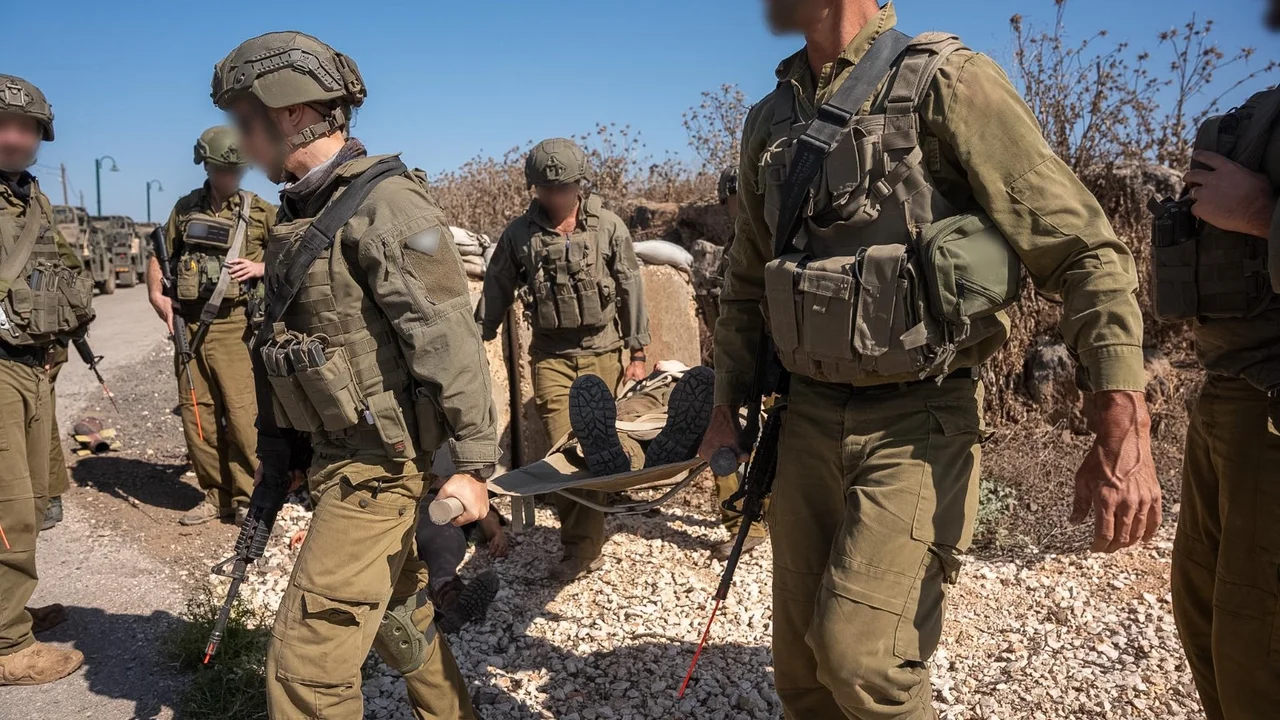
In the land of Bashan, the vast spaces are full of murderous players: the new regime, ISIS, Hamas, Palestinian terrorist organizations, Iranians, Hezbollah, Al-Nusra Front, and Turkey. IDF forces operating in the area arrest suspects and interrogate them. At this point of chaos, the Druze population in the Hermon villages is in uncertainty — which puts it before a fateful choice: choosing Israel or Syria.
According to estimates, about 15,000 residents currently live in the village of Hader. It is the largest of the Druze villages near the border, in the northern sector of Division 210. Since the Six-Day War, the villagers supported the Assad regime and Hezbollah. But today it seems that many of the village's people pray for the day they will be part of Israel and win its protection.
Mutual guarantee on a thin rope
Israel has many interests in strengthening the alliance with the Druze in Syria, but it is clear that every step has fateful meanings. These are not only security interests but also social ones. The IDF seeks to strengthen strategic ties with our Druze neighbors, but in such a way that will not require them to cut off life with their homeland and will not cause them to be dependent on the Israeli government that holds the area security-wise, but is not interested in taking civil responsibility for it.
In May 2025, Division 210 and the Medical Corps established a forward clinic for sorting and treating the wounded and sick near the village of Hader. The current policy is fundamentally different from the one that was under the "Good Neighbor" administration (2016-2018). Now, when there is no civil war, the Druze are not "imprisoned" in the villages. The logic behind establishing a network of local clinics is also based on risk reduction: a clinic under Israeli management constitutes a high friction factor in the meeting between dozens of Syrian patients and Israeli soldiers.
"Send a message to the people in Israel that we all want Israel," Dr. Najm asks me. "All the Druze are close to each other, just like you, the Jews, and we are proud of Israel. Everyone here is dangerous to the Druze. They see us as traitors. But we know and remember the covenant."