Israel officially rejects, but effectively promotes: The deadlock surrounding the Trump plan for Gaza
In Jerusalem, it was announced that the 15-point plan is unacceptable, but in practice, steps have already been agreed upon to advance the handover of Hamas weapons and the establishment of monitoring mechanisms. Elections in Israel and the US are hindering progress, and fundamental gaps remain between Hamas and the Peace Council regarding the method of disarmament. Simultaneously, economic pressure on Hamas and humanitarian aid may become key leverage points.
On one side stands the desire of the Peace Council and the Trump administration to promote the 20-point plan and begin the rehabilitation of the Gaza Strip, and on the other side are Israel's security requirements, which are significantly radicalized due to the approaching elections.
Take, for example, the story of the Erez crossing. The crossing had been closed since the beginning of the war, and in recent months, renovations and preparations for its opening were carried out to facilitate the passage of supply trucks into the Strip. These are trucks with food and humanitarian aid, which currently pass only through Kerem Shalom. All work was done with the approval of the political echelon, and the German government even stepped in and purchased an advanced scanning device to assist in the security screening process of the trucks.
Towards the end of last week, news of the expected opening was published. Right-wing organizations, opposing the very entry of aid into the Strip, raised an outcry, and the Prime Minister and the Minister of Defense backtracked and issued a statement that no approval had been given for opening the crossing. The planned ceremony was canceled, and the gate, for now, will remain closed. A security official clarified that this does not involve the entry of additional equipment or aid.
Agreements already reached
It is the same with the story of the 15 points. The CEO of the Peace Council, Nickolay Mladenov, announced that Israel was not required to agree to or sign the 15-point plan, which was signed between the Peace Council and Hamas. Prime Minister Benjamin Netanyahu officially announced that Israel rejects the plan, despite Hamas's principled agreement to disarm, but Jerusalem has effectively agreed to promote it.
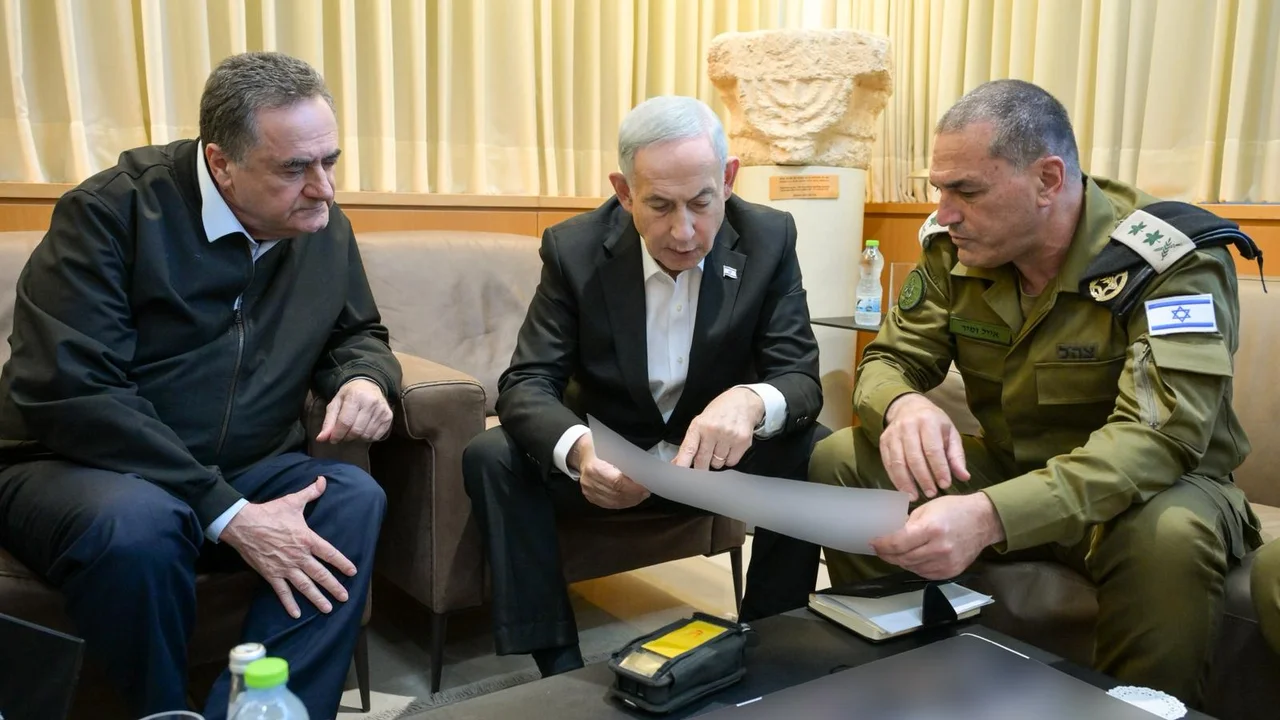
In a meeting with Prime Minister Netanyahu last week, an agreement was reached on the process of handing over the weapons of Hamas and terrorist organizations, on the establishment of monitoring and control mechanisms for the process, and also on solutions to some of the severe humanitarian problems that have arisen.
Diplomatic and security sources from Israel and the Peace Council say that in practice, it will be possible to advance the weapons handover process and the implementation of the Trump plan in the coming weeks, but there are several fundamental obstacles in the way.
One is the difficulty for the leadership in Israel to agree to progress steps before the elections, as these may be perceived as concessions on the main goal of the war — destroying Hamas's military power and removing it from the Strip. On the other hand, the Trump administration would prefer progress, in order to present a significant diplomatic achievement before the midterm elections. Therefore, it is expected that he will act vis-à-vis Netanyahu on the matter, whether in their regular phone calls or in a possible meeting around the UN General Assembly convening at the end of next month.
The gap between Hamas and the Peace Council
Another problem stems from the gaps between Hamas's version of the 15 points and the version of Mladenov and the Peace Council.
Hamas spokesman, Osama Hamdan, claims that "no one said and not a word was said about handing over weapons. What was agreed upon is only the transfer of heavy weapons to the responsibility of the Palestinian committee (technocrat government) and under the supervision of the resistance organizations (i.e., Hamas and Islamic Jihad). No non-Palestinian party will be involved in the process. Not a single bullet will leave the Gaza Strip, that is what was agreed."
Mladenov, on the other hand, clarified in a speech at the Security Council that the agreement that Hamas signed "covers all categories of weapons without exception, without any gray area." That is, the handover of all weapons — from pistols to rockets — as well as the handover of tunnel maps, which are supposed to be destroyed.
Those who are supposed to collect the weapons are the same multinational force, ISF, which has not yet been established in practice. Representatives of the armies that are supposed to compose it, including Uganda, Morocco, and Kosovo, visited the planned staging areas, but the forces themselves will not arrive soon.
The reason for this is the need for Israeli consent to the process of handing over, storing, and destroying the weapons, and on the other hand, Hamas's opposition to handing over weapons to a non-Palestinian force. In addition, the countries that will send the forces oppose their soldiers being in danger of confrontation with Hamas.
Here also arises the issue of the new Palestinian police force. Hundreds of Palestinians training in Egypt are supposed to staff it, but Hamas demands that thousands of its men, with their weapons, join the force. Mladenov announced that only those who receive security clearance will join this force. Security clearance means a Shin Bet check — and Hamas opposes this.
Solutions for sewage and the approaching winter
Due to all these complications, and alongside the attempt to untangle the knot, the Peace Council is focusing on efforts to ease the situation for the Palestinians staying in camps in the Strip.
With Israel, it was agreed, among other things, to find sanitary solutions for the sewage problem before the rains begin. This sewage is currently flowing into the sea and the pollution is reaching the shores of Ashkelon. It is also about establishing stable shelters ahead of the approaching winter. Israel opposes the entry of tents that have pegs and metal poles, as these may be used to prepare weapons.
A point that may help in advancing the process is the economic pressure on Hamas. The organization is struggling to fund its expenses, has stopped paying salaries to its civil administration employees, and is encountering increasing difficulty in collecting "taxes" — in practice, protection money — from local merchants.
In the 15 points, it was promised that the Peace Council would fund $400 million of the Hamas administration's debts, including salaries and payments to suppliers. It is possible that Hamas will be flexible on the weapons issue in order to receive part of the amount.
In Israel, the main thesis is that Hamas, despite its signature, will not fulfill its commitment to hand over weapons and will excuse this by saying its conditions were not met and by "Israeli violations." The assessment is that after the elections in Israel, in the US, and in the Palestinian Authority, the election results will determine the continuation of the process — and until then it will drag on.
The Peace Council's message to both sides
In the Peace Council's statement over the weekend, it was said that it had conveyed a direct message to Hamas through intermediaries, demanding that all militant activity in Gaza cease immediately, including the recent launching of kites into Israeli territory.
The Council also clarified to Israel that the ceasefire must be respected by all sides, and that military action cannot extend beyond a response to real and immediate threats.
The Peace Council's position is clear: the process of disarming Hamas and establishing civil governance in Gaza can only succeed if each side fulfills its commitments. Violations by both sides damage the trust and conditions necessary for progress.