Rafael, Elbit and Rivals Vie for 150 Million Shekel Anti-Drone Defense Contracts
Israel's defense establishment is allocating 150 million shekels for counter-drone border protection, culminating in a December demonstration featuring Rafael, Elbit, and Israel Aerospace Industries.
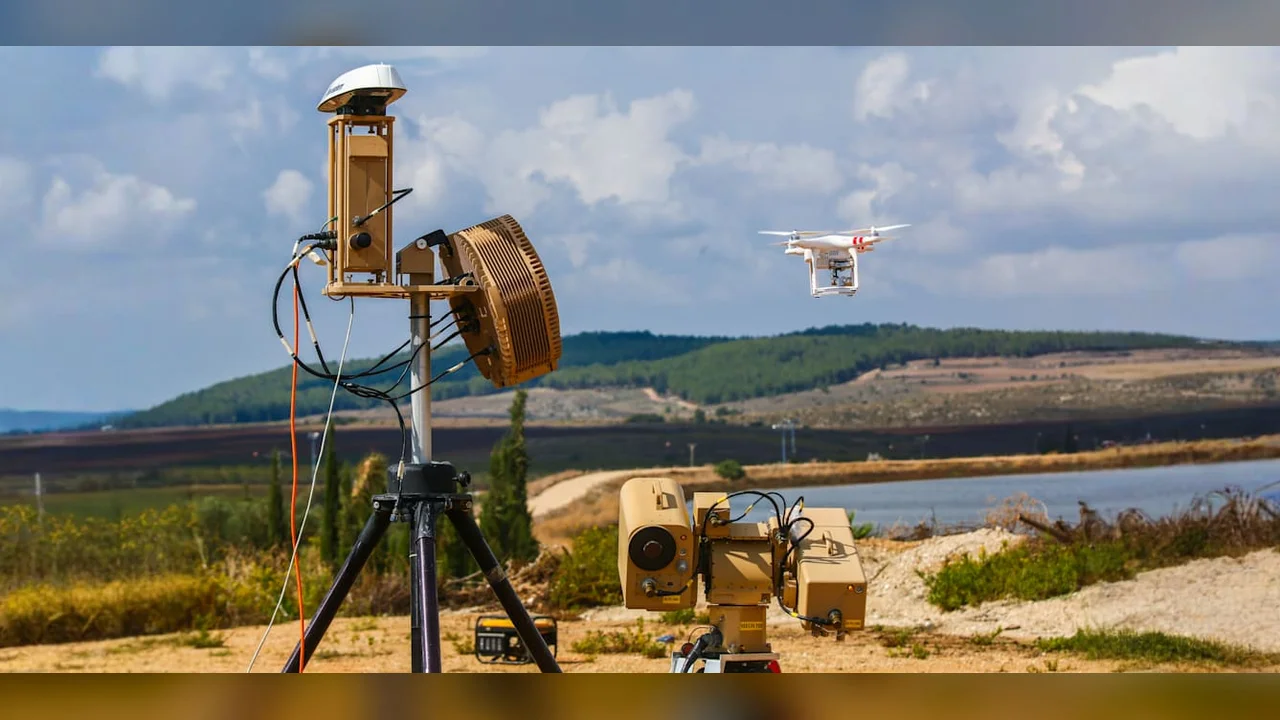
Israel's defense sector is gearing up for a major procurement push, with at least 150 million shekels slated for allocation before the end of the year to bolster counter-drone border defense systems. According to defense industry details, this funding will be decided following a large-scale live demonstration scheduled for December, which will feature a wide array of domestic defense firms and startups. The overall budget is expected to be distributed across multiple companies and operational sectors, paving the way for additional contracts in forthcoming security projects.
The Ministry of Defense's strategy of decentralizing contracts mirrors a similar approach adopted roughly six months ago regarding the eastern border barrier project spanning Jordan and Syria. In that initiative, Ondas subsidiary M4 Defense secured a 10 million dollar order out of a broader 50 million dollar framework. Investments in anti-drone solutions are scaling up significantly as aerial threats expand globally, driven by intense operational lessons learned in conflicts such as Ukraine.
Key Competitors and Advanced Technologies
Ondas, which has drawn industry attention following a wave of high-profile appointments including former Mossad director Yossi Cohen (noted in industry reports), is among the prominent contenders preparing for the December demonstration. The firm is expected to participate alongside the Ra'anana-based startup Aerosentry, established in April of last year, which specializes in artificial intelligence flight software designed for high-speed drone maneuvering and interceptor operations.
Leading defense giants and agile startups are bringing distinct technological suites to the upcoming trials:
- Israel Aerospace Industries: Presenting the HookGuard system, combining radar detection, electro-optical sensors, AI-driven command and control, and interceptor drones.
- Elbit Systems and Elishra: Showcasing radar-based interception architectures utilizing interceptor drones and net-catchers.
- Rafael Advanced Defense Systems: Demonstrating the Drone Dome, a mobile tactical system providing protection against drones and unmanned aerial vehicles.
- SpearUAV: Featuring the Iron Wasp system designed for immediate tactical airspace defense.
- Kalat: Providing an open-architecture command and control platform that integrates sensors, radars, and weapon systems under a unified interface.
Diverse Physics and C&C Integration Challenges
Layered defense against unmanned aerial vehicles presents profound technical hurdles across detection, identification, and interception stages. Optical-fiber drones, frequently deployed by Hezbollah, complicate electronic warfare countermeasures because they cannot be jammed using conventional radio frequency methods. However, these threats possess relatively limited ranges and payload capacities, typically carrying around 2.5 kilograms of explosives. Consequently, effective defense requires detection methods independent of radio frequency communications, incorporating radars, advanced optics, LIDAR, and acoustic sensors.
While diversifying detection modalities enhances identification accuracy, it introduces significant challenges for command and control platforms that must seamlessly bridge disparate physical sensors. Kalat, ranked fourth in a recent startup ranking, addresses this hurdle with an open-architecture platform designed to consolidate heterogeneous feeds from sensors, radars, and intelligence systems.
Tactical Laser Solutions and Mobility
Alongside kinetic interceptors, energy weapons represent a critical long-term pillar of counter-drone defense. While high-power laser systems such as Rafael's Iron Beam operate at robust 100-kilowatt capacities suitable for heavy aerial threats, they remain too heavy for micro-drone interception. To counter this, Rafael developed the Drone Dome, featuring a lighter 10-kilowatt power profile mounted on 4x4 vehicles or armored personnel carriers to deliver mobile tactical protection for maneuvering forces.