Iran between war and survival: "It's hell, and there is no one to save us"
The bombings have returned, the currency is plummeting, and power and water outages are expanding. Residents from Tehran to the port cities in the south describe lives reduced to worrying about food, livelihood, and family members — alongside the fear of the attacks and the regime's repressive mechanisms.
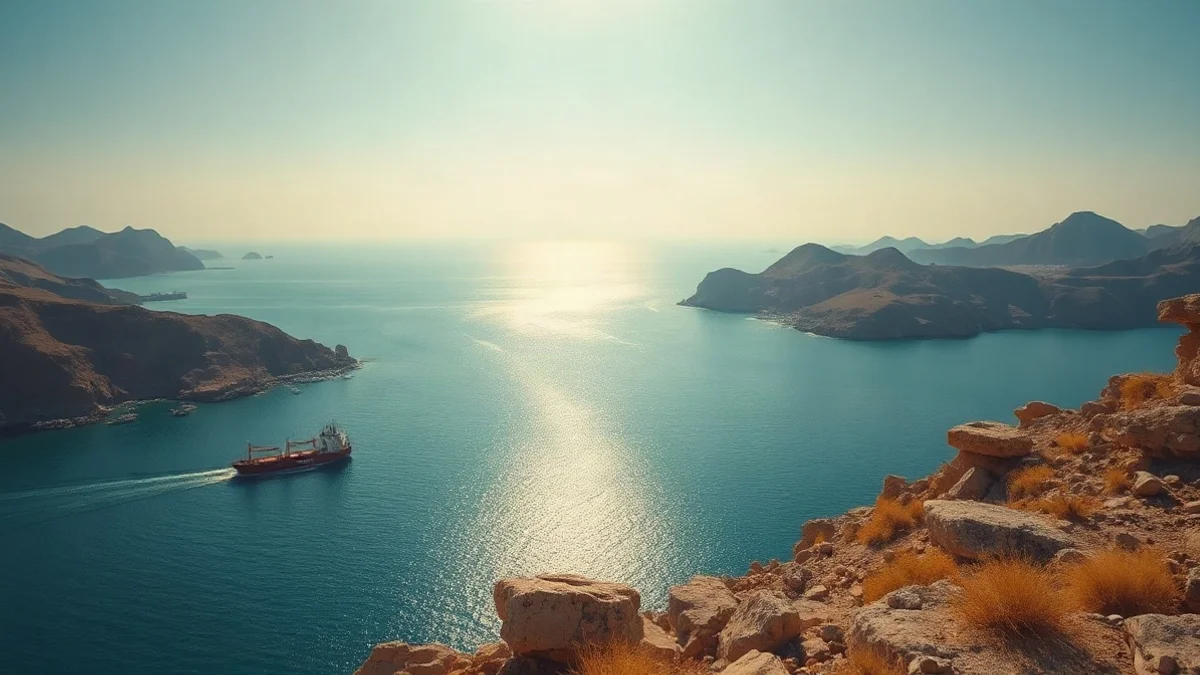
At night, explosions are heard in the port cities of southern Iran. In the morning, residents check if the electricity has returned, if the water is still flowing, and if the internet connection is stable enough to allow for a few hours of work. In Tehran, far from the main centers of the strikes, the war is felt in a different way: in the price of rice, in the emptying shops, and in salaries that lose their value before they even enter the bank account.
Since the fighting resumed in recent weeks, residents across Iran describe a reality where almost every daily action involves uncertainty. It is hard to know if one can go to work, if it is worth leaving the children at home, if it is better to hoard food, or if an even harder period is expected.
"The most stressful thing is the back-and-forth: one day war, the next day peace," Somayeh, a 40-year-old photographer from Tehran, told Reuters. "We don't know what is really going to happen. We can't even plan two days ahead." According to her, the cost of her weekly shopping has almost doubled. "The most important thing during the war is the economy," she said. "Every day our situation becomes worse and harder."
While the war over the Iranian narrative continues, the testimonies collected in recent days in the media present a more complex picture. Some of the interviewees strongly oppose the religious and extremist regime that rules Iran, while others actually support the confrontation with the USA and see it as a necessary price for maintaining the country's independence. However, almost all of them describe the same basic feeling: their lives are managed by events and leaders over whom they have no influence.
Behnam, a 38-year-old unemployed musician from Tehran, told the New York Times that when he calls family members and friends, the conversation does not start with the war. "The first question we ask each other is: have you eaten?" he said. According to him, even his relatives have stopped encouraging him to find work. Unemployment is rising, businesses are shrinking, and plans that once seemed basic — renovating the house, opening a business, or moving to a new apartment — are being postponed indefinitely.
"Honestly, we have reached a point where we only think about survival," he said. "I no longer have control over my life. Our fate is in the hands of those who do not think about the simple people."
War reaches the tap
In southern Iran, where the American military is landing the main attacks, the war is not only heard in the air. In Hormozgan province, local authorities reported that the strikes hit electrical grids and a water desalination plant. The USA did not comment on the claims. Residents in the area told of prolonged power outages and difficulties in water supply, while temperatures often climb to over 48 degrees.
In Jask, families began to hoard water after the damage to the desalination plant. Moein, a resident of the city, told the British Guardian that although the supply was restored, the fear of another attack has not disappeared. "The heat is rising, and if we don't have a water supply because of these attacks, we will die of exhaustion, heat, or thirst," he said. "We are preparing for the next attacks and need to save as much water as possible."
In Bandar Abbas, one of the central cities in the south of the country, residents said that the explosions and power outages have become part of the night routine. Mahnaz, 39, whose main work is done from home, told the Guardian that any disconnection of electricity or the internet also threatens her source of income. "The war is far from over, and daily life is becoming harder under the bombings, power outages, and internet shutdowns," she said. "It is truly hell here."
Soroush, a 37-year-old writer from Bandar Abbas, described a process of forced adaptation. "We have to accept the possibility that this will simply be our new reality," he told the Guardian. "There is no one who will come to save us from the bombs or the regime's bullets."
This sentence expresses a fear that has recurred in many testimonies: for opponents of the regime, the threat does not come from one direction. They fear American bombs, but also arrests, executions, and the tightening of control within the country.
Disappointment with the regime — and with Western promises
The war broke out after months of protests and internal repression. In January, thousands took to the streets following the economic and currency crisis. The authorities suppressed the protests by force, and thousands were killed.
Asel, a 20-year-old saleswoman from a town near Tehran, was among the protesters. She told the New York Times that she was arrested and tortured along with her friends. At the beginning of the American-Israeli intervention, according to her, she hoped that the strikes would lead to the overthrow of the regime.
This hope disappeared as the war dragged on, the citizens paid the price, and the regime remained in place. "Donald Trump told us he wanted to save us, but that was not true," she said. "What will happen in the future no longer matters to me."
Amin, who manages a small guesthouse in southern Iran, also described a similar feeling. Although he does not support the regime, he told Reuters that the American strikes have further exacerbated the situation of the citizens. "Donald Trump destroyed our lives more than the Islamic rulers did," he said.
For some Iranians, the survival of the regime is not just a political disappointment. They fear that the war will give the authorities justification to expand repression, restrict the internet again, and present any internal criticism as a security threat. This fear is based on their experience from the last year. After the previous war, a prolonged internet shutdown was imposed in the country, which harmed self-employed workers and small businesses. Even after the bombings subsided, the regime continued to arrest opponents, confiscate property, and execute participants in protests.
For many, the Iranian crisis is not measured by the number of missiles launched or the military sites hit, but by the amount of food left at home. Residents told the New York Times that they buy rice by the cup instead of by the sack, forgo medical treatment, and purchase vitamins as a substitute for fruits and vegetables, whose prices have become too high.
Farzad, a web developer from Tehran, told of a family friend who began selling homemade pickles and jams via Instagram after her pension was no longer enough. The business was successful at first, but collapsed when the government blocked the internet. "Put the statistics aside," he told the New York Times. "We know the crisis through our bodies, through the experience we have lived."
Even the short periods when the fighting weakened did not bring recovery. The ceasefire achieved last month stopped the bombings for a short time, but not the collapse of the currency or the rise in prices. When the agreement fell apart and the strikes were renewed, many felt they were returning to the same point — only in a more difficult economic situation.
Fear of staying — and fear of leaving
Despite the difficult reality, emigration is not a simple option for most Iranians. Some cannot afford to leave the country, others are not willing to leave parents and children behind, and there are those who fear becoming refugees without status or a clear future.
Amir, a 30-year-old software engineer from Sanandaj, told Reuters that the internet shutdowns harmed his work and left him in debt. And yet, he is not in a hurry to flee. "We don't want to leave our home," he said. "We don't know what life will look like outside. Will the borders be open? Will other countries accept us, or will we end up in the situation that the Syrian refugees reached?"
Nazanin, a 34-year-old psychotherapist, said that in the past she wanted to emigrate, but the possibility that her family members would be killed while she was outside the country changed her decision. "If my family is killed by a bomb, what will I do?" she told Reuters. "The thought that I would not be with them and that I would be left alone with the grief was so difficult that it changed my whole attitude toward emigration."
Even supporters of the regime pay a price
Alongside these voices, there are also Iranians who justify the continuation of the conflict. They see the American strikes as an attempt to force Iran to surrender, and believe that the government must continue to fight even at a heavy economic cost.
"Everything has a price," Hossein, who manages an online business from Bandar Abbas, told the New York Times. "Standing up to the USA and maintaining our independence is much more important than becoming another country in the region that simply says yes to everything the USA wants."
Supporters of the regime hold rallies at night in various cities and demand that the government not agree to a compromise. On the other hand, other residents see these demonstrations as further evidence of the gap between those who call for the continuation of the war and those who are forced to deal with its consequences.
Farida, 51, from southern Iran, told the New York Times that the strikes in her area of residence damaged bridges and railway tracks and left residents cut off for days. She fears for the future of her children, for their education, and for the employment opportunities that will remain for them.
"It was a bitter and extremely stressful experience, full of despair about the future," she said. "Unfortunately, we, the people, pay the price for the mistakes and stubbornness of governments."
For many of the interviewees, there is no longer an expectation of a big solution or quick change. They ask for more basic things: to work, to buy food, to refresh themselves in the heavy heat, and to know that the children will be able to go to school the next day.
Mohsen, a business owner from Isfahan, summarized the feeling with sharp words. "The situation has become so bad that everyone has completely lost it," he told the New York Times. "We are trapped in hell, and there is no one who will save us."