"We need to close the High Court, and transfer the powers": Judge Stein sparked Milvitsky's anger
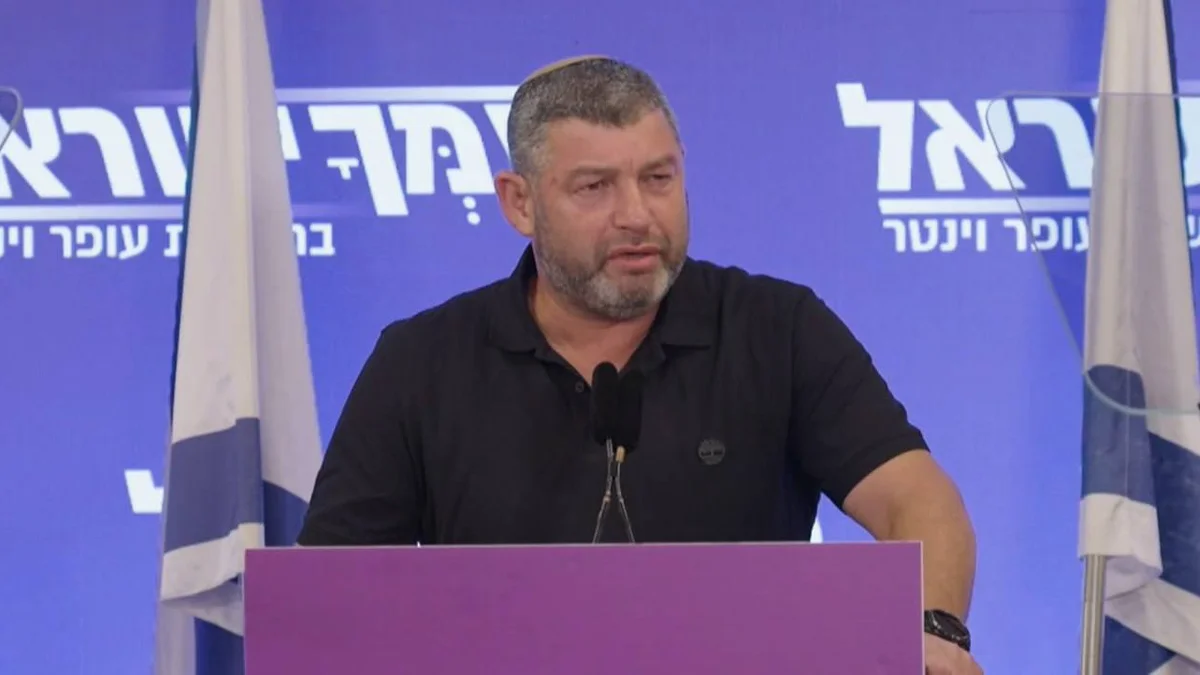
MK Hanoch Milvitsky presented his vision for the Israeli judicial system after expressing anger over Supreme Court Justice Alex Stein's decision to freeze the budget transfer approved by his committee. "The Knesset will choose judges and the High Court will remain an appellate court," he said.
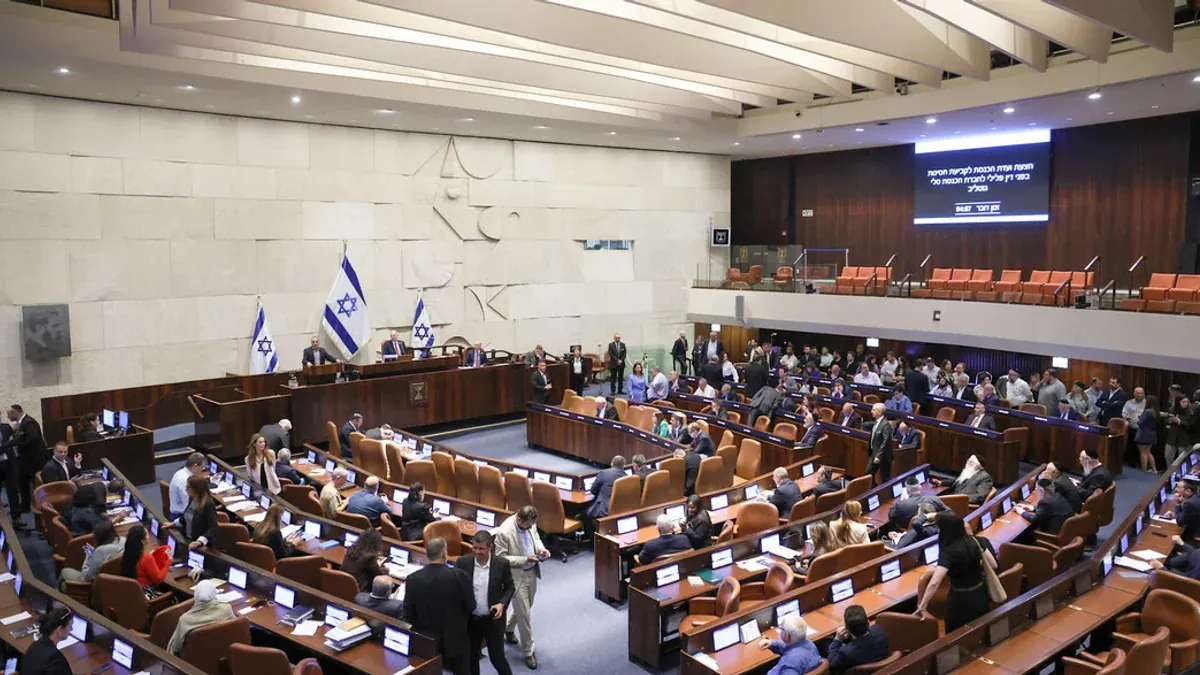
After Supreme Court Justice Alex Stein decided to freeze the transfer of funds approved by the Knesset Finance Committee, the coalition was furious, and the first to respond was Likud MK Hanoch Milvitsky, who serves as chairman of the Finance Committee, where the decision that Stein froze was made.
Justice Stein's decision drew great criticism from within the coalition because he is supposed to be a conservative-leaning judge. MK Hanoch Milvitsky, during a conversation with Liat Ron on 103FM radio, explained his vision for the Israeli judicial system. In addition, he addressed the reason he warned against new right-wing parties. And did he apologize for comparing protest activists in his committee to Nukhba terrorists?
MK Milvitsky first declared that freezing the funds is not an acceptable step at all from his point of view: "Justice Stein joined the opposition, unequivocally. These are things that were done in the past much closer to elections. It was also brought up in the committee: the previous Knesset Speaker Mickey Levy approved the transfer of many coalition funds a week before the elections. Justice Stein froze financial transfers, which is very bad, but he also approved the continued detention of Warrant Officer Ari Rosenfeld even though 48 hours after he was arrested he passed a polygraph test and was not interrogated for a single day. This is not a matter of being a leftist, an outstanding reservist was held in conditions of a dangerous security detainee, the man was in these conditions for three months when after 48 hours from the time of his arrest he cooperated and yet they arrested him."
He further said: "In my view, what needs to be done is to anchor in a Basic Law the way Basic Laws are legislated, on the basis of Basic Laws after we have anchored them, we will establish a Constitutional Court where the Knesset chooses the judges and then basically, just as the Knesset established the High Court - we need to close the High Court, and transfer the administrative powers that exist today in the Supreme Court to the Constitutional Court. The Supreme Court will remain an appellate court for criminal and civil cases only."
After the host was stunned, he repeated and said: "Unequivocally. After we have established a Constitutional Court, there is no longer any justification for holding administrative powers in the Supreme Court. The public in Israel is losing faith in the enforcement system and the judicial system, this is not a good situation for the country and I think it needs to be fixed. The way to fix it is through the establishment of that vital institution called a Constitutional Court. I will try with all my might to talk to those who determine policy on these matters and I will try to convince."
Later, he addressed the outburst of 'Standing Together' activists in the Finance Committee and his declaration that 'these are worse than Nukhba': "When anarchists enter, we sit through a whole discussion, and the moment the discussion of the Ministry of Settlement Affairs comes up, they get up and shout statements about 'Jewish terror', 'the money that goes to the settlements is intended for terrorist acts and burning people', these are illegitimate statements. I will not sit and allow them in my place. These people who stand together with the Arabs of Judea and Samaria against the Israeli settlement, do not stand together with me, they act against me," he added.
After being asked if he regrets using the derogatory term 'Nukhba', he admitted his mistake: "I agree that this statement was unsuccessful and expressed a great storm of soul and very great emotions on my part. This expression that Jews get up in the Knesset of Israel and say that funds are being transferred to 'burn people'. You cannot compare anyone to Nukhba - this was an incorrect statement. This does not at all detract from the severity, the disgust and the loathing. I am a very small politician, what I feel is seen, my mouth and heart are equal. This has good sides and it has less good sides."
Regarding his political future and the state of the Likud party, he said: "I am busy with the primaries and the Likud campaign. I would recommend to the entire right-center public not to be tempted by offers in the field. There is a party that proves itself consistently, that stands on the right and is on the right, and there are all kinds of those who thought they were right-wing and then we saw how they go with all kinds of elements that are far from the right to complete a government for them. Naftali Bennett is the most obvious example and there are of course others."
In conclusion, he said that "a prime minister wants to have as much influence as possible and this is a natural thing in politics. The primaries are the soul of the Likud and it is good that there are primaries. The movement's institutions decided to grant the prime minister eight reserved spots and therefore we are all behind this thing and moving forward. When a prime minister wants to deepen his control over the list, that's fine, all party leaders are like that, but the Likud is indeed a party that comes from below and in order to be elected in it you need to have a field connection, unlike perhaps other places."