Hyundai Unveils Mercury EV in China Featuring Rapid Battery Swapping
Hyundai unveiled its Mercury electric crossover at Auto Guangzhou 2026, featuring rapid battery-swapping technology developed in partnership with battery giant CATL.
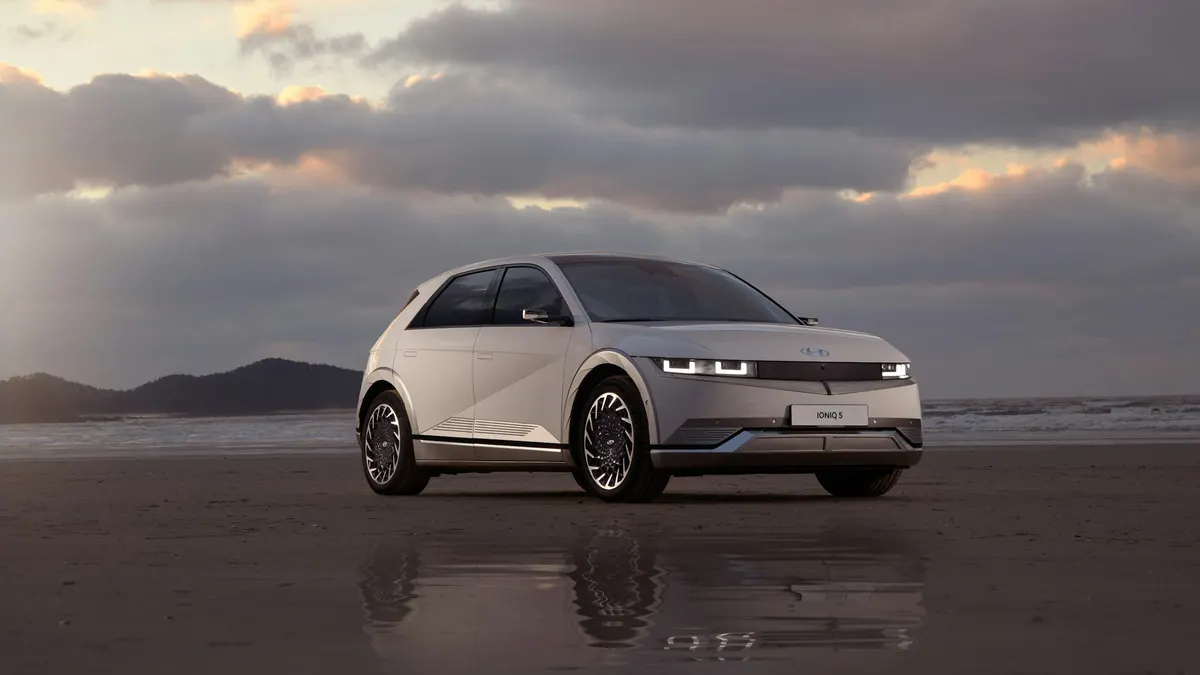
Hyundai has unveiled the Mercury compact electric crossover at the Auto Guangzhou 2026 exhibition in China, marking a significant return to battery-swapping technology by a major non-Chinese automaker. The vehicle is the third model in the Ioniq Planet series developed specifically for the Chinese market and draws its name from celestial naming conventions, having no connection to the historic Ford Motor Company subsidiary that closed in 2011.
Design and Battery-Swapping Technology
The crossover features a striking fluorescent yellow-green exterior paint scheme alongside an aggressive front fascia that Hyundai officially describes as a "shark nose" similar to Cupra designs. While full technical specifications remain under wraps, Hyundai confirmed a partnership with Chinese battery giant CATL to produce a dedicated variant equipped for rapid battery swapping.
The system enables a depleted battery to be replaced with a fully charged unit in approximately 100 seconds, matching the timeframe of a conventional fuel stop. This approach addresses charging accessibility challenges for drivers lacking private parking or overnight home chargers, as well as those requiring quick power restoration during long-distance travel.
Industrial Scale and Infrastructure
This modern revival of battery-swapping recalls the ambitious vision of the Israeli venture Better Place, which collapsed in 2013 after raising hundreds of million dollars. However, industry analysts note that the current ecosystem operates on an entirely different scale, backed by robust existing infrastructure rather than building a network from scratch.
CATL currently operates over 2,500 Choco-Swap stations across China, with strategic targets to reach 3,000 stations by the end of the year and expand to 6,000 stations across 297 Chinese cities by 2027. Alongside competitor NIO, which operates a similar network spanning domestic and European markets, the expanding infrastructure provides the industrial backing necessary to make battery swapping a commercially viable alternative to traditional charging.