100-Million-Year-Old Fossil Flower Discovered in Museum Rock Collection
Researchers discovered an exceptionally preserved 100-million-year-old fossil flower named Tomlinsoniella pedicellata hidden inside a century-old museum rock sample from Kansas using micro-CT scanning.
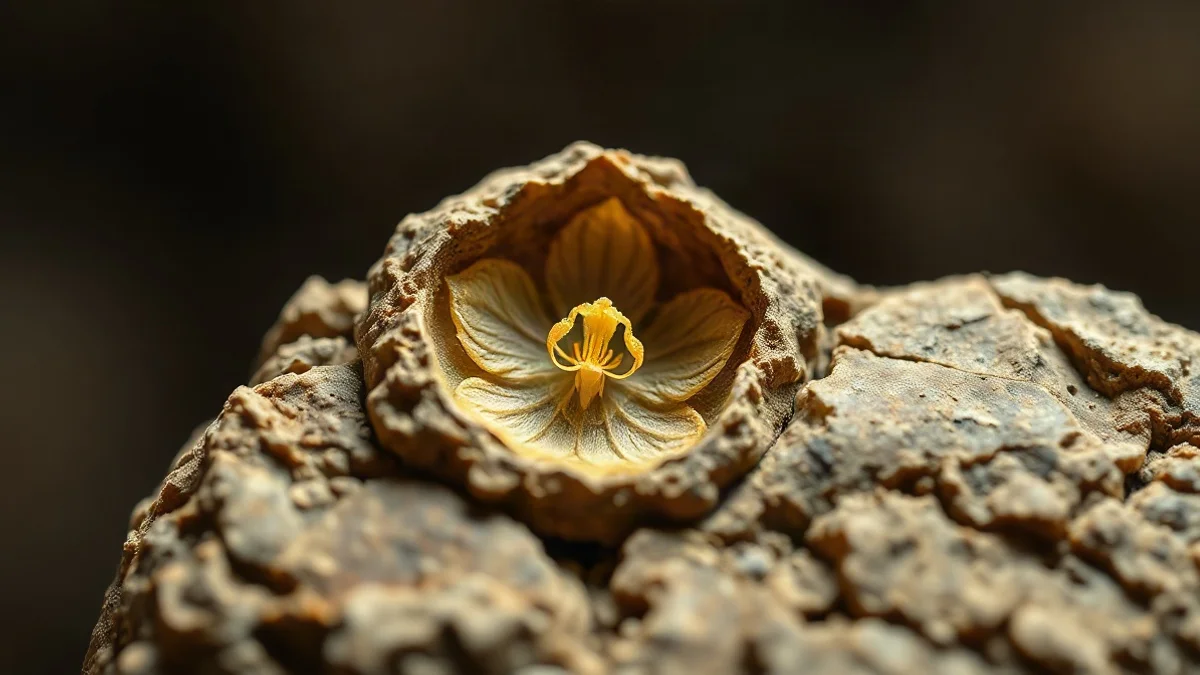
An international team of American and British researchers has discovered an exceptionally preserved, 100-million-year-old fossilized flower dating back to the mid-Cretaceous period. Measuring no larger than a grain of rice with a height of 1.5 millimeters and a diameter of 1.2 millimeters, the tiny specimen was scientifically named Tomlinsoniella pedicellata. The findings were published in the American Journal of Botany and provide new insight into the early evolutionary history of modern plants.
Discovered Hidden in a Century-Old Museum Sample
The fossil was unexpectedly uncovered inside a museum rock specimen collected over 130 years ago. The rock originated from the Dakota Formation in Kansas, a geological unit renowned for its abundant plant fossils, which were gathered and documented between 1870 and 1890 by pioneer paleobotanist Leo Lesquereux. Since then, the specimens have been preserved in the paleobotany collections of the Smithsonian Institution's National Museum of Natural History in Washington.
Dr. Steven Manchester, a paleobotanist at the Florida Museum of Natural History, borrowed a rock sample from the Lesquereux collection to examine another fossil flower known as Dakotanthus using micro-CT scanning technology. During the X-ray computed tomography scan, Manchester accidentally discovered the new fossil completely encased within the rock. Clay minerals surrounding the flower had hardened, preserving its intricate details before the organic material eventually decayed, leaving behind an exact three-dimensional void.
Classic Monocot Structural Traits
The fossil represents an extremely early record of a flower belonging to monocots, a major plant group representing about 20 percent of all known flowering plants today. Monocots include essential global crops such as cereals, bananas, sweet potatoes, and orchids. While genetic DNA evidence suggests monocots originated in the early Cretaceous, mid-Cretaceous fossils from this lineage remain exceptionally rare.
The microscopic fossil exhibits the classic structural blueprint of modern monocots, featuring floral organs arranged in groups of threes: three sepals, three petals, six stamens arranged in triplets, and three distinct, bottle-shaped carpels that are unfreed and apocarpous. This classical layout closely mirrors textbook diagrams of contemporary monocots, such as lilies, tulips, and daffodils.
Evolutionary Significance and Museum Collections
After analyzing the structural morphology, the researchers concluded that the fossil closely resembles an extinct group of palms, likely belonging to a subfamily of fan palms comparable to the modern California fan palm. Study co-author Dr. William J. Baker of the Royal Botanic Gardens, Kew, highlighted the significance of the find:
"To find a fossil flower so perfect, which is unexpectedly revealed from within a rock, is an extraordinary thrill. This ancient flower looks to us so familiar and modern that we would not be surprised to discover such a plant living today."
The discovery emphasizes the immense scientific value of historical museum collections and advanced imaging technologies in unlocking secrets hidden for over a century. Tomlinsoniella pedicellata offers crucial physical evidence regarding the evolutionary diversification of angiosperms during the age of dinosaurs.