Jordanian Hotel Worker Convicted of Raping Autistic Israeli Guest
A 26-year-old Jordanian hotel worker was convicted in Beersheba District Court of raping a 21-year-old Israeli man with autism, exploiting his inability to resist. The plea deal covered two rape counts and indecent acts; sentencing is set for later.

A 26-year-old hotel worker from Jordan was convicted in Israel’s District Court in Beersheba of raping a 21-year-old Israeli man with autism, exploiting the victim’s inability to resist. The court convicted the defendant under a plea agreement covering two counts of rape and one count of indecent acts, while sentencing will be decided at a later date.
The worker was employed as a cleaner and room attendant at a Leonardo Hotels property in Eilat. The incident took place in one of the autumn days about a year earlier, when the defendant entered the room where the Israeli victim was staying with an organized group from the Kinaret Association, which provides services for the welfare and rehabilitation of people with disabilities.
How the attack unfolded in the hotel room
According to the indictment filed against the defendant, he was aware of the victim’s intellectual limitations. The worker began his duties in the room while the guest was there. At some point, he asked the victim whether he wanted a massage, repeating the offer several times even after the victim refused and tried to make his position clear in English.
The victim ultimately agreed to a massage only after he became concerned about the worker. The indictment describes that the victim indicated consent by nodding his head and expressing agreement in a weak voice. The massage began with the worker touching the victim with his hands, but shortly afterward the worker instructed him to lie on the bed.
The indictment states that the contact then took on a sexual character. The worker inserted his hands under the victim’s underwear despite the victim’s attempts to explain that he did not want this. “He inserted his thumbs into the victim’s anus, despite the fact that he expressed resistance to this,” the indictment said.
The indictment further described that the worker ordered the victim to turn over and lie on his back, continuing to touch his concealed genital area in an effort to reach sexual gratification. It also described an additional rape incident and other acts intended to bring the defendant to sexual arousal and satisfaction.
Charges, plea agreement and court proceedings
The indictment attributed to the defendant two counts of rape and one count of indecent acts. At the end of the indictment, which was amended after several court hearings, the document stated that the defendant “raped the complainant without his free consent, by exploiting the fact that the complainant is intellectually disabled in a way that does not allow him to give free consent, and also committed indecent acts against him by force.”
The plea agreement was reached before the trial began, ahead of the scheduled testimony of the victim. The victim’s lawyer, Shlomi Hacohen, asked that the victim be allowed to testify behind a partition so he would not have to face the defendant.
The defendant participated in the hearings from custody via a remote video system. Hacohen was appointed to represent the victim through Legal Aid.
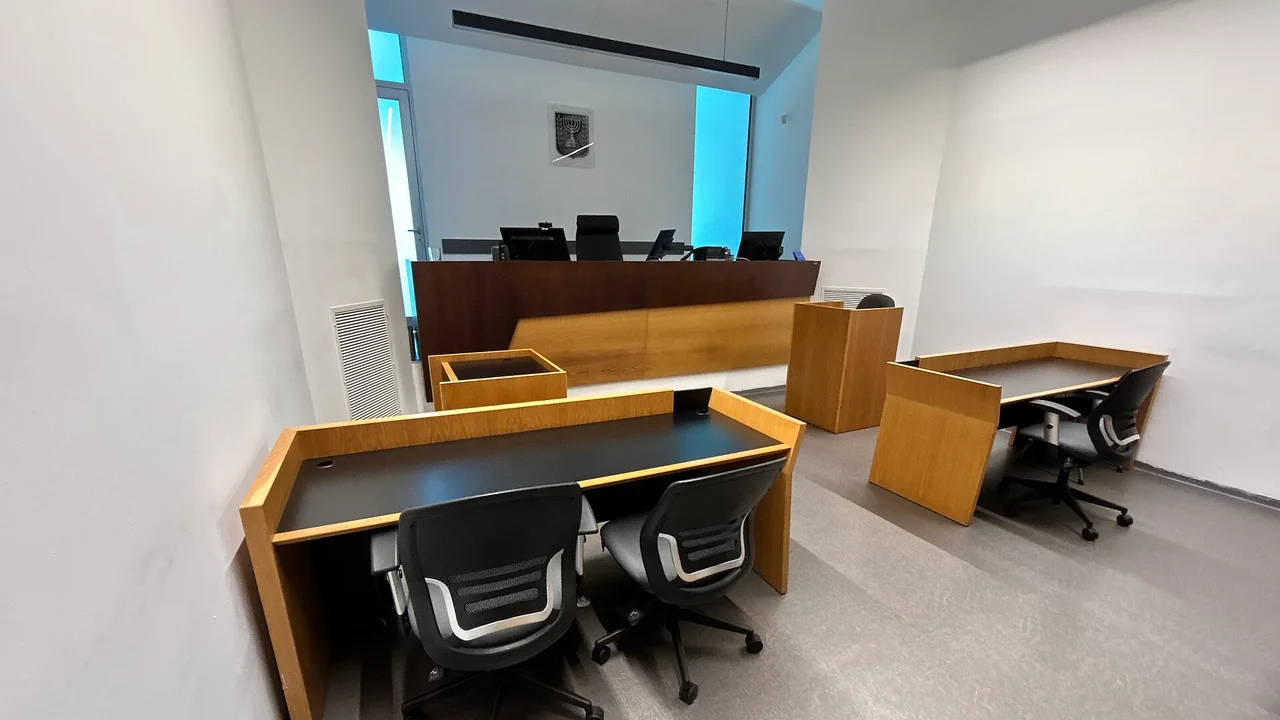
The panel of the District Court in Beersheba, which included Yoel Eden, Racheal Toren, and Dr. Yuval Livdaro, was scheduled to begin hearing prosecution witnesses on the day before the proceedings were set to start. However, before any testimony began, the prosecution’s representative, attorney Ayyelet Kadosh, informed the court that a plea agreement had been reached with the defendant’s defense.
Kadosh told the court: “We reached a plea agreement, according to which a second amended indictment will be submitted, as I am filing it with the court now. The defendant will withdraw his denial in the indictment, will admit the facts in the second amended indictment, and will be convicted of the offenses detailed therein. There is no sentencing agreement between the parties and the parties will present open arguments.”
Under the agreement, the defendant withdrew his denial of the charges, admitted the facts in the second amended indictment, and was convicted of the offenses attributed to him. The court accepted the plea agreement and convicted the worker.
Sentencing to be decided later
While the plea agreement led to conviction, the prosecution and defense did not reach an agreement on punishment. Each side will present its sentencing arguments to the court, and the sentence will be issued at a later date.