Heavy Trucks Drive Israel's Highway Gridlock as Megaprojects Loom
Heavy trucks comprise 7% of Israel's vehicles but drive severe highway congestion and safety hazards, with upcoming infrastructure projects threatening gridlock.
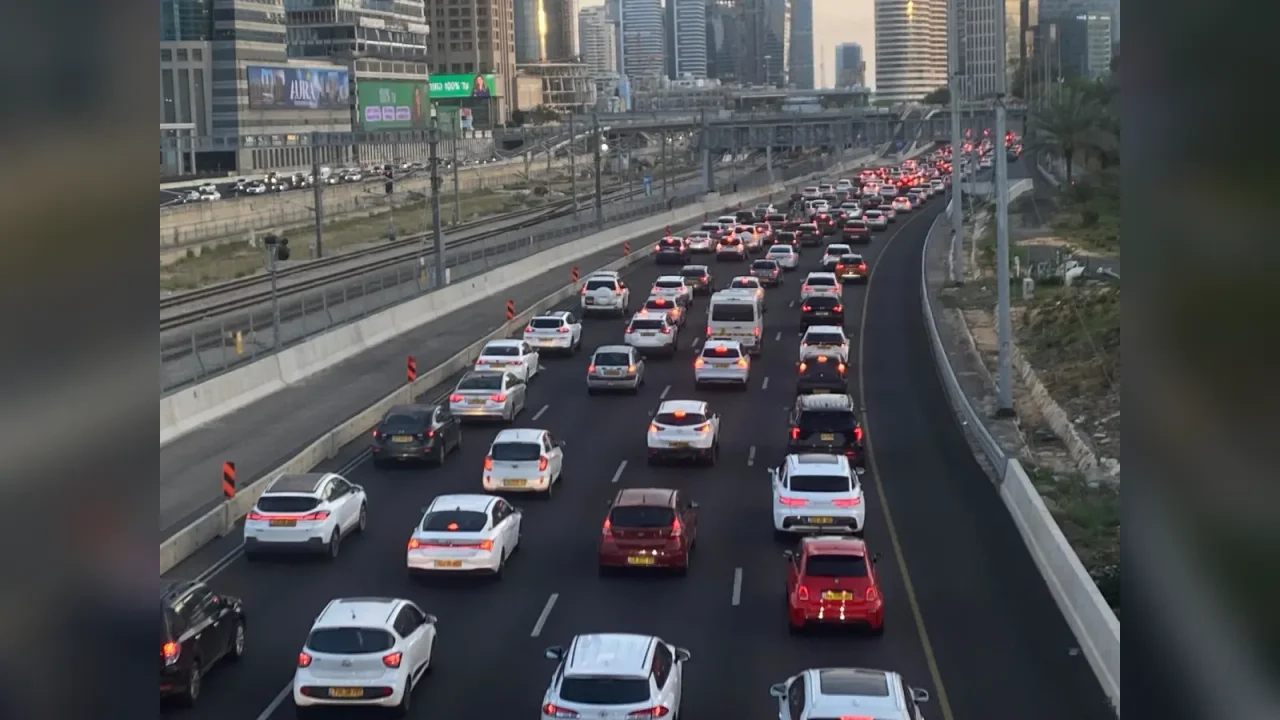
Heavy trucks account for just seven percent of all registered vehicles in Israel, yet they drive gridlock and present a growing daily hazard on major highways. According to the Central Bureau of Statistics, approximately 314,000 trucks operate among the nation's 4.37 million registered vehicles. Due to their immense size, slow acceleration, and long braking distances—requiring two and a half to three times the stopping space of passenger cars—these commercial carriers exert a disproportionate impact on traffic flow and highway safety.
The Logistics Bottleneck and Rail Limitations
Israel relies almost entirely on maritime imports, with 99 percent of goods arriving through seaports and more than 90 percent subsequently transported to distribution hubs via road. Recent years have seen shifts in port activity, with Ashdod Port and The South Port increasing their combined container share to 62 percent by 2025. Meanwhile, Haifa Port absorbed a major share of vehicle imports following the shutdown of Eilat Port. Unlike European nations that move roughly 15 percent of overland cargo by rail, Israel Railways handles only five to six percent of freight. Passenger trains command priority on the national rail network during daytime hours, relegating freight operations to the night and forcing thousands of containers onto highways.
Daily Safety Risks and Toll on Drivers
Daily road congestion is compounded by serious safety risks. The National Road Safety Authority reports that 97 people have died in heavy vehicle accidents this year, including 36 fatalities involving trucks exceeding 3.5 tonnes. Dr. Mor Caspi of the Tel Aviv University Smart Transportation Research Center emphasizes that heavy vehicle dynamics routinely conflict with passenger traffic. Fatigue, demanding schedules, and a scarcity of secure roadside rest areas and parking bays along highways further exacerbate risks for professional drivers and motorists alike.
Looming Megaprojects and Infrastructure Pressures
Without immediate infrastructural reforms, upcoming megaprojects threaten to overwhelm the national transport network. Construction of the Tel Aviv metropolitan light rail and metro network by NTA Metropolitan Mass Transit System will generate between 51 and 80 million tonnes of excavated earth, requiring up to 2,500 daily heavy truck trips from dense urban centers like Tel Aviv, Ramat Gan, Petah Tikva, and Rishon LeZion. Furthermore, the planned IMEC international trade corridor and future reconstruction efforts in Gaza will inject thousands of additional transport vehicles onto arterial routes.
Regulatory Responses and Strategic Plans
The Ministry of Transportation stated that it is advancing a comprehensive master plan to expand rail freight capabilities, construct inland freight terminals near the Jordan River and Tkuma, and divert 40 percent of heavy truck operations to nighttime hours. Additionally, authorities are implementing digital tachographs, establishing designated nighttime truck stops, and promoting coastal container shipping between Haifa Port and Ashdod Port to alleviate highway congestion.