Haifa Bay Port Eyes Regional Trade Hub Status Amid Post-War Recovery
Haifa Bay Port navigates post-war recovery and automated efficiency, while executives warn that geopolitical bottlenecks have hindered Israel's potential to become a major regional trade hub connecting the Persian Gulf to Europe.
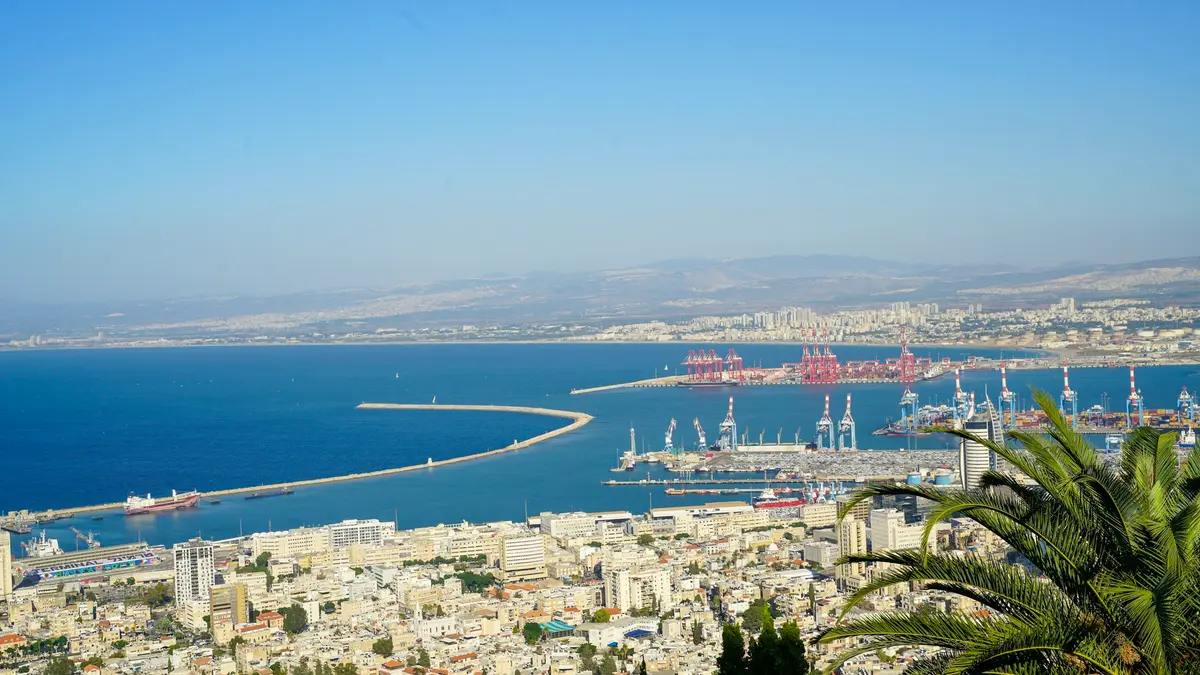
Massive automated cranes operate along the piers of Haifa Bay Port, yet they are entirely unmanned. Operators control them remotely from fortified control rooms, while automated systems manage container traffic. According to port management, transferring a container to a truck takes roughly seven minutes. However, a complex economic reality lies beneath this advanced technology: the ongoing conflict has halved port activity, and aspirations to turn Haifa into an international trade hub depend heavily on shipping lanes, border crossings, and regional security.
Yoav Zuckerman, Deputy CEO of Haifa Bay Port, outlines an economic opportunity that he asserts Israel has failed to capitalize on. Following disruptions in the Strait of Hormuz region, he notes a surging demand to transport goods from Persian Gulf nations to Europe through Israel. Cargoes were intended to travel via trucks across Saudi Arabia and Jordan, enter Israel, and subsequently depart on ships from Haifa's ports. Nevertheless, he argues that bottlenecks at the Jordanian border crossing severely restricted operations, forcing some shipments onto alternative routes. "One can certainly say that the State of Israel, or the ports in Haifa, missed a tremendous opportunity," he states.
Overcoming Wartime Hurdles and Rebuilding Volume
Haifa Bay Port commenced operations in September 2021 as part of a sweeping reform designed to foster competition in the maritime sector. China's SIPG secured the operating concession in 2015, establishing the port on land reclaimed from the sea. Five years following its launch, operators face the ongoing challenge not only of rapidly unloading vessels but also of attracting international shipping lines and cargo to Haifa.
The war dramatically impacted throughput. "By 2023, we had already reached 80,000 containers a month," Zuckerman recalls. "Following the war, imports and exports plummeted drastically, dropping us to around 30,000 or 35,000 containers monthly. Today, we stand at nearly 60,000 containers a month." Volumes are measured in TEUs (twenty-foot equivalent units). During the sharpest downturn, the port shed between 56% and 63% of its pre-war monthly volume. Although a significant recovery has taken place, throughput remains roughly a quarter below 2023 levels.
Zuckerman views container traffic as a direct barometer of the Israeli economy and the confidence of importers and exporters. "I assume an importer of items like shoes will not order massive quantities and fill warehouses to the brim. They might fill them halfway, just in case hostilities resume and consumer purchases decline," he explains. "You can gauge the mood of importers and exporters directly from the volume of incoming containers. Fortunately, that sentiment is improving."
The Regional Trade Vision and Transshipment Ambitions
Beyond domestic recovery, the port aims to expand transit cargo moving through Haifa toward international destinations, transforming the facility into a major regional trade hub. The disruptions around the Strait of Hormuz created an urgent demand for alternative trade corridors. Rather than shipping goods entirely by sea, carriers can truck freight across Saudi Arabia and Jordan into Israel, loading them onto vessels bound for Europe.
"The moment the Strait of Hormuz became a hazardous zone and regional ports were paralyzed, those shipments sought alternative pathways," Zuckerman explains. "The most efficient alternative route involves driving 1,500 to 2,000 kilometers by truck to the Jordanian border, crossing into Jordan, reaching the border checkpoint with Israel, and arriving directly at Haifa Port." However, he contends that surging demand was not matched by border-processing capacity, leading to transit delays of 14 to 20 days and diverting goods toward Lebanon, Syria, and Turkey.
Unlocking this potential requires tight coordination between governments, customs authorities, security bodies, and transportation agencies. Port management emphasizes that speed remains a core advantage, noting that vessel waiting costs range from $20,000 daily for smaller ships up to $200,000 for ultra-large container vessels. Operating around the clock, 365 days a year, Haifa Bay Port ensures continuous turnaround, cementing strategic partnerships with major carriers such as ZIM Integrated Shipping Services, which has designated the facility as its home port in Haifa.