Investment Manager and the Golden Tip: "The Best Buying Point is When Pessimism is Priced In"
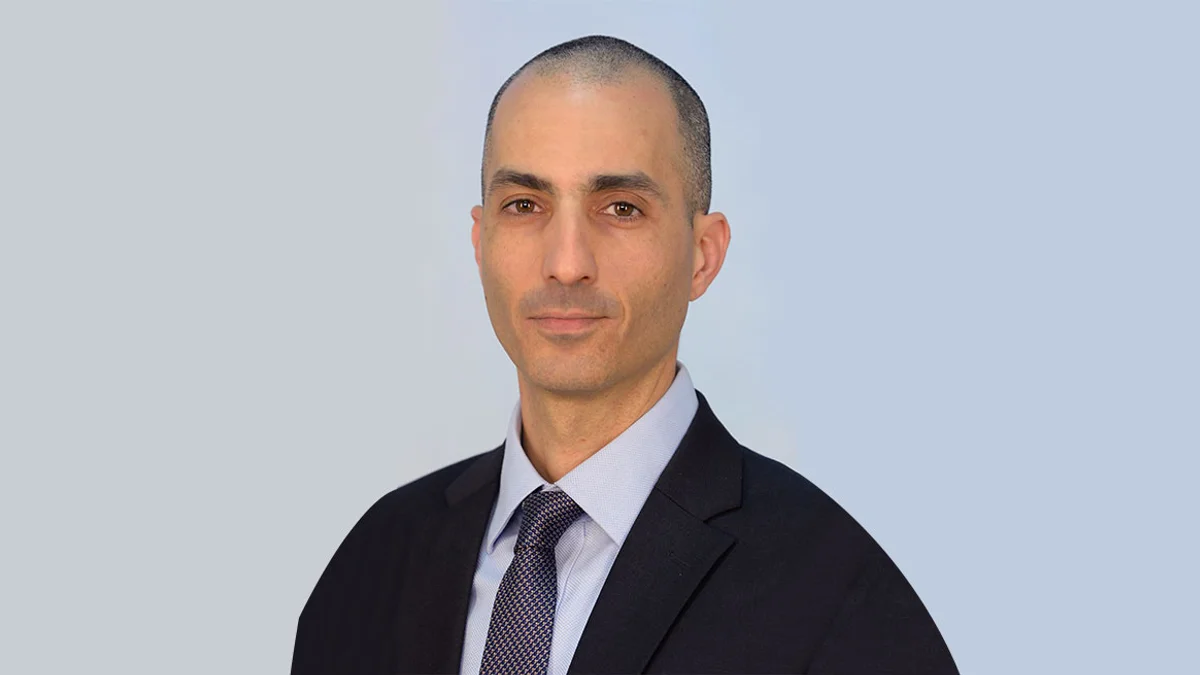
When Horizon Investment House CEO Itay Lipkovich looks at the drama in US bond yields, he sees an opportunity: "When the Treasury intervenes in the market, stocks rise." Why is he looking for bargains specifically in the bond companies the market fears? And also: the tech giant he is convinced will surprise in a big way.
The issue weighing most heavily on investors these days is the surge in long-term US government bond yields. In the opinion of Itay Lipkovich, CEO of Horizon Investment House, which manages 2 billion shekels, this is also the barometer that will continue to make things difficult for the markets in the near future. According to him, this is a worrying phenomenon, as "we have returned to yields of 5.2%–5.4% on long-term government bonds." The Fed and the US administration will want to prevent a breakout of these yield levels, because if it breaks, the market could enter a tailspin and yields could jump even towards 6% in the medium term, and this will also hurt the real estate sector, which is already suffocating today.
"The US debt has crossed 40 trillion dollars, and if the interest on the debt rises, it is only adding fuel to the fire. Paying 5% on 40 trillion dollars is 2 trillion dollars a year just in interest on the debt when it is rolled over." However, in his eyes, this is also an opportunity. "Last week the Treasury announced bond purchases. For now, it is a minor intervention, but historically, whenever the US has done a bond purchase program, it has caused the stock market to rise, even if the interest rate does not drop, because it increases demand versus supply in the bond market and lowers long-term interest rates."
Beyond the debt, Lipkovich warns of additional inflationary pressures: "If oil stays at 85 dollars, that is the good scenario, but a return to war with Iran and the closing of the Strait of Hormuz will jump it to 100 dollars. This is while at the same time there is now a rise in the prices of agricultural commodities like corn and wheat due to weather damage. This could create inflation from all directions."
"The big rally we saw in Israel has ended"
Regarding the local arena, Lipkovich argues that "the Israeli market is treading water. Last year's big rally has ended, we see underperformance in banks and defense stocks. The risk premium is no longer dropping because it seems that the agreements with Lebanon and Syria did not happen and the fall of the regime in Iran did not arrive, and there is uncertainty regarding the elections. The market has 'normalized' to much higher multiplier levels and is now struggling to rise. And if Iran has ballistic missiles in large quantities again within two years, we are back to talking about risks to the local market."
So should exposure to Israel be reduced now? "Israel is a very small country relative to the global stock market. If we lived in another country, we probably would not put a large part of the portfolio in the Israeli market, and therefore now there is a need for 60% exposure to abroad and 40% to Israel."
"Spreads in the bond market are at a low"
When we ask Lipkovich to build a portfolio, he suggests a portfolio of 30% stocks and 70% bonds for a conservative investor. He suggests allocating 18% of the portfolio to foreign stocks and 12% of the portfolio to stocks in Israel. 24% of the portfolio he allocates to Israeli government bonds with a duration of 6–7 years, "because the spreads between corporate and government bonds are at a low today," 11% he allocates to corporate bonds in Israel with a high investment rating of AA, and another 35% to bonds with A ratings or unrated.
For an aggressive investor, he suggests allocating 50% to stocks and 50% to bonds. In the equity portion, he allocates 30% to foreign stocks and 20% to stocks in Israel. For Israeli government bonds he allocates 17%, for corporate bonds in Israel with an AA rating he allocates 8%, and for corporate bonds with an A rating or unrated he allocates 25% of the portfolio. He justifies the allocation to corporate bonds with lower ratings by saying that they were hit "because of the mess in the bonds of American real estate companies (BVI) and the fear of interest rates, this segment took a hit. But the best buying point is when the market prices in all the pessimism. There are also good bonds with liens that trade at yields of 8%, compared to yields of a little over 3% in government bonds and 4% in AA-rated bonds."
"Apple stock is going to surprise in a big way this year"
When we ask him where to put the money now, he enthusiastically recommends Apple stock, which "is going to surprise in a big way later this year. After years of weak sales, we will see a wave of iPhone upgrades thanks to the new chips combined with AI. People who haven't replaced an iPhone in 4–5 years are going to replace it. In addition, Apple will allow organizations to run AI on an internal server, without fear of data leakage, there will be crazy demand for this product, this will bring them a lot of money, and the market is not yet pricing the product into Apple's value. Therefore, Apple is a great investment for this period."
In addition, he suggests overweighting the industrial sector in the US (ETF XLI), and the American defense and aviation sector (ETF ITA) because of the "global arms race. The US used so many missiles in the war with Iran and understands that it needs many more missiles." Another sector that receives a hot recommendation is healthcare (XLV). "The pricing there is very attractive after a weak period. AI will lead to the fact that suddenly more and more possibilities for drugs and vaccines will be found, as we saw now with Moderna's cancer vaccine, and also from pressure from the Democrats after the midterm elections to expand health programs."