New Study Reveals Surprising Fingerprint Similarities Across Hands
A new study published in the "Journal of Forensic Sciences" analyzed 56 million fingerprints, revealing surprising similarities between parallel fingers and offering new tools to improve forensic identification accuracy.
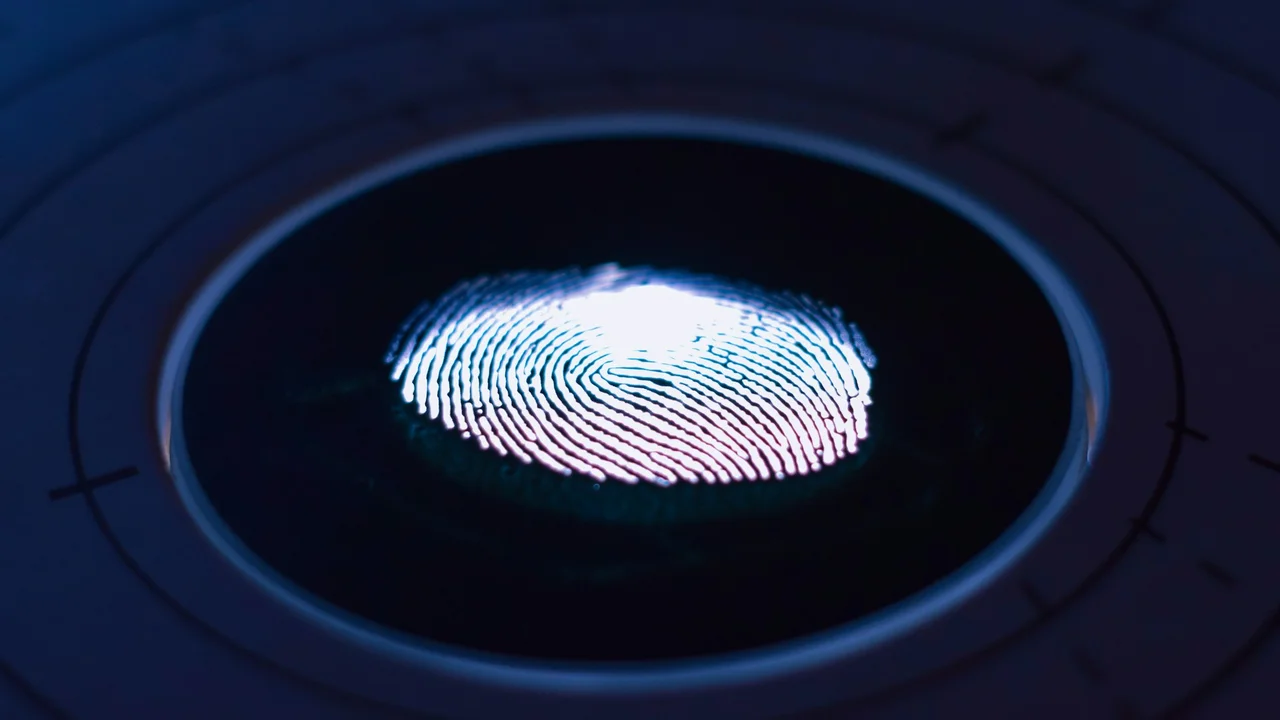
A new scientific study published in the "Journal of Forensic Sciences" challenges long-held assumptions about human fingerprints, revealing surprising similarities alongside the well-known differences. Researchers analyzed data from more than 56 million fingerprints, discovering distinct patterns of correlation, particularly between parallel fingers on the right and left hands. These findings could significantly improve forensic identification systems and help experts assess the statistical accuracy of fingerprint matches.
The research was conducted by a team of six researchers from China, led by Yaqi Yang, in collaboration with the China University of Political Science and Law in Beijing, the Beijing Public Security Bureau, and the Beijing Police College. The team focused on the minute ridges covering fingertips, which form familiar patterns of loops, whorls, and arches. Along these ridges lie minutiae points where lines split or end, and the combination of their location and shape has traditionally been used for identification. Through computerized analysis of the vast dataset, the scientists examined how these features are distributed across various prints and how frequently they repeat.
One of the most prominent findings was a statistical similarity between corresponding fingers on both hands. The researchers identified a degree of symmetry in how certain features appear, alongside substantial differences between overall patterns. This indicates that fingerprints are not a collection of entirely random shapes and that shared underlying patterns do exist. However, the study did not prove that two different fingers carry identical prints or that two different individuals share the same fingerprints.
Beyond discovering these similarities, the researchers developed a novel method to evaluate how distinct a specific fingerprint is compared to others. The system analyzes the minute features of a print and assigns a score based on their uniqueness. In experimental tests, the method successfully distinguished between different prints, even when they shared significant visual similarities.
This discovery could hold particular importance for criminal investigations. When investigators recover a fingerprint at a crime scene, they compare it against databases to identify the person who left it. However, latent prints are often incomplete or smudged, leaving only a small fragment for analysis. In such cases, the ability to assess how common or rare specific features are could help determine the statistical strength of a match.
The researchers estimate that these findings will contribute to the development of more accurate computerized identification systems and improve how experts evaluate fingerprint evidence. While the new method provides an additional scientific basis for examining matches, it remains a research development and has not yet been formally integrated into police systems or court procedures.