Seat Arona Receives Minor Updates as Volkswagen Group Strategy Shifts
Seat faces an uncertain future as Volkswagen focuses on Skoda and Cupra. The updated Seat Arona subcompact SUV features only minor cosmetic tweaks and a familiar 1.5-liter engine, struggling to stay competitive against rapidly evolving rivals.
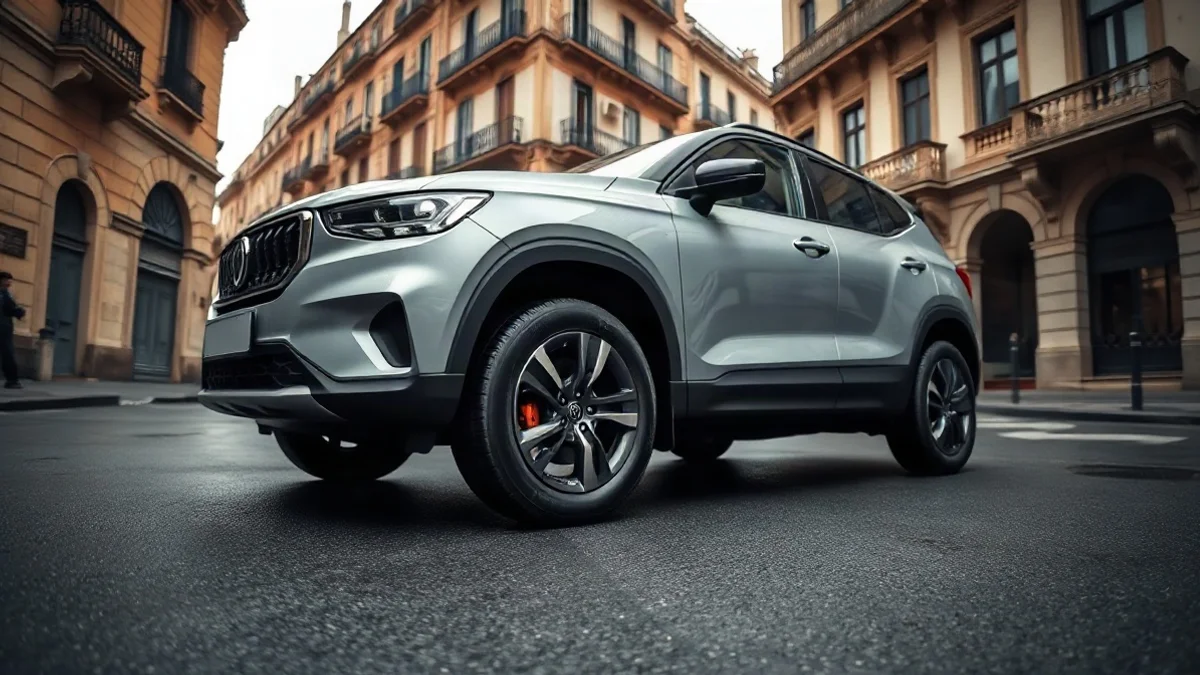
Seat, the quintessential Spanish automaker within the Volkswagen Group, is facing a critical juncture. As the parent company initiates sweeping cost-cutting measures amid intense Chinese market competition and high domestic production costs in Germany, the future of the brand remains uncertain. While recent German media reports suggested that Volkswagen may phase out the Seat brand—relying on Skoda for mass-market vehicles and Cupra for sporty offerings—the company's current vehicle lineup tells a story of stagnation and minimal investment.
A clear example of this conservative approach is the updated Seat Arona. The subcompact SUV is receiving its second mid-cycle refresh, though the changes are so subtle that they are easily missed at first glance. Exterior updates are limited to a revised front bumper and subtle lighting tweaks, while interior modifications include slightly improved upholstery and a stronger wireless smartphone charging pad. Despite these minor updates, the local importer has kept pricing stable, with the tested top-tier model starting at approximately 144,000 shekels.
Beneath the hood, the Arona features the Volkswagen Group's familiar 1.5-liter turbocharged engine producing 150 horsepower, paired with a dual-clutch automatic transmission. While lower trims offer a 1-liter three-cylinder engine, the 1.5-liter variant delivers ample power for highway cruising. However, the transmission exhibits occasional hesitation at urban speeds, and the infotainment system feels sluggish compared to modern competitors. The cabin retains its familiar layout, offering good driving ergonomics and a supportive seat, but lacks basic modern amenities for rear passengers, such as USB charging ports or dedicated air conditioning vents.
On the open road, the Arona performs admirably, maintaining the refined ride quality and solid handling characteristic of Volkswagen Group platforms. Road noise is well-managed, and safety systems operate seamlessly, though low-speed urban rides can feel somewhat firm over potholes and speed bumps. Ultimately, while the updated Seat Arona remains a capable and well-built compact crossover, its lack of substantial technological innovation or hybrid powertrain options in an increasingly aggressive market—dominated by rapidly evolving Chinese competitors—risks turning it into a niche product.