Israel's Fast Lane Park-and-Ride Project Faces Commuter Utilization Gaps
Israel's multi-billion-shekel fast lane park-and-ride project faces utilization gaps, with parking facilities operating below capacity as commuters weigh total travel times and connectivity.
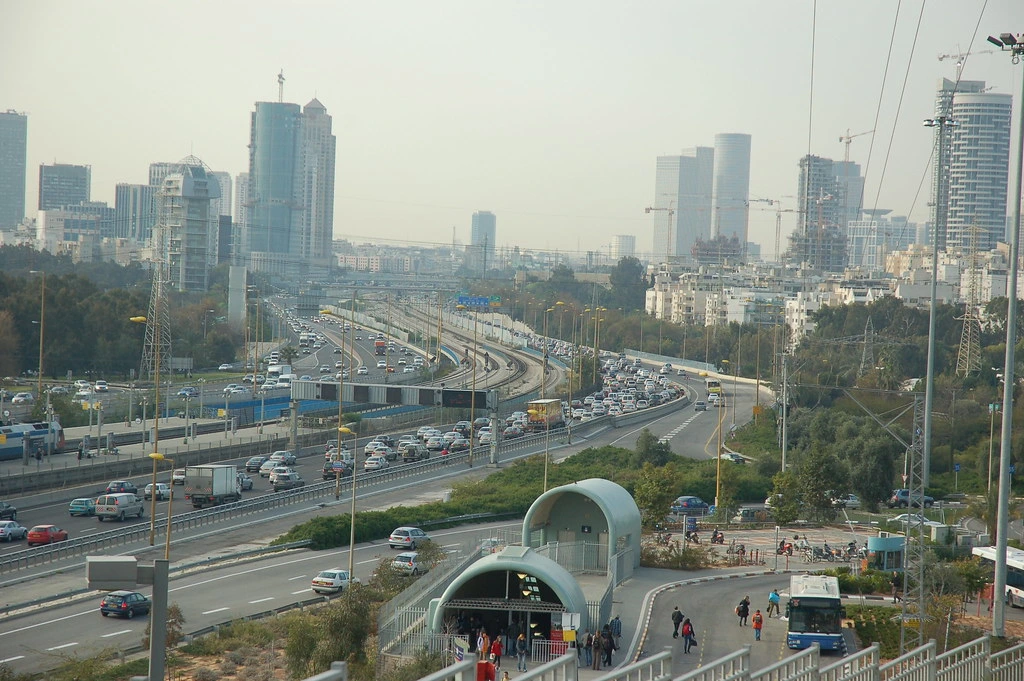
Israel has invested billions of shekels in the fast lane project, establishing three major park-and-ride complexes in Shefayim, Rishon LeZion, and Shapirim. Together, these facilities offer 14,300 parking spaces and a shuttle network designed to transport commuters to employment centers in the Tel Aviv metropolitan area. However, recent data indicates a significant gap between the infrastructure created and its actual utilization by motorists.
According to an analysis by Geocartography Group, the Shefayim parking facility, which opened in April with 7,000 spaces, is operating at only about 50 percent capacity. Approximately 3,500 vehicles arrive at the site daily, while the shuttle service serves between 9,000 and 10,000 passengers a day. In Rishon LeZion, where a new 3,500-space lot with four shuttle routes opened in October, usage patterns are still taking shape.
Evolving Demand and Travel Times
At the long-standing Shapirim parking lot, which has been expanded over the years to 3,800 spaces, demand has shifted. While initial years saw high utilization, the average daily number of shuttle passengers in 2023 was roughly 34 percent lower than in previous years, and daily users dropped significantly. Dr. Rina Degani, head of Geocartography Group, explains that speed alone is insufficient. Commuters weigh the total travel time from home to the office and the actual minutes saved compared to driving a private car.
Actual travel time analysis shows a stark contrast on certain routes. A test from Shefayim to HaKirya recorded 20 minutes by shuttle compared to 55 minutes by private car during the same hour. However, drivers must factor in the time required to reach the parking lot, search for a space, wait for the shuttle, and walk from the drop-off point to the office. About 20 percent of potential passengers express willingness to switch to shuttles, while approximately 50 percent condition this on service frequency and reduced travel times.
Broader Impact on Traffic and Real Estate
Another critical issue is net transportation utility. Studies at the Shapirim lot revealed that only 53% to 55% of shuttle users previously traveled to the center by private car, with others switching from existing public transit, including Israel Railways. This indicates that rising shuttle passenger counts do not necessarily translate to a proportional reduction in cars on the road.
Transportation changes also affect surrounding residential areas. Nechama Bogin, chair of the Appraisers Association, notes that park-and-ride lots do not inherently raise apartment values; rather, reduced commuting times from home to work drive value increases, impacting specific neighborhoods near parking access rather entire cities. Ultimately, experts emphasize that infrastructure success depends on seamless connectivity and addressing the final mile of urban transit.