Astronomers Prepare for Breakthrough Observations of Exoplanet LHS 1140b
Dr. Colin Cherubim prepares to observe the exoplanet LHS 1140b in search of atmospheric helium, potentially marking a major breakthrough in the hunt for habitable worlds beyond our solar system.
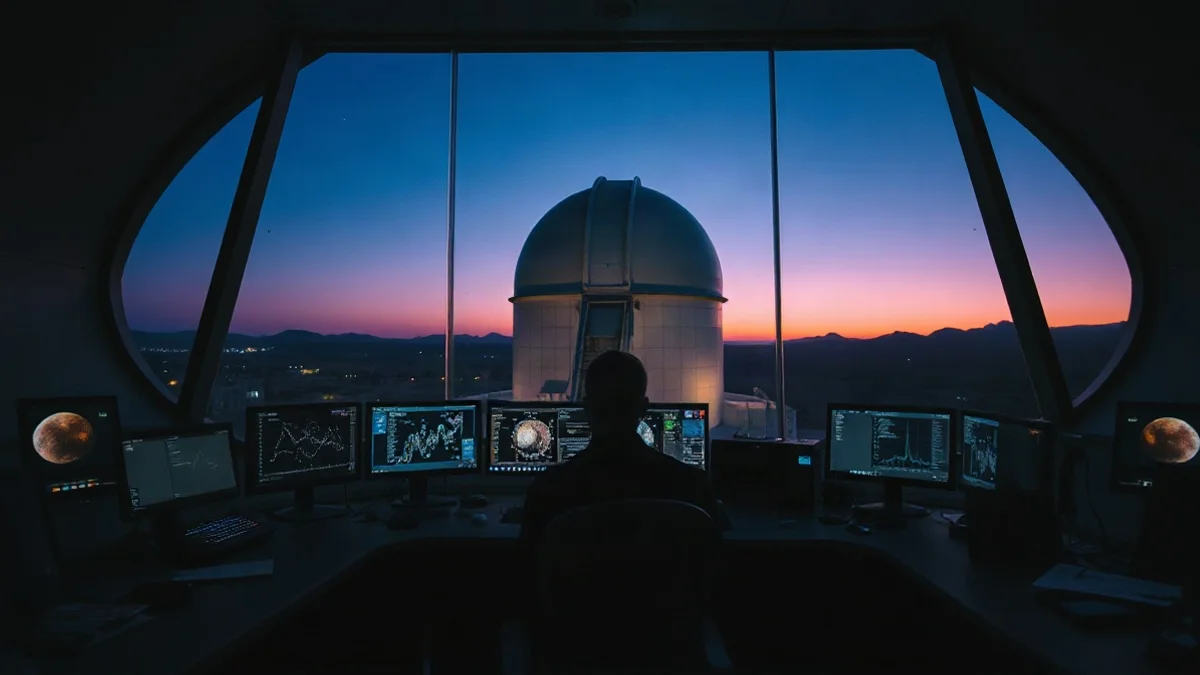
Astronomers are on the verge of a potential breakthrough in the search for extraterrestrial life as Dr. Colin Cherubim prepares to observe the exoplanet LHS 1140b using advanced telescopes in Chile. Located 49 light-years away, LHS 1140b is roughly 70% larger than Earth and orbits a red dwarf star. Discovered in 2017, the exoplanet has recently emerged as a prime candidate for hosting habitable conditions, boasting an overall composition and temperature profile remarkably similar to our own.
The Search for a Primordial Atmosphere
Speaking to the press, Dr. Cherubim explained that previous observations yielded conflicting data regarding the exoplanet's density and atmospheric composition. While initial measurements suggested a barren rock, subsequent data pointed toward a possible global ocean and a secondary atmosphere rich in helium. However, follow-up observations using advanced instrumentation failed to consistently detect the helium signature, leaving researchers eager for definitive data from upcoming telescope passes.
Scientific Caution and Future Prospects
Professor Yohai Kaspi of the Weizmann Institute of Science noted that while the detection of an atmosphere in the habitable zone is a significant milestone, it does not automatically guarantee conditions suitable for life. Researchers emphasize that confirming biological activity will require detecting complex organic molecules or technosignatures, as current data remains inconclusive. Future missions, including advanced space telescopes scheduled for launch in the coming decades, are expected to provide deeper insights into distant worlds.