Euclid Space Telescope Discovers Most Distant Quasar from Early Universe
Euclid space telescope discovered the most distant quasar known, J1504+6252, powered by a 360-million-solar-mass black hole seen 630 million years after the Big Bang.
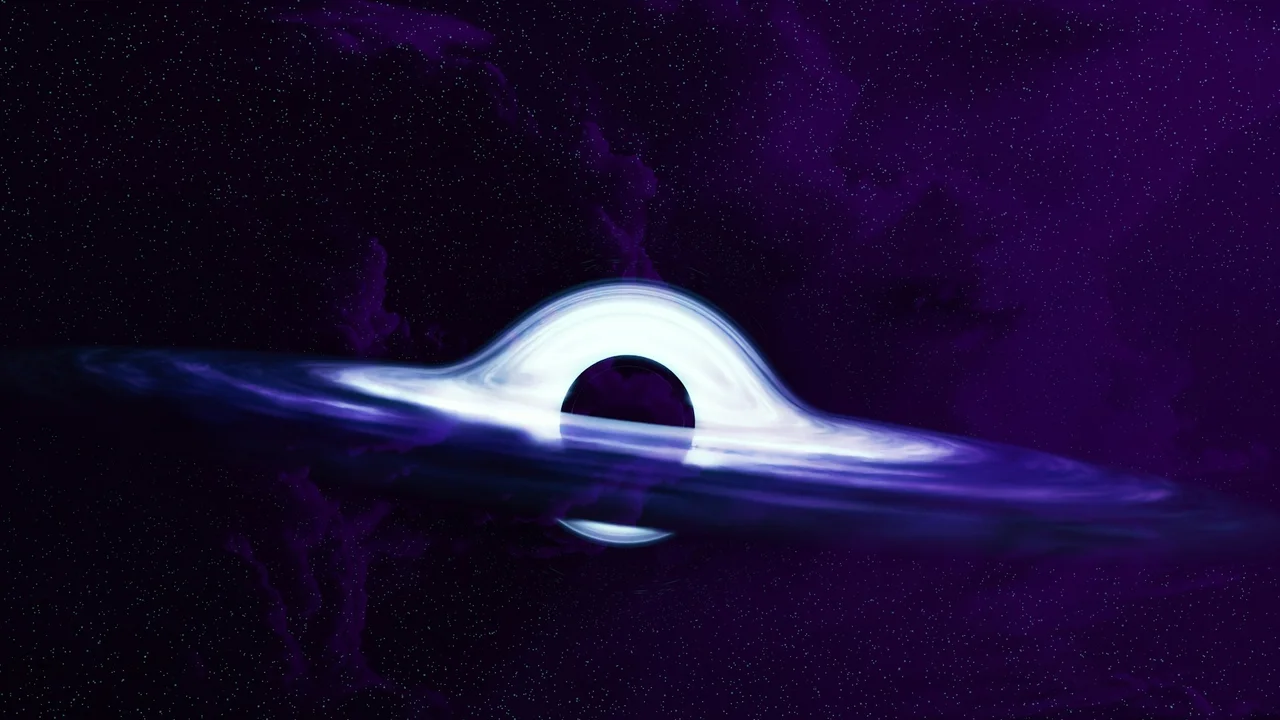
The European Space Agency's Euclid space telescope has discovered the most distant quasar observed to date, featuring a supermassive black hole with a mass equivalent to approximately 360 million suns. The rare galactic core appeared as it was roughly 630 million years after the Big Bang, breaking a previous record set by the same telescope just months prior and pushing humanity's view of the early universe back by an additional 40 million years.
Officially designated as J1504+6252, the celestial object was identified among millions of candidates examined in data gathered by the Euclid observatory over an 18-month period. Following the initial detection, an extensive observation campaign was conducted utilizing both ground-based and spaceborne facilities, including the W. M. Keck Observatory, the Large Binocular Telescope, the NASA/ESA Hubble Space Telescope, and the James Webb Space Telescope operated by NASA, ESA, and the Canadian Space Agency. Data from these instruments confirmed the object's identity and revealed that it boasts a redshift value of 8.13, marking the first time a quasar with a redshift exceeding 8 has been identified.
Challenges to Cosmic Growth Models
Dr. Julien Wolf of the Max Planck Institute for Astronomy in Germany and the European Southern Observatory, who led the research published in the journal Astronomy & Astrophysics, noted the implications of the discovery for theoretical models. "The closer we find them to the Big Bang, the faster their black holes must have grown, been more massive at formation, or a combination of both," he explained.
Unlike many other distant quasars, this newly discovered object accretes matter at a relatively modest rate, indicating that it attained its colossal mass through exceptionally rapid growth episodes during the earliest stages of cosmic history. This characteristic challenges existing scientific models regarding the formation and rapid maturation of black holes in the early universe, providing researchers with vital insights into the transition of the cosmos from darkness to light during the emergence of the first stars and galaxies.