Negev Flash Floods Reveal Massive Water Pools and Revive Desert Trails at Ein Yarkam
Recent Negev flash floods have created a massive water reservoir at Ein Yarkam in Nahal Hatira, transforming the desert landscape, reviving local ecosystems, and offering new hiking trails for visitors.
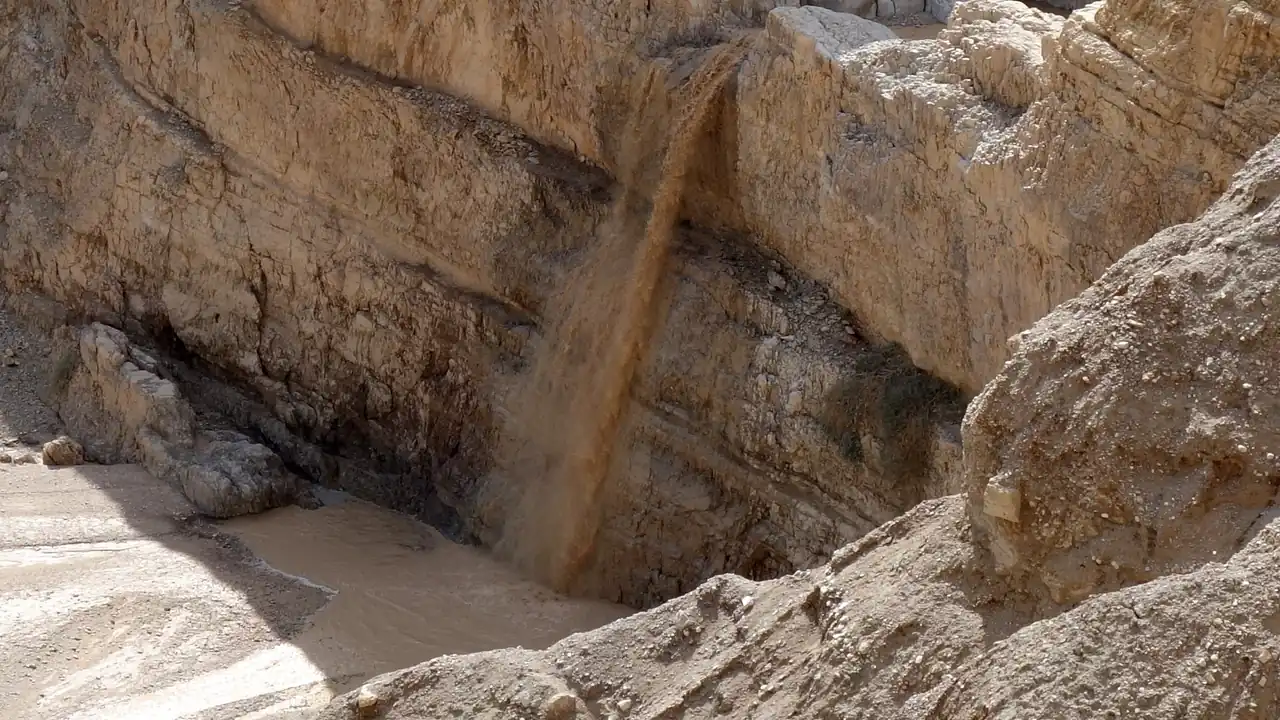
Powerful flash floods that swept through the Negev during election day tore away years of accumulated sediment in Nahal Hatira, which drains the Great Crater, and carved out deep desert pools. At Ein Yarkam, a beloved hiking destination, a massive water reservoir formed across a stretch of roughly 200 meters outside the canyon.
Shlomi Lobaton, a veteran tour guide with thirty years of experience leading flood expeditions, noted that he has never witnessed such an immense overflow at the site. While Ein Yarkam is naturally fed by a spring with year-round water in its narrow canyon, the recent torrents cleared out debris and created deep pools that will last well into the winter season.
Hiking Options and Trail Accessibility
Ein Yarkam offers accessible trails for families as well as challenging routes for experienced hikers. Visitors can navigate using Waze to reach a designated parking area near the site.
- Short Family Walk: A brief six-minute walk covering about 300 meters leads straight into the canyon, while the marked trail to the spring itself is roughly 600 meters from the parking lot.
- Nahal Hatira and Maale Palmach: Adventurous visitors can hike further along Nahal Hatira, encountering additional pools and descending via high ladders at Maale Palmach, though the ladder descent is unsuitable for young children.
- Combined Desert Trek: Experienced hikers looking for a challenge can combine Nahal Hatira with Nahal Yamin in a one-way, six-kilometer route that requires vehicle shuttles.
Geological Heritage and Desert Wildlife
Families visiting the region can enrich their desert experience by stopping at nearby Gav Hetzim to examine ancient marine fossils, including preserved clams and starfish, which testify to eras when the Negev was submerged under prehistoric seas. Authorities remind the public that all natural fossils are protected by law and must not be collected.
During his tour, Lobaton also encountered a herd of Nubian ibex near the roadside that displayed distinctive reddish coats and white leg stripes. Environmental observers note that the recent rains have sparked a revival in local flora, fostering new plant and mushroom growth that will sustain desert wildlife ranging from small rodents to apex predators.
Scenic Overlooks and Environmental Concerns
For travelers wishing to extend their journey, Lobaton recommends scenic overlooks atop Maale Akrabim and Maale Ali at the rim of the Small Crater. While Maale Akrabim offers sweeping historical views, the road remains officially closed to vehicular traffic for safety reasons. Nearby Maale Ali provides a vantage point to observe geological erosion processes.
Meanwhile, environmental organizations continue to monitor the future of the region following recent legal proceedings concerning nearby phosphate mining plans, signaling an ongoing commitment to protecting local natural landmarks. Visitors heading to Ein Yarkam are advised to check weather forecasts in advance, avoid stream beds during flood warnings, and exercise caution near cliff edges and deep pools.