8,500-Year-Old Prehistoric Settlement Uncovered in Egypt's Western Desert
Egyptian and Italian archaeologists have uncovered an 8,500-year-old prehistoric settlement in Egypt's Western Desert, revealing stone structures and ancient lakebeds that offer new insights into early human adaptation to climate change.
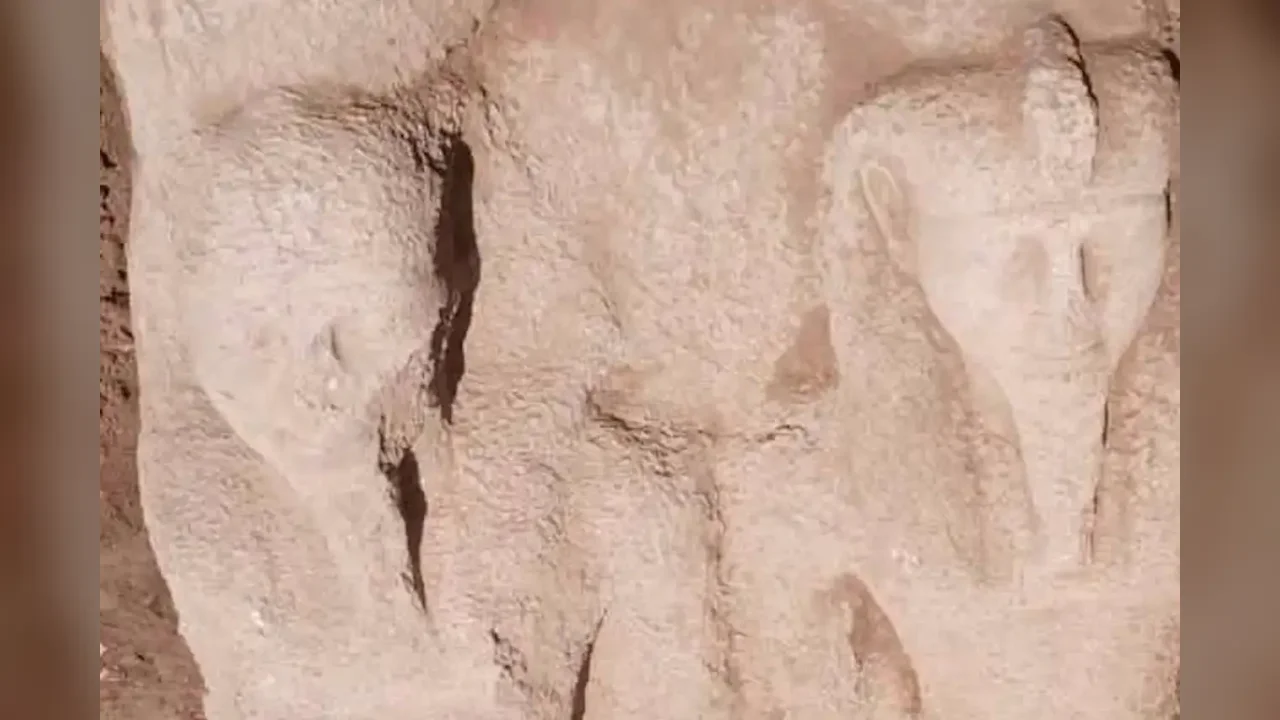
An extraordinary archaeological discovery in Egypt has brought to light the remains of an 8,500-year-old human settlement deep within the Western Desert, predating the Giza pyramids by millennia. Announced by the Egyptian Ministry of Tourism and Antiquities, the findings reveal that a large and organized community once thrived in what is now an arid landscape, offering a fascinating glimpse into prehistoric life.
Uncovering the Farafra Oasis Settlement
Located on the Ragheb Plateau along the eastern edges of the Farafra Oasis depression, the site was uncovered by a joint Egyptian-Italian research expedition. Archaeologists identified roughly 200 distinct archaeological artifacts at the location, including stone structures, ancient hearths used for cooking and heating, and dense concentrations of lithic tools. Initial research indicates that the site was not merely a temporary nomadic encampment, but rather a substantial, organized settlement where residents maintained sustained daily activities over extended periods.
Clues to a Green Sahara
Perhaps the most intriguing aspect of the discovery relates to the drastically different environmental conditions of the ancient past. Geological testing revealed remnants of shallow depressions and sediment deposits originating from ancient lakes, confirming that the region once enjoyed a significantly wetter climate. Researchers believe these hospitable conditions enabled early humans to permanently settle the area and harness its natural resources.
Adapting to Climate Shifts
The expedition commenced its fieldwork at the site in 2023, expanding excavations and geological research through 2025. The initial dating of approximately 8,500 years was established by comparing the excavated artifacts with discoveries from other ancient sites across western Egypt. Senior officials at Egypt's Supreme Council of Antiquities noted that the findings provide crucial new evidence regarding prehistoric human settlement patterns and how ancient communities adapted to gradual climate change and the progressive desertification of the Sahara.