Defense Markets: India Tests Elbit Systems PULS, Turkey and Egypt Naval Drills
India expands domestic rocket manufacturing while maintaining strong ties to Elbit Systems, as Turkey and Egypt explore naval shipbuilding and Germany bans Chinese drones.
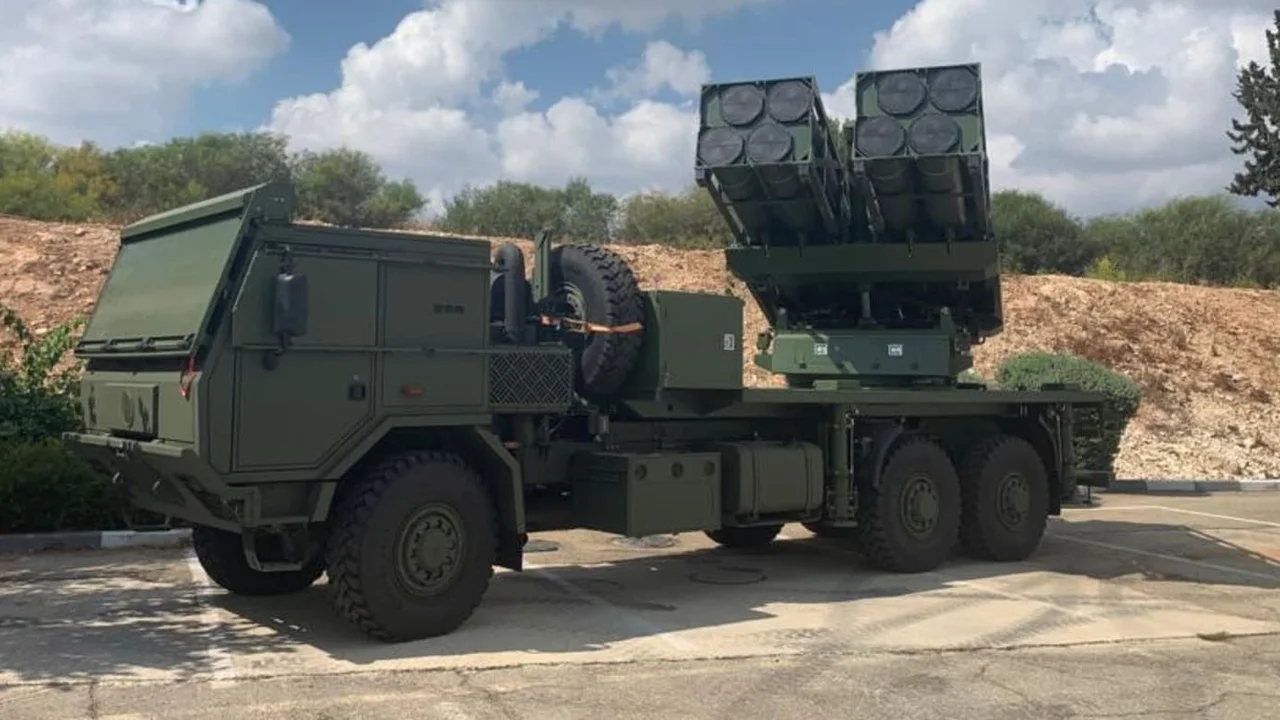
India remains a cornerstone of Israeli defense exports while simultaneously expanding its domestic military manufacturing capabilities. The Indian firm Niva tested its locally developed universal rocket launcher, the SURyaSTRA. Despite domestic production goals under Prime Minister Narendra Modi's Make In India initiative, India continues to integrate foreign technology. Last July, Niva signed an agreement with Elbit Systems to incorporate the PULS artillery rocket system into its production lines. Elbit Systems' PULS can fire unguided rockets, precise munitions, and missiles at ranges of up to 300 kilometers while cutting maintenance and training costs across wheeled and tracked platforms.
India's Leading Share in Israeli Defense Exports
Data from the Stockholm International Peace Research Institute (SIPRI) highlight India's preeminent position as the top consumer of Israeli defense technology. Between 2021 and 2025, India accounted for approximately 29% of all Israeli defense exports. Germany followed with 21%, and the United States represented 7.8%. Israel's willingness to accommodate local manufacturing demands and technology transfers has anchored this bilateral defense trade.
Turkey and Egypt Explore Naval Shipbuilding Partnerships
Meanwhile, security dynamics are shifting in the Eastern Mediterranean as Turkey and Egypt evaluate joint naval shipbuilding initiatives. Turkish Navy Commander Admiral Ercüment Tatlıoğlu disclosed the discussions during the "Friendship Sea 2026" joint naval exercise in Alexandria. The exercise represents the second consecutive year of the drills, following a reconciliation that ended 13 years of hostility between Ankara and Cairo. Turkey deployed its largest homegrown vessel ever built, the TCG Anadolu, to the Egyptian port. Naval forces from both nations practiced surface warfare, anti-submarine combat, and maritime air defense.
During the drills, Admiral Tatlıoğlu conferred with his Egyptian counterpart, Vice Admiral Mahmoud Al-Fouzi, emphasizing the deepening cooperation between their fleets. Analysts note that close military coordination between Turkey and Egypt could complicate Israel's strategic calculus in the Eastern Mediterranean, where Ankara remains a primary regional adversary. The integration of Turkish unmanned systems, such as Bayraktar TB3 UAVs or Piranha uncrewed surface vessels, could impact Israeli naval operational freedom in the region.
Germany Moves to Phase Out Chinese Drones
Western nations are actively decoupling their supply chains from Chinese technology, with Germany becoming the latest nation to restrict Chinese-made drones. Chinese tech giant DJI commands over 70% of the global drone market and more than 90% of hobbyist drones in the United States. While prized for their cost-effectiveness, Chinese-made hardware has raised acute security concerns across Western capitals.
Germany decided to replace Chinese drones with European alternatives to safeguard military security, information technology networks, and sensitive data. German military commanders previously utilized commercial DJI models during training exercises and adversary simulations due to their low price point. Beijing sharply criticized the decision, with the Chinese Foreign Ministry denouncing the move as discriminatory against Chinese products. Trade tensions persist as China restricts dual-use exports to several European entities, including Germany's Rheinmetall, in retaliation for sanctions tied to Russia.