New Deep Sea Clam Species Discovered Living Inside Sea Urchin Throats
Scientists discovered a new clam species living inside a sea urchin's throat at depths of 4,000 meters in the Great Australian Bight, marking a rare internal symbiosis.
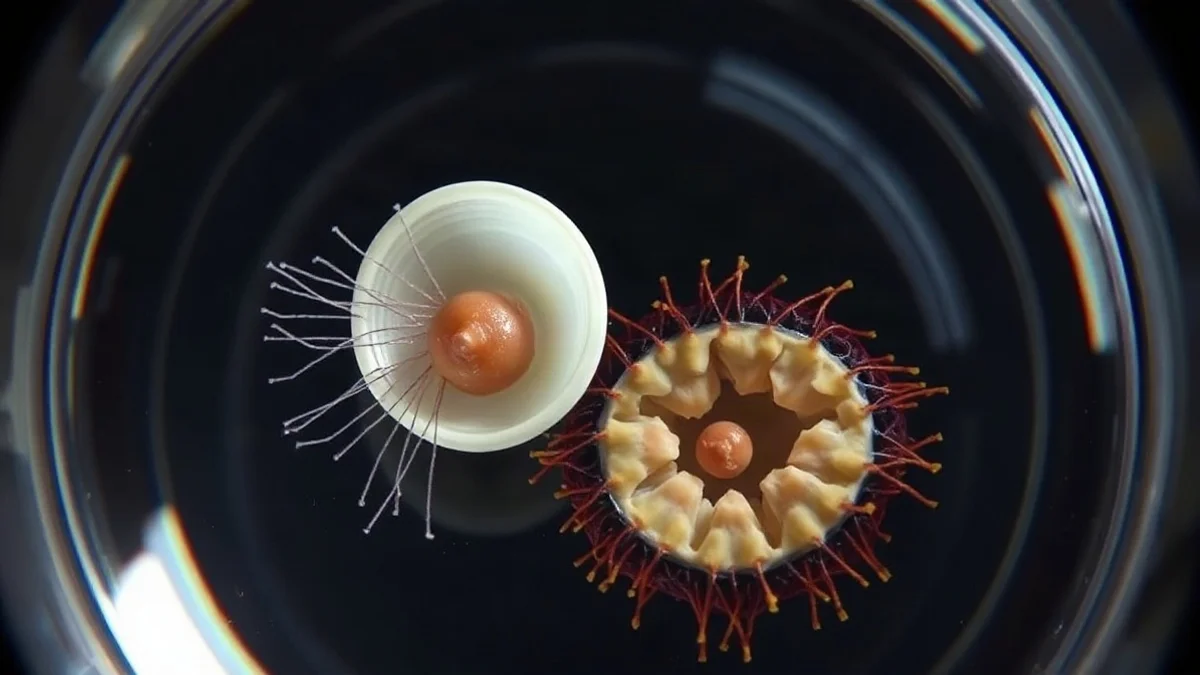
Deep-sea researchers have discovered a previously unknown species of clam living entirely inside the throat of a sea urchin at depths ranging from 4,000 to 5,000 meters in the Great Australian Bight.
Published in the scientific journal ZooKeys, the finding emerged from an extensive survey of the ocean floor that yielded 66,721 invertebrates across 1,267 species. Researchers estimate that roughly one-third of the identified species could be entirely new to science.
Initially, scientists spotted clams featuring specialized fibers used to anchor onto other marine organisms, though they could not identify the host creature. Subsequent examinations uncovered additional clams housed within thin internal tubes, and DNA testing confirmed the location to be the esophagus of a sea urchin.
A review of historical archives revealed that related clam specimens had actually been collected inside a sea urchin during the famed British Challenger expedition between 1872 and 1876. This historical clue remained hidden within scientific collections for nearly 150 years without being properly identified.
Reaching up to 19 millimeters in length, the newly identified bivalve received the scientific name Vaticinaria gulicola, translating from Latin as "throat dweller." While many symbiotic clams attach themselves to the exterior surfaces of other animals, residing internally inside another living creature remains an exceptionally rare phenomenon.
A major mystery still puzzling researchers is how the clam sustains its nutrition. Scientists hypothesize that the bivalve feeds on nutrient-rich sediment swallowed by the host sea urchin, though this theory awaits definitive proof. The discovery underscores how limited human knowledge remains regarding complex life forms inhabiting the deepest ocean environments.