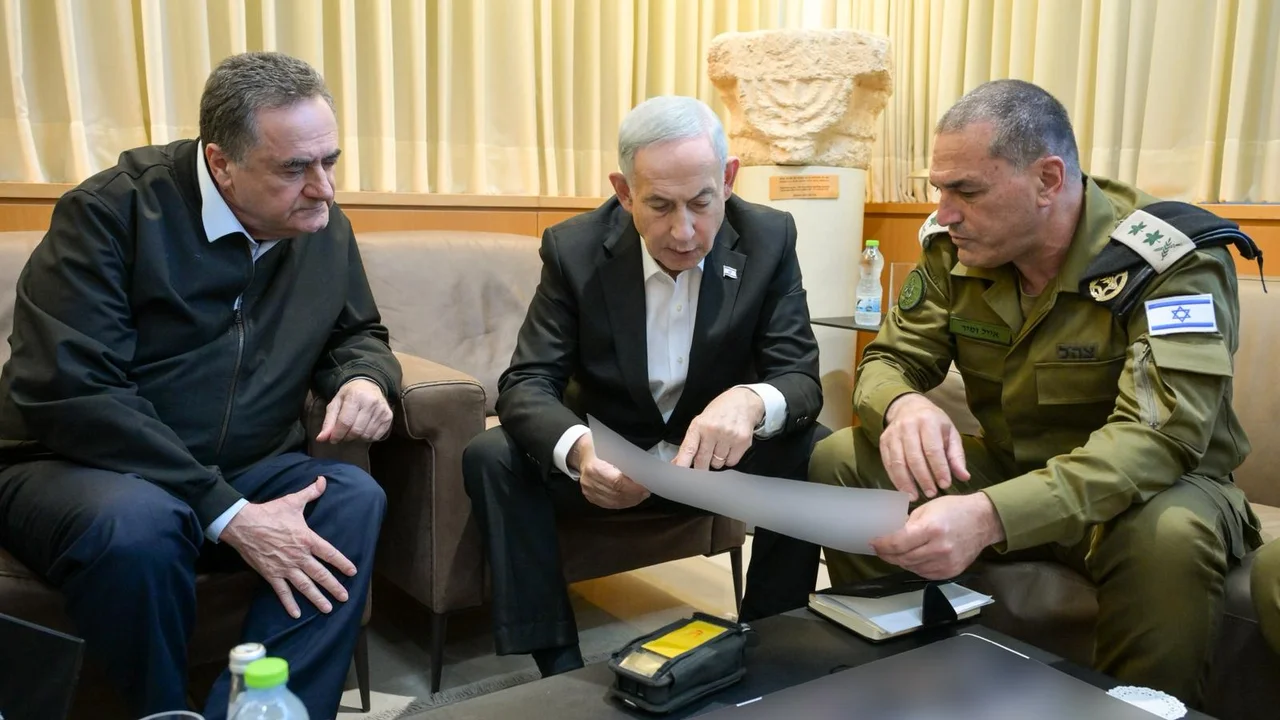
COGAT: "Hamas remains the main obstacle to improving the fabric of life in the Gaza Strip"
The Office of the Coordinator of Government Activities in the Territories reveals the situation in the Gaza Strip since the ceasefire began: more than 2 million tons of food, a 72% decrease in prices, and an increase of over 50% in hospital bed occupancy. "The volume of aid significantly exceeds the defined needs - Hamas is interfering with humanitarian activity."
"Hamas remains the main obstacle to further improvement of the situation in the Gaza Strip. The organization interferes with humanitarian activity, exploits civilian infrastructure, influences distribution mechanisms, and continues its repeated attempts to smuggle prohibited items under the guise of humanitarian aid," a senior official at the Coordinator of Government Activities in the Territories (COGAT) headquarters stated yesterday, Sunday.
Since the beginning of the ceasefire in the Gaza Strip in October 2025, the IDF has continued to allow the entry of humanitarian aid and goods into the Gaza Strip, in coordination with the UN and international organizations. According to COGAT's analysis, the volume of aid entering the Gaza Strip significantly exceeds the humanitarian needs as defined by UN agencies, international organizations, and assessments conducted throughout the war.
The senior official at the coordination headquarters clarified that despite the analysis, "Israel will continue to work together with its international partners to improve the humanitarian response, while preventing its exploitation by Hamas at the expense of the residents of the Gaza Strip."
Food data: over 450 trucks enter the Strip daily
According to the data, since the beginning of the ceasefire, more than two million tons of food have been transferred, including meat, chicken, eggs, cheese, fruits, and vegetables. It also emerges that about 600 trucks enter the Gaza Strip daily, with 70–80% of them carrying food, and that food prices have dropped by about 72%.
As of today, 41 bakeries operated by international organizations are active in the Gaza Strip, producing more than 3 million pita breads per day, in addition to dozens of local bakeries.
Water data: four water lines active in the Strip - three of them from Israel
It also emerged that more than 70,000 cubic meters of water are supplied to the Strip on average daily, equivalent to more than 60 liters per person per day. About 250 water trucks operate daily and serve about 2,800 distribution points throughout the Gaza Strip. Furthermore, more than 74,000 tons of hygiene and sanitation equipment have entered the Gaza Strip, alongside waste removal equipment and water purification tablets.
Four water lines are currently active in the Gaza Strip, three of which provide water from Israel. These operate alongside desalination plants as well as dozens of water wells throughout the Strip.
Medical data: over 21,000 tons of medical equipment have been brought in since the beginning of the ceasefire
More than 21,000 tons of medical equipment have entered the Gaza Strip since the beginning of the ceasefire. COGAT data shows that hospital bed occupancy has increased by over 50%. In coordination with international organizations, advanced medical equipment has been transferred to the Strip, including X-ray machines, generators, and oxygen cylinders.
In the northern Gaza Strip, eight hospitals operate permanently, along with four field hospitals and four medical centers. In the southern Strip, two permanent hospitals and eight field hospitals are operating.