Caesarstone Faces Massive Lawsuits and Financial Strain After 98% Stock Drop
Caesarstone faces deep uncertainty as it prepares its third-quarter earnings report following a massive court ruling, severe legal liabilities over silicosis claims, and a 98% drop from its historic peak valuation.
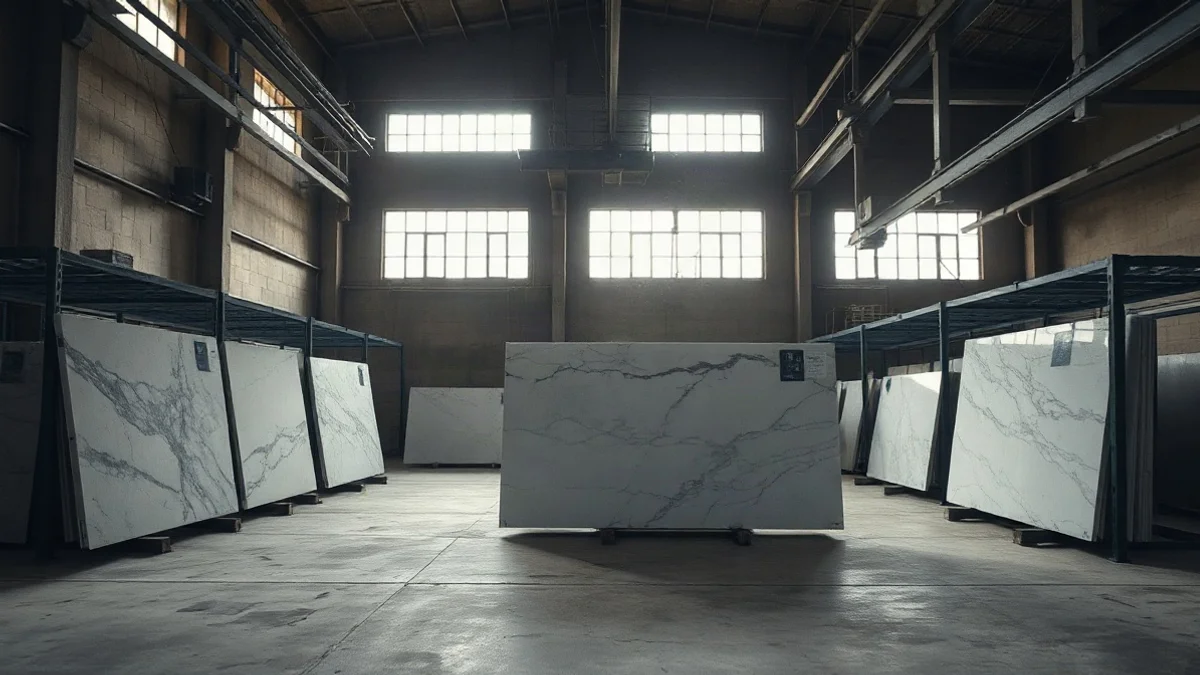
Caesarstone, the prominent manufacturer of quartz surfaces for kitchens and bathrooms, is set to release its third-quarter financial results following a significant surge in its stock price over recent months. However, the seemingly positive market momentum is overshadowed by mounting financial uncertainty and heavy legal challenges.
The company recently postponed its earnings report, originally scheduled for last week, explaining that the delay provides additional time for ongoing settlement discussions without providing further details. This uncertainty comes on the heels of a major court ruling in California, where a jury found Caesarstone liable and ordered it to pay $67.3 million in damages, of which Caesarstone's share amounts to $46.5 million. As of the end of the second quarter, the company reported cash reserves of $51.8 million.
Financial Decline and Mass Lawsuits
Despite the recent stock rebound, Caesarstone's market valuation remains at historic lows. It trades on Nasdaq at a market cap of approximately $53 million—98% below its peak valuation of $2.5 billion reached in 2015, and 86% lower than its valuation during its Wall Street IPO in 2012.
The company has faced persistent difficulties in recent years driven by intensifying market competition and a wave of lawsuits alleging that workers contracted silicosis and other respiratory illnesses from inhaling silica dust while fabricating the company's products. According to Caesarstone's expanded annual report, the company is a party to hundreds of lawsuits involving 618 claimants, including 40 in Israel, 151 in Australia, and 427 in the United States. In response, Australia instituted a sweeping ban in mid-2024 on engineered stone containing crystalline silica, severely impacting a core market.
Restructuring and Leadership Return
Three key players from Caesarstone's peak era remain involved: controlling shareholder Kibbutz Sdot Yam (30.2%), private equity fund Tene (10.4%), and CEO Yossi Shiran (2.5%). Both Tene and Shiran are on their second stint with the company. Tene, founded by Dr. Ariel Halperin, invested in Caesarstone in 2006 and executed a lucrative exit in 2013, but returned in 2016 and is currently sitting on significant paper losses following the stock's collapse.
CEO Yossi Shiran, who previously led the company from 2009 to 2016, returned in 2023 to spearhead a global restructuring plan. This included shuttering the historic plant at Kibbutz Sdot Yam and closing facilities in the United States and at the Bar-Lev Industrial Park in northern Israel to curb cash burn. In the first half of the year, revenues contracted by 7.7% to $185 million, while operating and net losses widened to $29.6 million and $36.7 million, respectively, though cash burn significantly slowed.