First of Three Consecutive Supermoons Illuminates Night Sky as Beaver Moon
Stargazers observe the Beaver Moon, the first of three consecutive supermoons appearing larger and brighter as it approaches perigee, while coastal US regions brace for record-high tides.
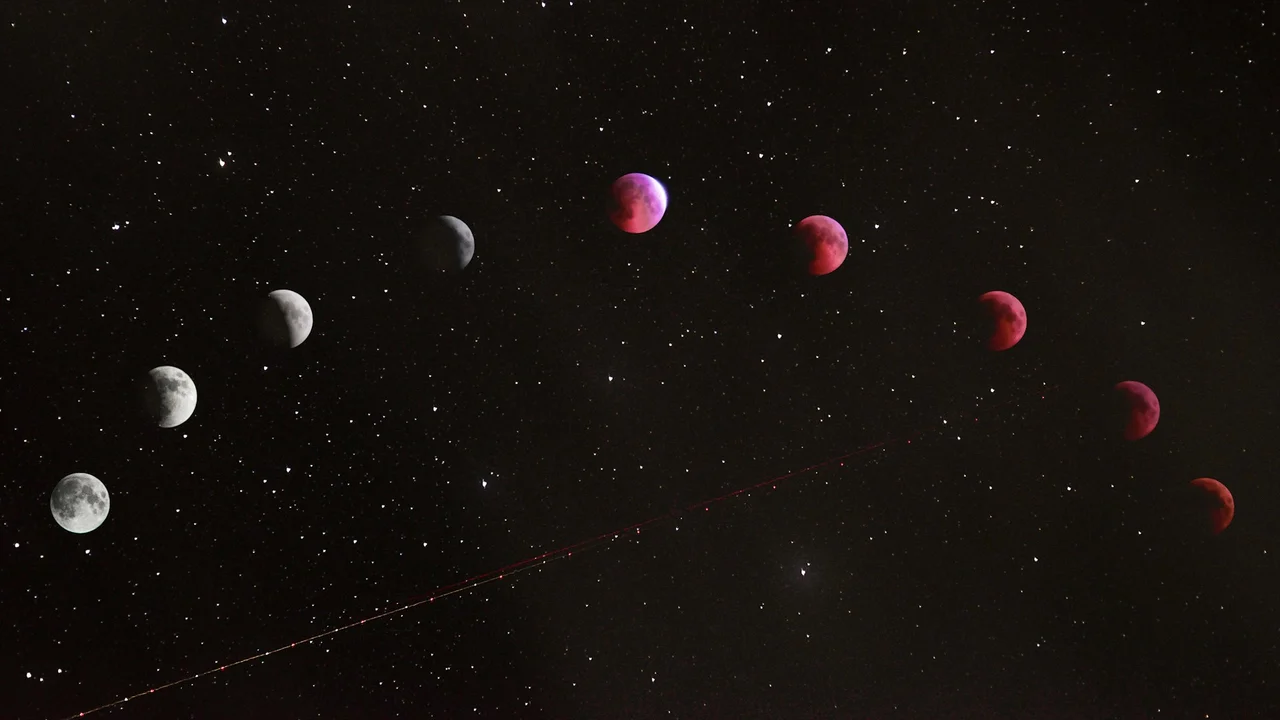
Stargazers around the world had the opportunity to observe a striking celestial event as the night sky illuminated with the "Beaver Moon," the first of three consecutive supermoons. Appearing larger and brighter than usual, this full moon also marked the third and final full moon of autumn in the Northern Hemisphere. The celestial lineup continues a sequence of exceptionally close full moons, including a supermoon scheduled to appear on Christmas Eve, which will stand as the closest full moon to Earth since January 2, 2018. Following that display, subsequent supermoons are projected to illuminate the night skies on January 22, 2027, and February 20, 2027.
Origins and Astronomy of the Beaver Moon
The November full moon derives its traditional moniker from the seasonal behavior of beavers actively preparing for the winter months. During November, beavers finish constructing their dams and lodges while storing food before lakes and rivers freeze over. Because beavers are nocturnal animals, they frequently complete this labor under the illumination of the full moon. Alternative historical designations for the November full moon include the "Frost Moon" and the "Snow Moon." Scientifically, a supermoon occurs when a full moon coincides with perigee, the point in the lunar elliptical orbit where the satellite comes closest to Earth. While the average distance from Earth to the moon sits at 384,472 kilometers, a perigee full moon can appear up to 14 percent larger and 30 percent brighter than a moon positioned at apogee, its farthest point.
Astronomers note that the moon frequently appears even larger when positioned near the horizon due to an optical phenomenon known as the moon illusion. Dr. William Alston, an astronomer at the University of Hertfordshire in the United Kingdom, explained that this visual effect becomes slightly more pronounced during a supermoon. Experts recommend observing the celestial body during moonrise and moonset for optimal viewing conditions, though the striking appearance remains visible throughout the entire night and into the following day. Beyond visual appeal, the gravitational alignment exerts a measurable influence on Earth's oceanic tides.
Tidal Impacts and Coastal Warnings
Because the moon rests closer to Earth during a supermoon event, gravitational pull increases slightly, producing marginally larger tides. While the variance between a standard full moon and a supermoon tidal range generally amounts to only a few centimeters, alignment with the sun during full and new moon phases generates pronounced spring tides. The combination of gravitational forces was projected to produce severe coastal effects along the western coast of the USA, where Pacific Ocean tidal heights risked breaking 40-year records. These elevated waters threatened to flood low-lying coastal communities and complicate holiday travel during Thanksgiving week. In the San Francisco Bay area, tides were anticipated to peak at nearly one meter above average, according to Dial Huang, a meteorologist with the US National Weather Service.