Bank of Israel Rate Cut Speculation Mounts as Annual Inflation Eases to 1.1%
Annual inflation easing to 1.1% revives expectations of a Bank of Israel rate cut next week, though banking stocks and currency shifts complicate the policy outlook.
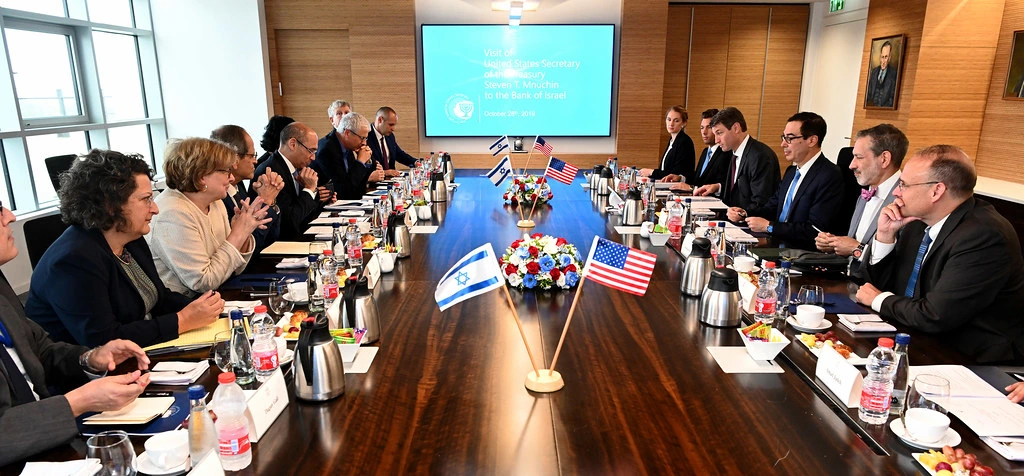
Israel's annual inflation rate unexpectedly eased to 1.1% after the consumer price index dipped by 0.1% contrary to prior market forecasts. This downward shift has revived speculation that the Bank of Israel could implement an interest rate cut as early as next week, a prospect that immediately impacted domestic financial markets.
Market Reactions and Banking Sector Performance
Banking stocks opened the trading session with notable losses as investors began pricing in a potential monetary easing cycle that could compress profit margins by narrowing the gap between loan interest rates and deposit yields. By 11:00 AM, the benchmark Tel Aviv 35 Index, which carries a heavy weighting of bank shares, dropped 0.7%, while the broader Tel Aviv 125 Index declined by 0.3%. In contrast, the Tel Aviv 90 Index bucked the trend to rise by 1.1%, following a robust week that saw the Tel Aviv 35 and Tel Aviv 125 indices climb roughly 2.5% each, and the Tel Aviv 90 surge by 3.3%.
Individual banking institutions saw distinct downward pressure, with Mizrahi-Tefahot falling 1.6%, First International Bank dropping 1.4%, Bank Hapoalim declining 1.1%, and Israel Discount Bank retreating 1.0%. Bank Hapoalim reported a quarterly net profit of 2.36 billion shekels, representing a 14% decrease compared to the same period last year when the bank recorded a one-time non-recurring income. The bank noted that the prevailing interest rate environment further weighed on earnings even after stripping out that special revenue item.
Tech Sector Pressures and Currency Movements
Dual-listed semiconductor shares also exerted downward pressure on the Tel Aviv 35 Index, mirroring global tech weakness. Tower Semiconductor tumbled 7.2%, Camtek dropped 5.0%, and Nova fell 4.8%. These declines followed a 0.9% drop on the Nasdaq on Friday and a roughly 2% retreat by Nvidia following reports regarding founder and CEO Jensen Huang. Poria Finance Chairman Or Poria also pointed to ongoing weakness across technology and semiconductor equities in South Korea.
Meanwhile, currency dynamics present a competing force for monetary policymakers. The US dollar has appreciated by approximately 2.6% against the shekel since the beginning of November, with Friday's representative exchange rate fixed at 3.199 shekels and continuous trading pushing the rate above 3.22 shekels. Currency depreciation threatens to drive up import costs and reignite inflationary pressures in the coming months, potentially counteracting the recent arguments for an imminent rate reduction.
Economic Growth Data as a Deciding Factor
The ultimate deciding factor for the upcoming monetary policy decision may hinge on upcoming economic growth figures. Ronan Menachem, chief markets economist at Mizrahi-Tefahot, explained that robust economic growth would diminish the likelihood of the Bank of Israel cutting rates next week, whereas disappointing growth figures would provide the central bank with additional justification to ease monetary policy.